Oasis Marbella Fest 2026

Oasis Marbella Fest is an an umbrella brand for the Festival Site encompassing a range of touring festivals and concerts held during the summer at the San Pedro site.
Oasis Marbella Fest is an an umbrella brand for the Festival Site encompassing a range of touring festivals and concerts held during the summer at the San Pedro site.
The Surf-Freestyle discipline of the 2025 GWA Wing Pro World Tour is making fourth stop on the 2025 world tour in Tarifa between 24th and 27th June 2025 at Valdevaqueros Beach in front of Bibo Beach House restaurant.
Here is a list of the main festivals celebrated during the year in Frigiliana
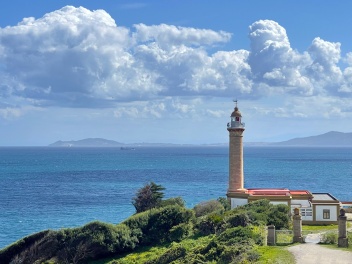
Nestled on the headland west of Getares, in the southern district of Algeciras, Punto Carnero and its historic lighthouse offer visitors a breathtaking experience of the Strait of Gibraltar. This scenic spot is one of the most remarkable coastal viewpoints in the region, boasting unparalleled panoramas of the iconic Rock of Gibraltar and the distant mountains of North Africa. Whether you are drawn by the dramatic landscapes, the historical significance of the lighthouse, or the serenity of nature, Punto Carnero is a must-visit destination.
The oldest evidence of human presence locally is the cave paintings of the Navalcán enclave, dated to the Copper Age. Between the end of the War of Granada in 1492 and the early sixteenth century, the lands surrounding today’s Noalejo were “entredichos”, or intermediate territorial bands not belonging to any specific municipality.
The oldest evidenced occupation of the municipal area dates back to somewhere between 2000 and 2500 BC, and can be traced in the Cueva de Aro. Further prehistoric references can be found on the hill of the Torre de la Cabeza, where remains from the Copper, Bronze, Iberian, Roman and Medieval periods have been unearthed. The first written reference to a population in Pegalajar is found in the tenth-century work of oriental geographer Al Muqadasi.
Check out our selection of excellent activities and things to do in and around Granada, perfect ways to experience some of the interesting things Granada has to offer without having to worry about organising it on your own.
Jódar and its surroundings have been populated in some form since at least the third millennium BC; the site of Las Quebradas, dating from the Chalcolithic period, evidences prehistoric settlement, whilst Mycenaean remains attest to human presence during the Iberian era.
Jimena sits along the Ruta de los Castillos, a network of towns based around important castles, however, the highlight of its historical and artistic heritage is the Cueva de la Granja, declared a Historic Monument, which houses seven groups of Neolithic paintings. It has about 1,300 inhabitants.
Campillo de Arenas is a small municipality surrounded by beautiful natural enclaves such as the Sierra de Campillo, which can be enjoyed by hiking, mountain biking or car. Some of its highlights include the Monasterio ravine, the Alberquilla viewpoint and the Quiebrajano reservoir. It has around 2,000 inhabitants.
Huelma is located just 3km west of the Jandulilla River, which forms a natural transit corridor from north to south between the Alto Valle del Guadalquivir valley, Vega de Granada and Hoya de Guadix, which are the areas where historically there were the largest and oldest concentrations of population.
Born from the union of two towns, Bedmar y Garcíez is built around a fifteenth-century rock castle. Listed as a historical monument, this building has classified the village as part of the Ruta de los Castillos. It has around 2,600 inhabitants.
The main economic activity of Arquillos is the cultivation of olive groves, and it is an ideal destination for lovers of nature. In the area of Llano de las Hormigas, in the middle of the Sierra Morena, is the Camping de Pedralejos, where tourists can rest from the hustle and bustle of the city. The town has paths prepared for hiking and an Olympic shooting range in the mountains. It has about 1,800 inhabitants.
Visitors to Navas de San Juan can enjoy walks through its enchanting streets, admiring the remarkable buildings that make up its historical and artistic heritage. It has about 4,500 inhabitants.
Given its strategic position as a passageway between Levante or La Mancha and the Guadalquivir Valley, Montizón has been settled since ancient times. Its earliest settlers are attested to by numerous remains including flint-tipped arrows, axes and carved stones, collected in Torre-Alber, and ceramics found in Cabeza Chica.
Villanueva del Arzobispo has one of the largest olive oil production cooperatives in Jaén and in Spain. But this liquid gold is not its only attraction; travellers who visit this municipality can also enjoy its wonderful natural surroundings included in the Sierra de Cazorla, Segura y las Villas Natural Park and an interesting historical and artistic heritage. It has about 7,970 inhabitants.
Originally known as Mingo Priego, its current name comes from Alonso Carrillo, who was appointed Archbishop of Toledo in 1445 and granted the municipality the category of town in a founding certificate dated September 1, 1449, later confirmed by King Juan II of Castile on January 1 in 1450 and by the Reyes Católicos on January 25, 1498, thus separating the village from the old town of Iznatoraf.
Sorihuela de Guadalimar is part of the Sierras de Cazorla, Segura y las Villas Natural Park. Its landscape is dominated by olive groves, cereal fields, and orchards. It has about 1,000 inhabitants.
Dreambeach 2013 was the first edition of Dreambeach. It took place from 10th to 15th August 2017. This was the longest festival yet. Six days Tuedsay to Sunday. The Sunday was a wind down with acts on the Camping stage. Total gate passes of the five stadium days were 175.000 which is about 35.000 atendees.