Day trips from Seville for conference delegates
As a hub for key conferences, Seville offers the perfect gateway into exploring other alternative areas of Andalucia. Find out more information
As a hub for key conferences, Seville offers the perfect gateway into exploring other alternative areas of Andalucia. Find out more information
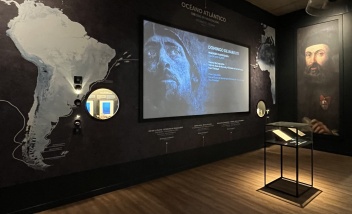
In 1519 Portuguese explorer Ferdinand Magellan set sail from Seville with a fleet of five naos (carracks or carvel-built wooden sailing ships) to find the Molluca spice islands, in modern-day Indonesia. Three years later, only one of his naos returned, the Nao Victoria, captained by Juan Sebastian Elcano – Magellan had been killed in a conflict in the Philippines.
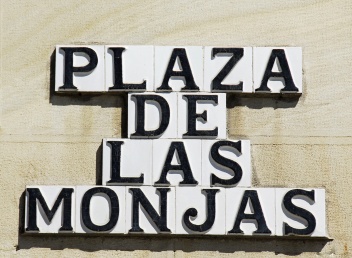
Plaza de las Monjas can be described as the main square in the city of Huelva. Its origin is to be found during the foundation of the Convento de las Madres Agustinas; hence the name 'monjas' meaning 'nuns'. The convent was built in early sixteenth century, therefore suggesting the square was created in front of the convent's entrance during the first years of this century.
Paseo Maritimo de la Ría is a seaside boulevard that was opened in July 2016 and is within the Paraje Natural de las Marismas del Odiel.
Palacio Mora Claros is an early twentieth century palace built by, Moisés Serrano and José María Pérez Carasa, and was restored in 1997.
The Casa del Rey Moro was built in the 18th Century, when Moorish Spain was already a distant memory. Its Moorish gardens having been designed by the French landscape gardener, Jean Claude Forestier, in 1912.
One of the curious things about Jerez, is that alongside the wealthy (though less so lately) equestrian sherry barons, there is a vibrant flamenco tradition - two very different aspects of Andalucian culture.
Spain´s most famous 20th-century literary figure, Federico Garcia Lorca, was murdered by Fascists, probably for his political leanings and sexual orientation, in Granada, in 1936 - just before the outbreak of the Civil War. Although renowned throughout the world, Lorca´s name was banned under Franco and he was apparently forgotten.
Guadix is considered the ‘European Capital of Caves’ due to its 2,000 underground dwellings spread across 200 hectares. Around 4,500 residents still live in these cave houses, which maintain a constant temperature year-round and offer peace and quiet thanks to their natural clay insulation. The caves are easily accessible from the town centre.
The Cathedral of Guadix, built on the so-called ‘Sacred Hill’, stands on the site of a former Visigothic cathedral and later an Arab mosque. Constructed between the 16th and 18th centuries, it is the town’s most important monument, combining Gothic, Renaissance and Baroque elements. Its most famous feature is the Puerta de San Torcuato, with its tall bell tower visible from anywhere in the town.
The Palacio de Villalegre is one of Guadix’s most emblematic buildings. Built by the Fernández de Córdoba family on the site of a former Muslim residence, it later passed through several noble families. Over the centuries, it has served as a Civil Guard barracks, a tenement house and local police headquarters. It is located on Calle Santa María del Buen Aire.
The Church of Santiago, designed by the architect and sculptor Diego de Siloé, is one of the most beautiful examples of religious architecture in Guadix. Built on the model of a traditional Mudejar temple, it features a monumental Renaissance portal, whitewashed walls, and a ceramic spire. It is located in Plaza Santiago.
The Casa Consistorial, or Town Hall, represents the transformation of Guadix into a true Renaissance city. Originally built between the late 16th and early 17th centuries, it centralised political power around the main square. After being destroyed during the Spanish Civil War, it was rebuilt in 1949. It is located in the Plaza de la Constitución.
The Church and Convent of La Concepción, dating back to 1655, is one of the oldest in Guadix. Despite suffering several fires, it retains its original 16th-century structure with a central cloister and arched galleries. Beneath the street lie the remains of Roman baths from the city’s ancient past. It is located on Calle Concepción.
The Palacio de Peñaflor belonged to the Pérez de Barradas family, Marquesses of Cortes and Graena, who settled in Guadix after the Reconquista. The building is currently being considered for conversion into the town’s future museum. It is located on Calle Barradas.
The Church of La Magdalena, located in the historic neighborhood of the same name, holds great historical and architectural value. Built from the mid-16th century on the site of the former Mozarabic community, it preserves Mudejar features such as wooden roofs and a typical Accitan bell tower, as well as a Baroque portal from 1621. Recently restored, it now houses the Diocesan Archive of Guadix and part of the town’s treasures.
The Antigua Lonja, or Old Exchange, once served as a centre for business meetings, commercial transactions and banking in Guadix. Today, only the façade remains, featuring the coat of arms of Charles V, indicating that the building was constructed between 1530 and 1550. It is located on Calle Ancha.
The Roman Theatre of Colonia Iulia Gemella Acci is one of Guadix’s most remarkable archaeological sites. Built in the early 1st century AD, the theatre formed part of a monumental complex covering almost 6,000 m² and served as a leisure space for the Roman colony founded by Julius Caesar. It is located on Avenida Mariana Pineda.
ECCO is a cultural space, showcasing various mediums of art, with occasional daytime and evening events.
Built over uneven ground, the church is a magnificent display of masonry. The oldest parts, both Gothic in style, are the head and the transept. The three naves have Doric columns and Renaissance semicircular arches. Its tower, with a quadrangular plan and four semicircular arches to house the bells, becomes octagonal on the second level. Inside, two impressive eighteenth-century pulpits are preserved, as well as a baptismal font from the sixteenth century. Its portals are simple in structure but of great ornamental interest; the main one, from the seventeenth century, opens with a semicircular arch, between Ionic columns, geometrically decorated with rhombuses in the Mannerist style. In the centre, a niche houses a sculpture of the Inmaculada Concepción. It has two other covers, both with a semicircular arch; the north, from 1570, with careful flamingos at the ends of the cornice, which is attributed to Francisco del Castillo “el Mozo” and his brother Benito; and the south, dated 1620. Located on Avenida de la Virgen del Cuadro.