Festivals in Almeria City
Festivals in Almeria: La Virgen del Mar, La Virgen del Carmen, Cabalgata de Reyes Magos, Romería a Torregarcía, Carnaval, Día de Andalucía, Semana Santa, Cruces de Mayo, Noche de San Juan, Virgen del Carmen and more.
Festivals in Almeria: La Virgen del Mar, La Virgen del Carmen, Cabalgata de Reyes Magos, Romería a Torregarcía, Carnaval, Día de Andalucía, Semana Santa, Cruces de Mayo, Noche de San Juan, Virgen del Carmen and more.
Spain is known world-wide as a country of many fiestas - festivals of religious fervour like Semana Santa (Easter Holy Week) and festivals of a more secular nature like winter carnivals. You can find celebrations for just about every taste if you travel far and wide enough in this country.
Fiesta de Interés Turístico Internacional (Festival of International Tourism interest) is a honorary title awarded to about 56 festivals in Spain by the Secretario General de Turismo del Ministerio de Industria, Turismo y Comercio del Gobierno de España. These are published in the BOE (Boletin Oficial del Estado). This is the highest level of award.
This route starts at San Juan del Puerto northeast of Huelva City and ends 36km further north in Valverde del Camino, passing through a region of gently rolling hills known as El Andévalo. The route is surfaced in places and is suitable for walkers, cyclists, wheelchair users and horse riders.
The Via Verde Subbeticas is a southern extention of the Vía Verde of the Olive Oil that originates in Jaen city. The Via Verde Subbeticas covers 56 km, much of it on the fringes of the limestone mountainous area of the Sierras Subbéticas Natural Park. It links a series of beautiful villages, such as Zuheros, Luque and Cabra.
Corpus Christi feast is the Catholic solemnity in honour of the presence of the body of Christ in the holy water. It is celebrated throughout Spain and is held in either May or June depending on when Easter occurs.
Christmas brings great cheer across Spain as families prepare to spend the Season together over one elaborate meal after another. Every year Andalucia.com brings you a special look at Christmas and this year it is no different.
Starting from the Valverde railway station, at the end of the Vía Verde of the Watermills that links Valverde with San Juan del Puerto to the south, is this 35km-long route to Riotinto, a historically important mining centre. The final stretch of the train track was used for transporting miners from Zalamea and El Campillo to Riotinto.
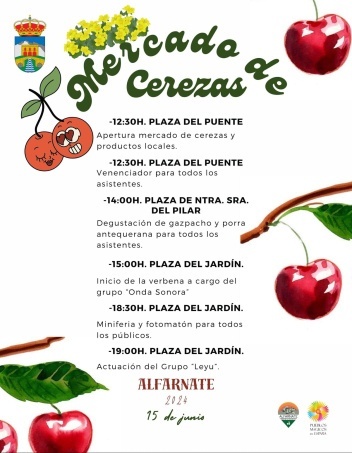
The Festival de la Cereza usually thakes place on the third Saturday in June. It is a well-organised event with several stalls set up in the town’s “polideportivo” sports centre where you can buy large flats of top quality local cherries at rock bottom prices. But that’s not all!
Possibly the most beautiful vía verde in Andalucia is the route between Puerto Serrano, west of Algodonales on the Ronda-Sevilla road, and the former bandit haven Olvera, sitting on its dramatic pinnacle north-east of Ronda.
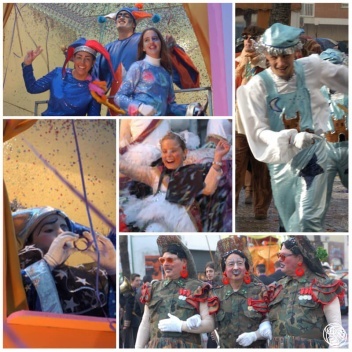
Spain is a country with a well known Catholic tradition. The carnival is, therefore, celebrated before the 40 days of Lent as a way to let loose before the prohibitions of the upcoming religious holidays. Most Andalucian towns stage a parade, and a dance and a "Carnival Queen" and other singing contests.
This vía verde (greenway) covers 55km between Jaen and the Guadajoz river, where it joins the Vía Verde of the Subbética. It is suitable for walkers, cyclists and wheelchair users. This greenway follows part of the 120km-long Jaen-Puente Genil railway line used for transporting olive oil from the late 19th century onwards, linking Jaen with Malaga and Algeciras and opening up the market for oil.
This 17km vía verde follows the former Buitrón mining railway line that once linked Mina Concepción and Zalamea la Real and was used exclusively for transporting mineral extracted from the mine (mina) of Mina Concepción all the way to cargo boats in San Juan del Puerto on the Odiel estuary near Huelva city.
On the edge of the Sierra Nevada National Park is a 6km-long vía verde (greenway) that follows an old railway line along the lush valley of the Genil river, between Güéjar-Sierra, 15km southeast of Granada city, and the Barranco de San Juan to the east.
Until the 1960s, the Aznalcóllar mines northwest of Seville - still in operation today - were linked to the Guadalquivir river in the city by a railway, now the 27km-long Vía Verde de Itálica. Between Sevilla and Camas the route is called the Vía Verde of Camas, which turns into the Vía Verde de Itálica between Camas and Santiponce.
In the Sierra Norte Natural Park is this 18km-long vía verde (greenway) that follows the Huéznar river and the course of an old mining railway. The trains carried iron (hierro) from the mine at Cerro del Hierro to the station of Cazalla-Constantina, located 6km from Cazalla and 8km from Constantina, which was on the mainline.
Starting in Alcalá de Guadaíra 14km south of Seville, this vía verde (greenway) covers 28km and ends in Carmona, running along the foot of a string of hills (alcores) after which the route is named. Dotted along the hills and located close to the greenway are several picturesque towns overlooking the fertile vega (plain).
Spain´s longest vía verde (Railway Path) at 91km, this route crosses the gently rolling campiña (countryside) between Valchillón, just southwest of Cordoba, and Marchena in Seville province, 60km from Seville. It passes through the valley of the Guadalquivir river, with its fertile plain and cultivated fields of cereal crops and olive groves.
If you see a flamenco show while you’re here, you may well be seized with the urge to buy a dress, along with all the necessary colour-coordinated accoutrements: jewellery, shoes, comb, shawl, flower and fan. There are countless shops in every town and city around Andalucia where you can buy all the gear.
Most cities now have indoor centro comerciales (shopping centres) with supermarkets, fashion stores, and cafes. The undisputed queen of these is La Cañada in Marbella, which is home to Andalucia’s only Marks & Spencers.