Hotels in Rota

Rota boasts sixteen kilometres of fine beaches, including Playa de la Costilla and Playa de la Ballena. Many of them have been awarded due to their cleanliness and high standards and facilities. Popular among wind and kitesurfers, the town experiences an onslaught of tourists, especially during the summer season.
Cabo de Plata festival, Barbate

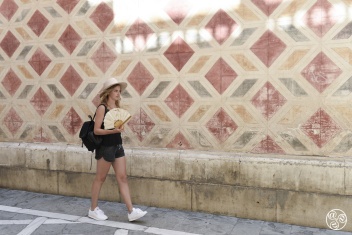
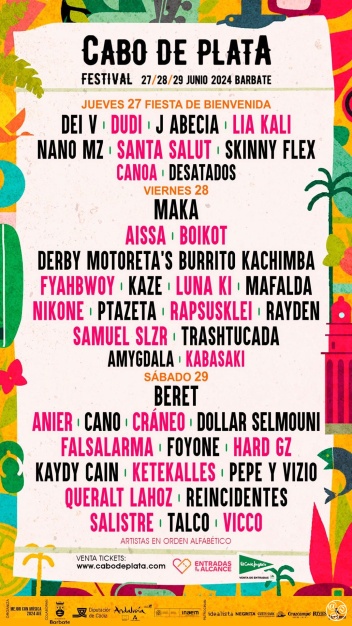
This successful festival has an 'all-are-going-on-a-summer-holiday' atmosphere that attracts a younger audience to the offbeat Costa de la Luz fishing town of Barbate. The 2024 edition took place a month earlier than usual, perhaps to avoid the peak holiday season for this coastal town. We are not aware of any announcements regarding the 2025 festival. The website still features information about the 2024 edition. 

Torre de Rio Real, Marbella

The Rio Real watchtower is located near the south-western bank of the Rio Real, on raised ground. This land is now a bend in the A-7 coastal road. A few metres away, on its southern side, there were abandoned Civil Guard barracks. There is no documentation of a tower at the time of the Reconquest of Marbella in 1485, so it is assumed that this tower was built at the end of the 16th century as part of the Hapsburg defensive strategy, with later modifications.

Torre del Duque, Puerto Banus

This is a defensive watchtower from the XVI century. It takes its name from the Roman baths, which are about 50 metres to the west. It is one of a chain of towers along the coast built at that time to warn the locals of pirates and possible Moorish invasions from North Africa. It is slightly conical in shape, but less so than the others, and leads to a larger terrace, perhaps to accommodate larger artillery. Built of stone, not brick, it is 13m high and has a diameter of 8.3m at the base.

La Torre de las Bóvedas in Guadalmina

This is a defensive watchtower from the XVI century. It takes its name from the Roman baths, which are about 50 metres to the west. It is one of a chain of towers along the coast built at that time to warn the locals of pirates and possible Moorish invasions from North Africa. It is slightly conical in shape, but less so than the others, and leads to a larger terrace, perhaps to accommodate larger artillery. Built of stone, not brick, it is 13m high and has a diameter of 8.3m at the base.

History of Cabra del Santo Cristo

Human presence in this area dates back to the Bronze Age, evident from a series of remains discovered in the Sierra de Cabra. During the Iberian era, the region formed part of a commercial route linking Granada with the Guadalquivir Valley. In the Hispano-Muslim period, a citadel was erected on the Cerro de San Juan. Some historians suggest it could be the Bagtawira fortress, belonging to a significant family that rebelled against the Umayyads at the close of the ninth and the beginning of the tenth century.

Weather in Villacarrillo

Weather in Villacarrillo - if you are considering visiting Villacarrillo you will be interested to check the latest weather forecast for the next few days from the table below. This weather forecast provided by AEMET (Spanish State Meteorological Agency).

Storage Solutions in Spain: A Practical Guide

If you are living in Spain or planning to move there, considering storage options can be a crucial aspect of your transition. Whether you are relocating to a new city, downsizing your home, or simply need extra space for your belongings, a storage unit can provide a convenient solution. Here are some practical tips on why you might need storage and what to look out for when choosing a storage company in Spain.

Guy Hunter Watts

Guy Hunter-Watts, walking expert and prolific author of walking guides who has led countless groups on walks through the breathtaking landscapes of Andalucia, has found his adopted home in Andalucia,

Joan Hunt

The founder of Cudeca, Joan Hunt, who died in 2021 at the age of 92, was one of the most inspirational pioneers in the field of palliative care in Southern Spain. She arrived in Málaga in 1984 with the idea of retiring with her husband, Fred, but unbeknown to her at that time, this would be the beginning of a new era for both Joan and the Costa del Sol.

Santo Tomé

Santo Tomé is situated within the Sierras de Cazorla, Segura y las Villas Natural Park. Among its attractions, it is the Torre del Vinagre Natural Interpretation Center that stands out, where visitors have the opportunity to get to know the Natural Park in depth. In addition, in the same place are the Botanical Garden and the Hunting Museum. It has about 2200 inhabitants.

Quesada

Quesada is a must for cultural tourism when visiting the Jaén province. Unsurprisingly, it encompasses various historical monuments, in addition to the Natural Monument of the Cueva del Agua and the set of caves with cave paintings of the Sierra de Quesada, which are declared a World Heritage Site by UNESCO. It has about 5200 inhabitants.

Pozo Alcón

Pozo Alcón belonged to the city of Úbeda until 1564, at which time it became part of Quesada, from which it later became independent in 1648 when Felipe IV granted it the title of Villa. One of its most beautiful places is the reservoir, where the locals go to cool off in the hottest months of the summer. It has about 4700 inhabitants.

Peal de Becerro

Peal de Becerro Part is situated within the Sierras de Cazorla, Segura y las Villas Natural Park. Populated over the centuries, it preserves remains from the Copper, Bronze, Iberian, Roman and Medieval ages. The Toya burial chamber is the best example of a chamber tomb in the town’s ancient history and was declared a Historical Monument in 1918.

Book your stay in Andalucia Now!