Hotel Argantonio
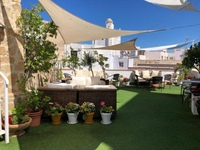
A charming hotel that is ideally located in the heart of the historic old town of Cadiz, which enraptures the traveller with its warm mix of Andalucian, colonial and classical styles.
A charming hotel that is ideally located in the heart of the historic old town of Cadiz, which enraptures the traveller with its warm mix of Andalucian, colonial and classical styles.
These two-wheeled upright electric vehicles. If you have never ridden one you will be surprised how quickly you can master the Segway. You simply stand on them and hold the handles of the vertical column to steer. Standing still on the spot requires a little more practice.
Although Cadiz city is smaller than the other provincial capitals, it offers some good live music opportunities. Venues where you can see pop, rock, jazz and flamenco performances include Sala Supersonic, La Posada de Babylonia and Momart Theatre.
The main annual music event in Cadiz is the Carnaval, held in February. The singing competitions performed by various different types of groups, known as the COAC, take place in the Gran Teatro de Falla over the three weeks before Carnaval itself takes place.
Cadiz cruise terminal is conveniently located just 5 minutes walk from the city centre and even more conveniently, perhaps, is the Hop on Hop off bus that stops outside the terminal. A handful of cruises stop here every month during the summer periods, however the dock is noticeably quieter in the winter.
The Real Club Náutico de Cádiz originated in 1868 as a Regata Club, its main purpose being the promotion and practice of nautical sports activities and maritime rescue. In 1884 another sports society was born with the name of Círculo Náutico, and its purpose was the practice of this sport. The merger of these two companies gave rise to a new entity that began to function in 1903, with the name of Sociedad de Regatas y Club Náutico and changes its name in 1913 to the current Real Club Náutico de Cádiz as a result of consent in holding his presidency SM, King Alfonso XIII, granting the title of Royal to the entity.
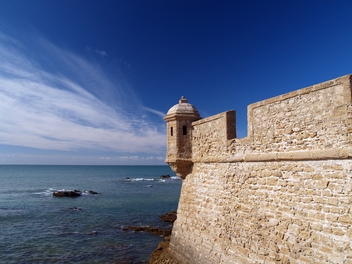
The leisure port’s proximity to the historic and monumental center of the city is one more incentive to the stopover at this port. Cádiz has a lot to offer culturally, but it also offers fun and spectacular cuisine with its seafood and fish. The Bay of Cádiz is one of the most suitable places for sailing, comprising a large area of water open to the west that closes the castle island of San Sebastián to the east, the outer bastion of the eighteen defenses of the Bay of Cádiz. It is ideal for all kinds of water sports.
The coach station for coaches to other cities and other towns in the area of the Bay of Cadiz is located near the entrance to the old walled city to the east overlooking Cadiz bay.
Cadiz is believed to be the oldest city still standing in Europe. Its history is marked by its strategic military and commercial location on the Atlantic Ocean and at the entrance to a large sheltered bay. The settlement was founded by Phoenicians from Tyre (modern day Lebanon) following the Trojan War in about 1.104 BC.
The city town hall overlooks the Plaza San Juan de Dios and was constructed in two stages, the first in 1799, the latter in 1861.
This hospital has a brilliant El Greco of St Francis in Ecstasy, depicting the grey-cloaked saint experiencing a mystical vision.
A couple of blocks west of the Oratorio de San Felipe Neri is Calle Ancha, the main street of late 18th and early 19th century Cadiz. The cafes and bars here were the unofficial gathering and debating places for members of the 1812 Cortes.
The original simple chapel here was founded by a Philippine community around the year 1671. Transformation began in the year 1688 at the hands of the master builder, Blas Díaz, and were finished for its inauguration in 1719.
This church is divided into two very distinct parts: the gloomily simplistic oval 18th century chapel with only a crucifixion sculpture; and the contrasting upper floor, elegantly decorated and containing some fine Goya paintings depicting the Miracle of the Loaves and Fishes, the Guest at the Wedding and the Last Supper. An excellent free guide is given upon entry.