Montejaque
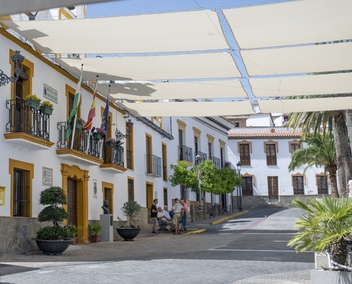
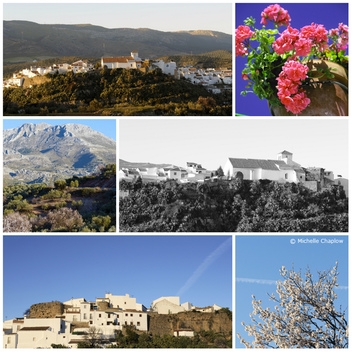
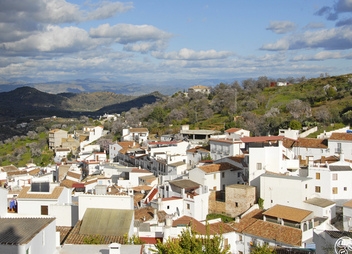
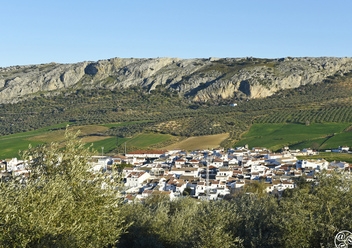
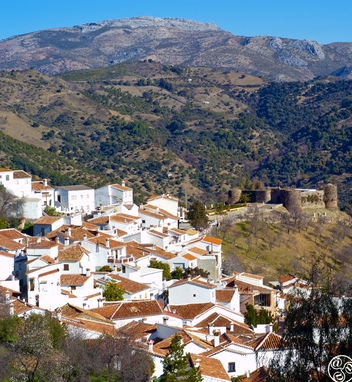
As in all the pueblos blancos, Montejaque dates from the time of the Berber settlers, after the Moslem conquest. Located in a semi-hidden bowl hidden by circular rocky outcrops, it overlooks a small fertile valley of olive groves.
As in all the pueblos blancos, Montejaque dates from the time of the Berber settlers, after the Moslem conquest. Located in a semi-hidden bowl hidden by circular rocky outcrops, it overlooks a small fertile valley of olive groves.
Though only a small pueblo of less than 220 inhabitants, Parauta’s municipal district of 44 square kilometres stretches from the wooded Alto Genal valley and deep into the rugged limestone Sierra de las Nieves Natural Park. As at Igualeja, the traveller would hardly notice they are passing through the district, unless they stopped at the rustic service station on the San Pedro-Ronda road.
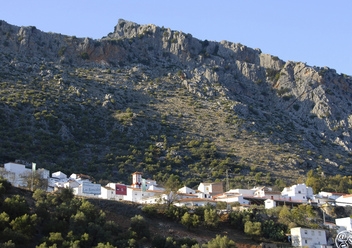
This mountainous town on the road between Ronda and Coín is dominated by the limestone outcrops of the surrounding mountains of the Serrania de Ronda. The bizarre rock formations of El Torrecilla (1900m) and its surrounding parque natural overlook the town and provide the source for the Río Turón that runs through it.
Guaro is a modest white village on the edge of the Sierra de las Nieves natural park. Thanks to its elevated position, at over 350 metres above sea level, the village offers privileged views across the surrounding countryside. Some of the best vistas are from its 16th century church of San Miguel, found at the top of the village’s narrow, winding streets.
Atajate is both a municipality and a tiny village in Málaga’s Ronda mountains (Serranía de Ronda). The village itself is part of the White Pueblo Route and is home to under 200 people, known as Atajateños. It’s known for both its beauty and natural surroundings.
Arriate is a jack-in-the-box; a surprise package in a plain wrapper. Enter it from any direction, and it appears to be a sleepy rural village waiting, with no sense of urgency, for its grass to grow and its paint to dry. Then, abracadabra! - a corner is turned and the visitor is suddenly thrown into the sophisticated high street of a chic and bustling small town.
Casarabonela geographically belongs to the Hoya de Málaga valley and the fertile valley that leads down to the coast, although the upper reaches of the municipal district touch on the mountainous region of Ronda and it falls in the administrative district of Yunquera.
The village of Cuevas del Becerro, 733 metres above sea level and sitting quietly beside the Ronda to Campillos road like a retired highwayman dreaming of his fiery youth, is living proof that in the hills of Andalucía there is always more to the landscape than meets the eye.
This mountain village is one of the most isolated in the Serrania de Ronda. It lies a long and windy 11km from the A-376 San Pedro-Ronda road, beyond the village of Igualeja. With a 4x4 or taking it slowly, a basic 'Jubrique track' leads over the mountains from the MA-8301 Estepona - Jubrique road. It can also be reached via another track from Juzcar and across the Rio Genal.
The village is tucked away beneath the Sierra Blanca at the head of the valley of the Rio Verde. To reach Istan, leave the old N-340 coastal highway onto the A-7176, west of Marbella on the Golden Mile just beyond the Hotel Puente Romano and near the Mosque.
Monda is a tiny town (or large village) in the mountains just inland from the Costa del Sol. Situated past Ojén on the A-355, it lies a mountain valley at 365m and has a population of less than 2,000. It is well-linked by road with Marbella, just 15km away, as well as Coin and Cartama (for Malaga). Thanks to development on the nearby coast over the last few decades, the town has enjoyed new prosperity.
Benadalid is a village that is working hard to develop its reputation for quality rural tourism. With a perfect location, this has not been difficult as the town is situated in the Genal River Valley and close to the Guadiaro Valley and surrounded by Cuco mountains and near the “Tajo de los Aviones” and “Tajo de la Cruz” gorges.
Sandwiched between the Alcornocales natural park and Sierra de Grazalema natural park in the far western reaches of Malaga province is the pueblo blanco (white town) of Cortes de la Frontera. It is in a superb vantage point overlooking the sweeping Guadiaro valley below, with a spectacular backdrop of the Serranía de Ronda mountains.
Set below the heights of the Serranía de Ronda and the start of the Hoya de Málaga range, this pueblo sits between El Burgo and Alozaina on the Ronda-Málaga road. It is a relatively large village with today over 3,000 inhabitants. The surrounding peaks reach over 1500m and winter snows cover them for two or three weeks each year.
As the name suggests (the prefix Ben- found across the region derives from the Arabic 'ibn', 'son of'), this is another village of Moorish origins. Located very near to Montejaque, the settlement can be found in two halves. The original village was built on a mountainside with the lower community in the Guadiaro river valley that grew up around the railway station.
Tolox lies between the rio de los Caballos and the rio de los Horcajos at the end of a side road hanging like a loose thread from the C-344 Málaga-Ronda highway. When they reach the village the two rivers call a truce and combine to form the rio Riachuelo.
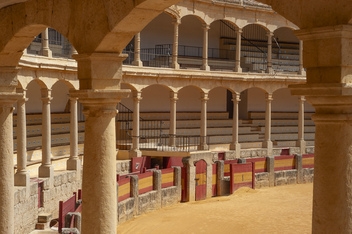
Inaugurated in 1785, Ronda's Plaza de Toros is one of the oldest in Spain, younger and smaller than that at Sevilla, but home to one of Spain's most famous 'schools' of bullfighting, on foot rather than on horseback as at Jerez and Sevilla.
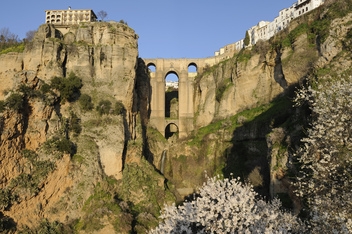
Puente Nuevo, Ronda's 'new bridge' was completed in 1793, after 40 years in construction and after the loss of the lives of 50 builders constructing the span bridging the 98m Tajo gorge. The bridge bisects Ronda into new town (mercadillo, 'little market') and old (La Ciudad). The project was first proposed by King Felipe V in 1735.
The Balneario de Fuente Amarga (Bitter Fountain) was established in 1867 and its waters declared for public use in 1871. It is located in the village of Tolox one hours drive inland from Marbella or Malaga at 360 meters above sea level at the entrance to the Sierra de la Nieves Natural Park and has clear air, a splendid warm climate, abundant water and green vegetation - a sheer delight in contrast to the pollution and stress of modern life.
Dolmen remains across the Rio Genal valley record Neolithic habitation here. The town hall suggests that Roman and Visigothic remnants can be found in the area, although this claim lacks substance.