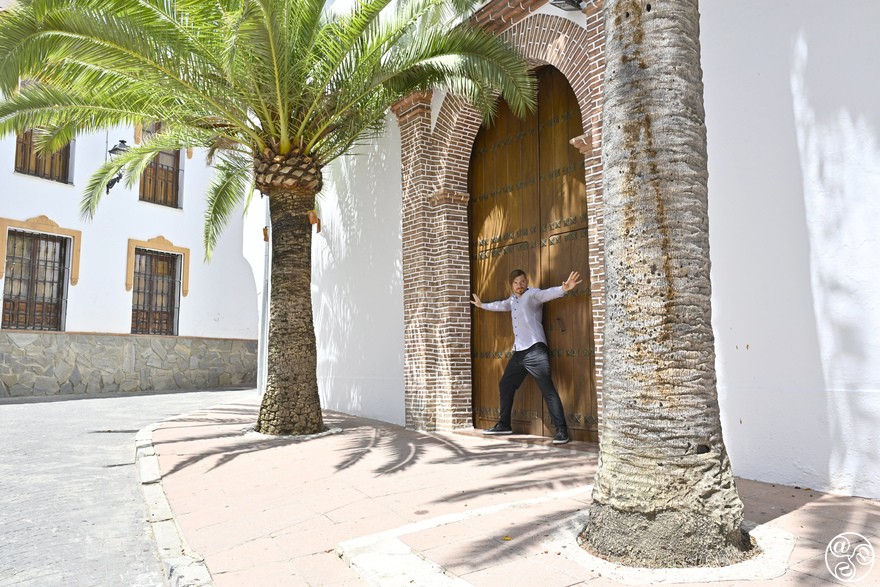
 Austin-based artist Donovan Keith in Montejaque Andalucia © Michelle Chaplow
Donovan Keith interview
Known for his soulful vocals, dynamic stage presence, and infectious energy, Austin-based artist Donovan Keith first made his mark on the music scene as the frontman of Soul Track Mind before launching a vibrant solo career that seamlessly blends R&B, funk, and roots soul.
While Keith has built a strong reputation across the United States, he has also forged a deep connection across the Atlantic with Southern Spain. Introduced to the region through the Pueblos Blancos Music Festival —a cultural exchange celebrating music across the picturesque (white villages) of the Serranía de Ronda, he has become a returning favorite on Andalucian stages. Beyond the performances, Keith’s frequent visits have fostered a personal affinity for Andalusian culture, landscape, and community, making his return to Spain feel like a true musical homecoming.
Andalucia.com first enjoyed Donovan’s high energy performance in the sleepy village of Estacion de Jimera de Libar in 2024 and Ronda and Montejaque in 2025. We interviewed Donovan when he returned to play at Louie Louie in Estepona in August 2026.
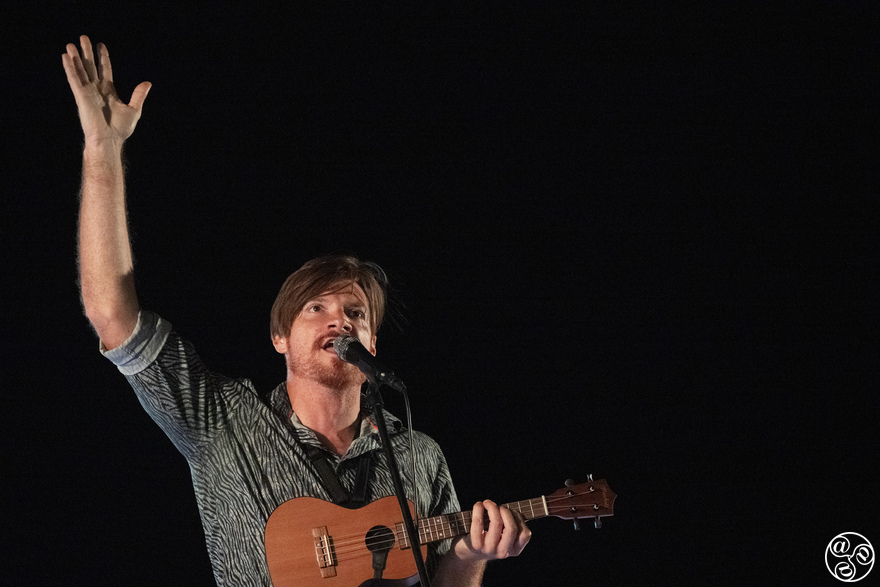 Donovan Keith, a R&B/Soul artist from Austin Texas in stage in Ronda © MIchelle Chaplow
Early Career & Vocal Beginnings
Hi Donovan, Congratulations on your successful mini tour of Southern Spain with three official and one unofficial performances at the pueblo blancos music festival and follow on gigs in Granada, Malaga and Estepona. Let’s start at the beginning.
AC: Where did you grow up?
Thanks, I was born in a steel mill town called Granite City, a suburb of St. Louis Missouri. That is right in the middle of the US, so I am often referred to as ‘Midwest - born and raised’. I lived there until I was about 13.
AC: Could you describe the town, the environment, and what life was like there?
My early environment was dominated by this blue-collar steel mill town, it was all kind of industrial working-class folks. Granite City is on the other [east side] of the Mississippi river from St Louis in Illinois.
When I was about 13, I also experienced life in South Bend in northern Indiana, east of Chicago. It was about a 7 hour drive by car from St. Louis. I lived between those two places and went to high school and college in South Bend.
South Bend is where Notre Dame University is. I did not go to Notre Dame, obviously, but it was a kind of really nice, college town with a budding kind of energy. I went to a large high school with more privileged and wealthier kids.
So going from a working-class town to a town that had a future, I think made a difference with my ability to be able to dream and, and imagine dreams.
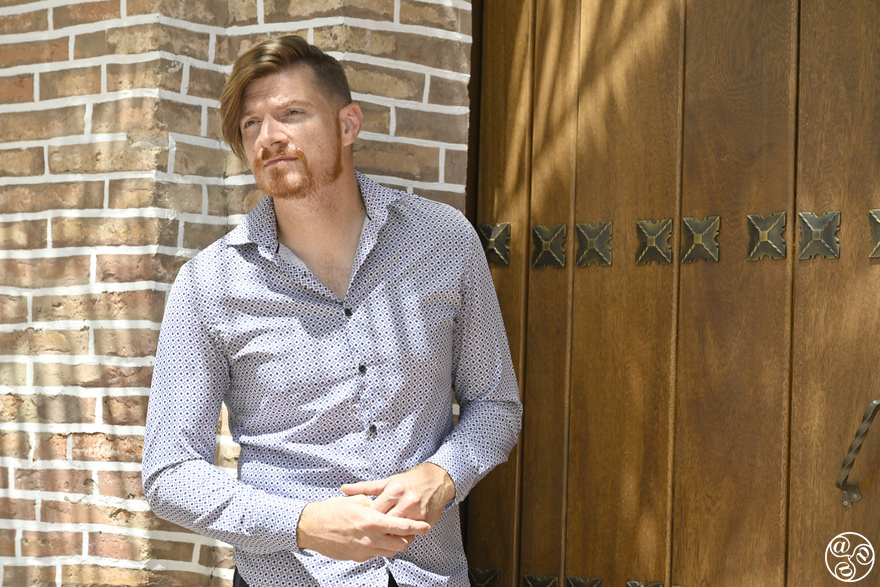 Donovan Keith in Andalucia for the Pueblos Blancos Music Fest © Michelle Chaplow
AC: When did you get into music, singing and playing?
I remember I used to listen to the oldies radio station in St. Louis called KSUE 103, every day, since I was four or five years old, so that's all the music influences.
But the actual music, singing, and performance came a bit later. It came from the theater. I enjoyed theater in high school and I was more or less like a goofy, high-energetic kid who listened to a lot of music influenced by my parents and my brothers, a more classical influence.
I developed my voice naturally, doing theater. I was questioning whether in the future being a stage actor was something I was really cut out to do. And in that process, I had a much stronger emotional pull to do music as a performance style, even though I'd never been in a band or choir before.
AC: Who were your main influences growing up?
There were a couple of different influences that made me; movies and TV shows and things like Blues Brothers. Commitments is a band I remember seeing as a young kid, playing classic soul in a modern way.
All those things influenced me and I saw some live performances where young kids my age sang in an amphitheater full of 1,200 people all dead silent, and they managed to move people emotionally.
That's what kind of inspired me and as time went by and led me to wanting to pursue music more as a profession.
Taking that leap to move halfway across the USA without knowing anyone or having led a band before takes immense courage—what gave you the faith to form Soul Track Mind?
I had a mentor, a blues singer, and I met him years ago, his name's Earl Thomas. I first met him in person in 2019. He was an artist whose music I had listened to over and over. I first got to know him when he was a suggested artist on a download music site, because I listened to Otis Redding.
Earl Thomas had a blues album that had some very soulful songs on it. So, over one summer I was listening to his music and then decided to experiment with MySpace (Easly Social networking and publishing site popular with musiciansthat peaked in the mis 2000s).
I sent him a message randomly when I was at the end of college and unsure what to do, but thinking about going down the music route. I sent him a random message asking him to listen to my tracks, and to tell me if I had any talent. He finally, got back to me a couple months later and told me, “You know, I like your voice, it's raw, but you have potential, do you write your own songs?
I sent him some of the songs I had written and he really connected with one particular song called Little Red Heart. That ended up being a song on my first album. Earl was the one that gave me the confidence in a really small town, where my family and my friends didn't really understand what I was doing, because they only knew me as the “actor”. They'd never seen me sing, but in my head, it was what I wanted to do.
So, if one guy who's an established blues artist, who's played Montreux Jazz, tells me I'm good enough, then I'm good enough. I don't need any other validation. He gave me advice on places to go, and he suggested Austin. I just moved down there, with my $5,000 saving on a whim, without knowing anybody and slowly put a band together. Over the years, he was a mentor who helped me avoid a lot of early pitfalls, and whenever I had problems, he was there to help.
AC: Tell me about your first band and why did it eventually come to an end?
That band was Soul Track Mind. I did it for about eight years; there was one solid band I started with for three years, and then following a bust up, I replaced most of the people in the band and kept going for another three.
Then I decided to keep going under my name. It was a hard start at first, because people didn't really know what I was doing. You build up a whole reputation under one name, and then you just pivot. Some of the venues didn't trust that my new things were going to work. It took some time. I got it back.
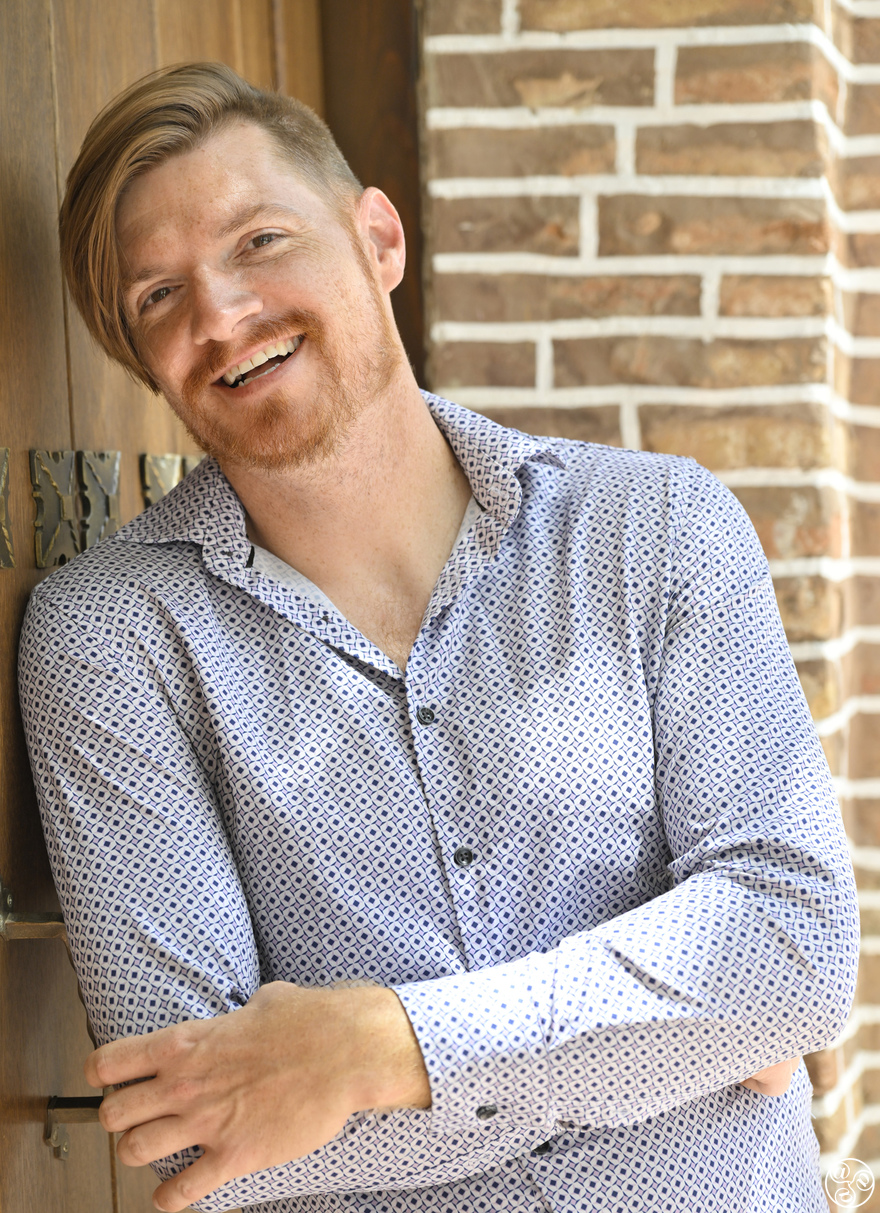 Donovan Keith © Michelle Chaplow
The Ukulele & Stage Energy
Your ukelele has practically become a signature good luck charm that follows you everywhere. We know you fell in love with it while staying with a local Spanish family on their ranch, playing music with their daughters. At the same time, critics consistently describe you as "the man who never stops moving" due to your high-energy dance routines and stage acrobatics.
AC: Tell us more about that magic moment on the Spanish ranch when you were introduced to the ukulele and decided to bring it into your live sets.
A horse training family migrated from Germany maybe 20 years ago or so, and had a ranch outside of Ronda. They came to Pueblo Blancos my first year that I came to play, and it was a mother and her two twin daughters. They heard me playing at the end of my set, and really liked it, so they decided to come into the theater and sit on the stone steps. They really liked it but they didn't catch the whole show. It was only a couple of the ending songs, but they really liked what I was doing.
Joe King Carrasco played after us and his sets were all energetic and fun. Sometimes you feel a certain energy where you find yourself attracted to people, and don't really know why. When you pick people out of a crowd sometimes, there's a certain energy. I picked the mom and I started dancing and talking with her and we really hit it off. And then I danced with the daughters as we all partied to Joe King's music.
Afterwards, they said, "Hey, we have a ranch," and she pointed over the cliff in the distance. “And it's just over that mountain. The next time you guys come back, you can come ride horses on the ranch.” So, I did that, although the rest of the band didn't go as often.
I really resonated with that family. I seemed to win back a lot on my own time. I even went on a solo trip and visited them by myself. Once I went and it was the twin daughters birthday, so I set off to get them a gift.
I went to a music store and I remembered that one of them talked about her dream of horseback riding while playing a ukulele in a traditional Spanish dress. So, I bought them a ukulele, and in the process of teaching them how to tune it and play it, I discovered how easy it was and really enjoyed it. When I went home to the States after that trip, I bought myself one.
How do you physically train and maintain vocal control while constantly dancing and leaping around on stage?
I've been doing this for so long that your muscle memory just kicks in. But I've also paid a lot of attention to diet and sleep and I've really focused a lot the last several years on longevity. Exercising, but not doing extreme stuff like the guys who want to lift weights all the time. I prefer working out lightly and as long as it's heavy enough to push. I don't do heavy weights or anything. Mostly a lot of calisthenics, body-weight exercises. Most importantly, I focus on sleep and a proper diet and nutrition.
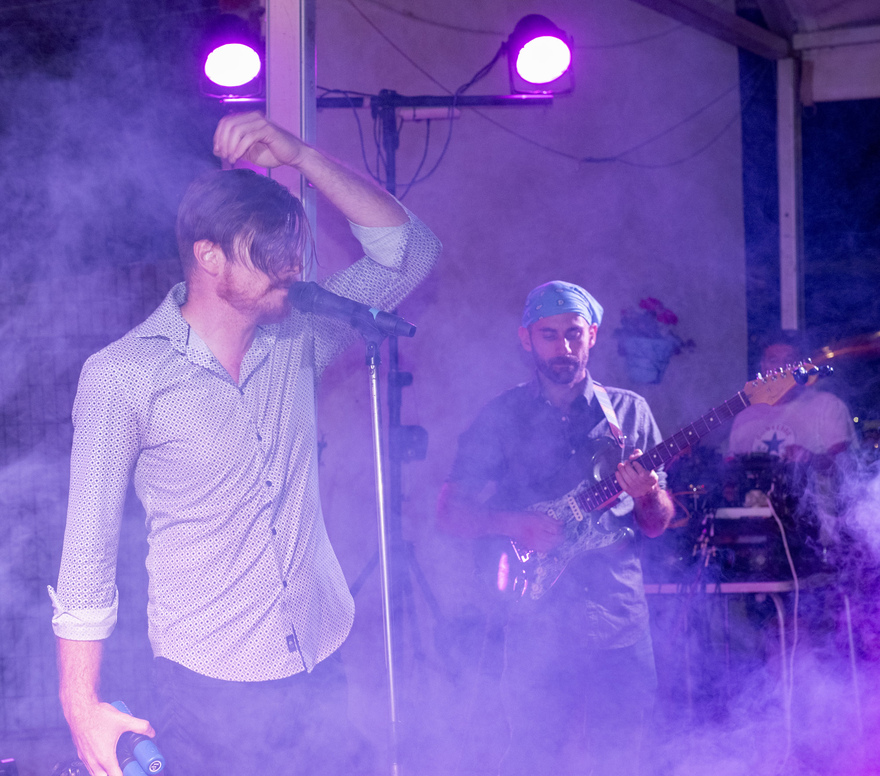 Donovan Keith, a R&B/Soul artist from Austin, Texas, he is known for his dance-infused stage show © MIchelle Chaplow
Connecting with Andalucia & Stage Dynamics
You’ve become a beloved regular in Spain through the Pueblos Blancos Music Festival, bridging the gap from Austin to Andalucia. Over your career, you've opened for massive arena acts like Erykah Badu and Enrique Iglesias, yet you regularly play intimate village squares across the Serranía de Ronda and local spots like Louie Louie in Estepona.
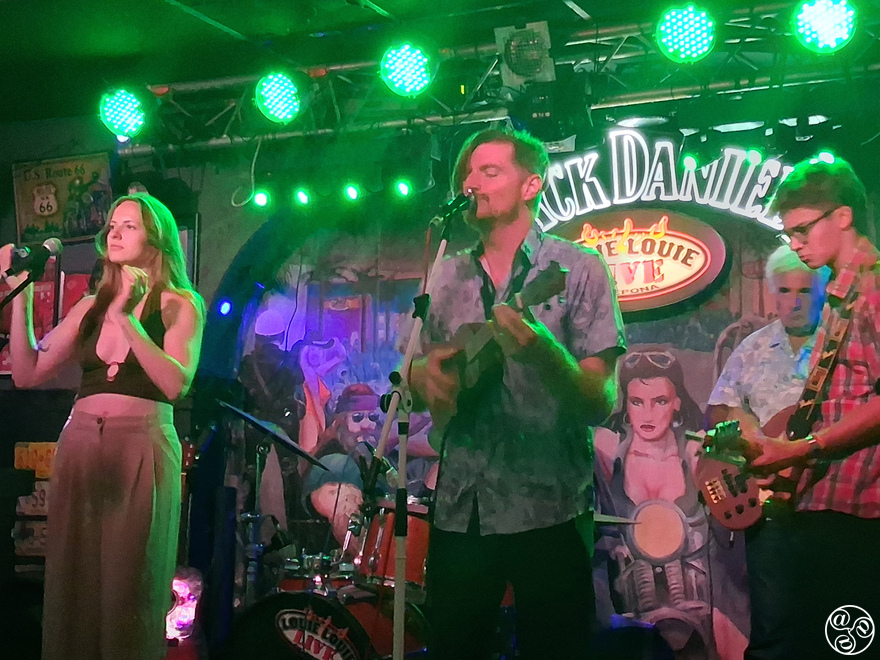 Alice Jacobsen (left) Donovan Keith (centre) Diego Castillo-Olivares (right) at Louie Louie
AC: Was the Pueblos Blancos Music Festival your very first connection to Andalucia and Spain? What keeps bringing you back year after year?
Yes, in 2019, that was the first time I connected with a European audience really. I met Phil Plata, the founder of the Pueblos Blancos Music Festival in Austin in December of 2018. He was drumming in a band and we were on the same billand we jammed together. Then a couple months later, in February of 2019, he invited me to come to Pueblo Blancos. Normally, I wouldn’t have had the time or the money, but because I had just won some grant money from a nonprofit in Austin. I was like, "Yeah, all right, let's do it."
That’s what opened up the opportunities to play for Andalucian audiences, and it changed my perspective of what I could do as a musician, rather than trying to grind in the United States or Texas, where people are a bit less appreciative.
AC: Music is a universal language, but how does connecting with an Andalusian audience—where English might not be everyone’s first language—change how you communicate on stage? Has performing in Spain changed how you interact with crowd energy back home in Texas?
The thing about Spain is that they're traditional, passionate and emotional, and sometimes that can be difficult, and likewise it's what we love about them. I noticed it in Cortes (Cortes de la Frontera), a couple of years ago. People and local kids would wander down the square and because there was somebody on, they would stop to watch. "Wow, these are very good, these people!"
There's really nothing like that festival. I mean, the dynamic between the community, musicians and personalities. There are so many saints, Josu Camacho and his daughter Paula, Juan de Castro, Phil Plata, Karen, Paul, Owen… All the volunteers that don't get paid and just stay out in the hot sun all day. I mean, there's really nothing else like it that I've seen, festival-wise.
The villages are pitching in now, because they're used to hosting it. Change is always difficult in a very traditional society, and I think the first couple years were difficult for them to understand what we were doing. But now that the community sees we have nine years of a track record, they think, "Okay, let's do that again."
Personal Andalusian Favorites & Life on the Road
We are so pleased to see you back in Spain as a regular visitor. Beyond the stages and shows, we’d love to know what Andalucia feels like to you on a personal level.
AC: What are your overall favorite places in Andalucia?
Village wise, Montejaque has a special place in my heart, and I think for a large city, I really enjoy Malaga, where we are playing on Saturday. I've been to Marbella, but I think Estepona is a bit calmer for me. In terms of Marbella and Ibiza and all that jazz, I'm like, "Yeah, yeah, okay, that's nice." But this is a bit more low-key, and I think I prefer a small town. I always look forward to coming down here (to Estepona) as part of the vacation after.
AC: To wrap up our chat today, what are five words that describe what Andalucia means to you?
Wow, Andalucia in a few words. Warm, passionate and traditional. Actually, I would say family too, but as a more descriptive word… Family-oriented.