 |
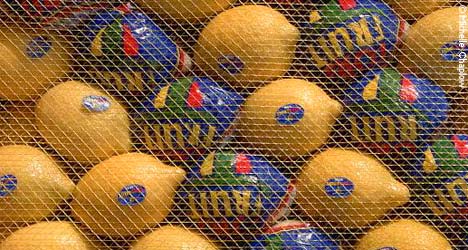
| Spain is one of the largest producers of citrus fruits in the world |
Overview of Economy
Spain’s economic narrative is one of profound transformation. Once a highly protected, state-heavy economy recovering from the deep recessions of the early 1990s, the country has navigated a turbulent quarter-century defined by the integration of the European Single Market, a massive property crash, a decade of strict austerity, and a remarkable post-COVID-19 resurgence. Today, Spain stands as one of the Eurozone's most dynamic major economies, balancing its traditional structural strengths with new leadership in green energy, technology, and advanced manufacturing.
The Regional Pillars and the Shift in Corporate Power
The geopolitical weight of Spain's economy remains anchored in its traditional industrial heartlands, though the landscape has broadened. Catalonia—with its economic engine centered in Barcelona—and the Basque Country remain premier industrial hubs. Alongside Madrid, Navarre, and Asturias (formerly referred to by its capital, Oviedo), these regions historically drove over half of the nation's industrial output. Catalonia, in particular, continues to be a vital powerhouse for logistics, chemicals, and manufacturing.
However, the corporate ecosystem has changed beyond recognition since the privatization wave of the late 1990s. The era when Spain’s largest entities were loss-making, state-owned enterprises in heavy industry and aviation is long gone. Flagship firms like Telefónica, Repsol, and Endesa were fully privatized and evolved into aggressive multinationals.
Furthermore, Spain shattered the old critique that it lacked global consumer and manufacturing giants. Inditex (Zara) grew into the world’s largest fashion retailer, redefining global supply chain logistics. In the energy sector, Iberdrola transitioned from a domestic utility into a global superpower in wind and solar energy, spearheading Spain’s status as Europe’s renewable energy laboratory.
In the early nineties, Spain experienced one of the worst recessions in the EU, resulting in falling output, reduced investment, an increasing public deficit, numerous bankruptcies (including the spectacular failures of Torras and Banesto), and rising inflation. In 1993 it was also the end of the seven year EU 'honeymoon' transition period, during which the country's tariffs and quotas on EU imports were phased out, thus exposing the economy to the full force of EU competition. Huge investment was needed for Spain's infrastructure, including roads, railways, airports, water supply and communications and the country received $22.8 billion between 1995 to 1999 from the EU specifically for this purpose.
Spanish industry was firmly rooted in small and medium sized family concerns and has only three companies in Europe's top 100 (Telefónica, Endesa and Repsol) and a further six in the top 300 (five banks, plus Iberdrola). It's significant that Spain's economy hasn't got one manufacturer among Europe's largest companies and most manufacturers are too small to compete globally. Spain has relied heavily on foreign investment (three-quarters of it in Barcelona and Madrid) for much of its recent growth, although many investors turned their backs on Spain during the recession. Over 30% of Spanish industry was foreign-owned, including some 50% of its food production which is mostly French owned.
In the early 90´s the government started the long process of privatising state owned companies, commencing with Argentaria (banking), Repsol (petrochemicals) Telefonica (telecomunications) and Endesa (electricity). Spain's dependence on agriculture has diminished in the last few decades, while tourism and other service industries have grown considerably in importance. In 1993 agriculture accounted for just 3.5% of GDP and employed some 10% of the workforce, almost half of the figure for 1985 and down from 27% in 1960 when around 40% of the population worked in agriculture). One third of the workforce is employed in industry, while services account for some 60% of jobs.
Spain's economies most important industries include tourism, chemicals and petro-chemicals, heavy industry and food and beverages. Spain is also Europe's fourth large manufacturing country after Germany, France and Italy. The principal growth areas include tourism, insurance, property development, electronics and financial services. Tourism is one of Spain's most important industries, especially in Andalucia, earning about 4% of the GDP and employing some 10% of the workforce, both directly and indirectly.
The country is also the world's largest producer of olive oil, fourth largest of dried fruit and the sixth largest of citrus fruits. Spain's vineyards are the largest in the world and some 60% larger than France's, although it's only the fourth highest producer of wine-grapes and ranks third in wine production. Other important crops include barley, wheat, maze, rice, potatoes, sugar-beet, peppers, avocados, tomatoes, tobacco, hops, oil bearing fruits and cork. Spain has over three million hectares of land under irrigation and employs widespread artificial watering which often isn't cost effective. Spanish farmers have been particularly badly hit by falling prices and drought in recent years.
Chronology of Crisis and Recovery
The path to modern Spain was forged through successive economic trials that reshaped its financial and social fabric.
2008 – 2013: The Great Recession & Property Crash
Following years of cheap credit under the Euro, Spain’s massive real estate and construction bubble burst spectacularly. The collapse triggered a deep financial crisis, causing GDP to contract by nearly 9%. By 2012, systemic rot in the savings banks (cajas) forced the government to accept a €41 billion European banking bailout to prevent total collapse.
2010 – 2019: The Austerity Era & Structural Rebalancing
Faced with soaring deficits, Spain implemented severe public spending cuts, slashed social benefits, and introduced deep labor market reforms. Unemployment peaked at a crippling 27% in 2013 (exceeding 50% for youth). Out of this pain, the economy re-balanced: private debt fell sharply, and Spanish firms pivoted to export markets, sparking a gradual, competitive recovery.
2020 – 2026: The Pandemic Shock to the Post-COVID Boom
The COVID-19 pandemic dealt a historic blow, collapsing GDP by 11% in 2020 as international travel ceased. However, fueled by billions from the EU’s Next Generation EU recovery fund, Spain engineered a brilliant rebound. By 2025 and into 2026, Spain emerged as the Eurozone's growth leader, outperforming Germany and France with robust GDP growth driven by a diverse services export boom, digital investment, and strong domestic employment.
Sectoral Realignment: Services, Tourism, and High-Tech Industry
Spain’s macroeconomic architecture has settled into a mature, service-dominated model. While small and medium-sized enterprises (SMEs) remain the backbone of local employment, they are increasingly integrated into global digital platforms and European supply chains.
Services and Tourism
The service sector now commands roughly 77.5% of total employment and GDP. Tourism remains an indispensable pillar—particularly in regions like Andalusia, Catalonia, and the Canary Islands—contributing between 12% and 14% of GDP. However, the sector has shifted focus from low-cost, mass tourism toward high-value, sustainable, and cultural tourism. Principal growth areas have expanded from basic insurance and property development to fintech, software development, logistics, and green hydrogen technology.
Manufacturing and Technology
Spain maintains its position as a major European industrial hub, standing proudly as Europe’s second-largest automotive manufacturer after Germany. The old handicap of "outdated industrial plant" has been resolved via intensive automation and foreign investment. Global tech companies now view Spain as a primary European hub for data centers and digital infrastructure.
Agriculture: Global Leadership Amid Climate Realities
Agriculture’s share of the economy has naturally contracted to roughly 2.5% of GDP, yet Spain’s role as the "orchard of Europe" is undisputed. The nation remains the world’s undisputed king of olive oil production and a top-tier global exporter of wine, citrus fruits, and fresh produce.
However, the historical reliance on un-cost-effective, intensive watering has clashed directly with climate change. Facing prolonged droughts and rising temperatures, particularly in the southern half of the peninsula, Spanish agriculture has undergone a forced technological revolution. Traditional watering has given way to advanced, computer-controlled drip irrigation, desalinated water networks, and smart glasshouse farming, turning water management into a highly specialized technology sector.
Labor Market and Fiscal Outlook
For decades, the single largest drag on the Spanish economy was its rigid, dual labor market, which fostered an unsustainable reliance on precarious, temporary contracts. A landmark Labour Reform in 2022 fundamentally reordered these laws, heavily disincentivising temporary hiring and converting millions of workers into permanent staff (indefinidos). This structural adjustment, paired with robust economic growth, pulled Spain’s chronic unemployment rate down to 9.9% its lowest level since the pre-crash era of early 2008.
While public debt and fiscal deficits remain legacy challenges from the crisis years, the modern Spanish economy has proven it can live within its means while transforming. It has successfully shed its 1990s vulnerabilities to become a highly competitive, tech-forward, and resilient player on the global stage.