LA Almazara Olive Oil Mill, Ronda - by Philippe Starck
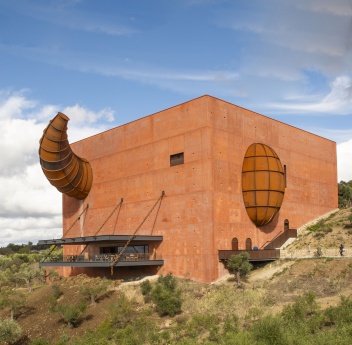
The LA Almazara Olive Oil Mill just outside Ronda is designed by Philippe Starck to provide an immersive experience that captures the essence of extra virgin olive oil.
The LA Almazara Olive Oil Mill just outside Ronda is designed by Philippe Starck to provide an immersive experience that captures the essence of extra virgin olive oil.
For a real performance of the most noble and classical kind, no one should miss the magnificent stallions of the Real Escuela Andaluza del Arte Ecuestre, the Royal Andalusian School of Equestrian Art.
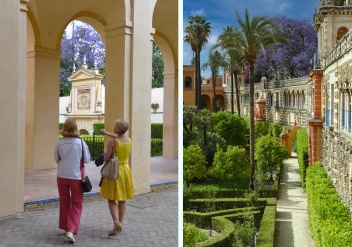
The Alcázar Réal (Royal Palace) of Seville is one of the city’s most enchanting, and most popular, historic monuments. Along with the Cathedral and Archive of the Indies, it is recognised as UNESCO World Heritage. The word alcázar actually means fortified palace, and this one is hidden behind castle walls on Plaza del Triunfo opposite the Cathedral.
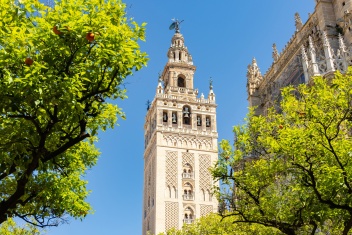
The cathedral's construction lasted over a century, from 1401 to 1506. It is said that when the plans were drawn up, church elders stated, "Hagamos una iglesia tan hermosa y tan grandiosa que los que la vieren labrada nos tengan por locos." (Let us build a church so beautiful and so magnificent that those who see it finished will think we are mad).
The Nájera Palace has a brick façade, a cloistered courtyard, and a staircase decorated with Baroque plasterwork. Its tower, designed by Nicolás Mejías, exemplifies the predominant civil tower style in Antequera during the 18th century.
The Archivo Histórico Municipal houses a large collection of historical documents, including manuscripts and printed books dating from the 15th to the 20th century, offering resources for researchers and historians.
This Museo de Arte de la Diputación showcases works by artists and provides a platform for contemporary artistic expression in the area. It is housed in a late 18th-century building originally commissioned by Don Juan Manuel de Colarte y Lila.
The Museo del Aceite-Hojiblanca is dedicated to the area's olive oil production. Visitors can learn about the history of olive cultivation and traditional pressing methods in Andalusian culture.
Antequera offers a variety of museums that reflect its cultural heritage, artistic traditions, and historical importance.
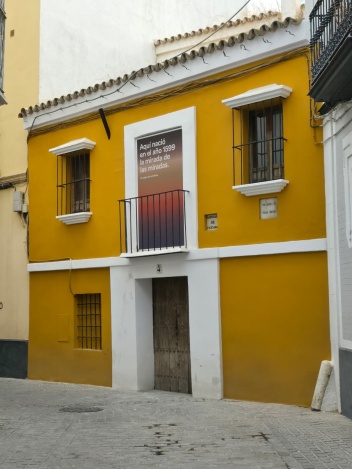
Casa Natal de Velazque, is the birthplace of the famous influential painter, Diego Velázquez. The building is soon to be turned into a museum.
The art museum has been open since August 2004 and was donated to the town by José Antonio Jiménez Tovar.
This museum exhibits musical instruments from 'El Viaje de Lúa', a journey around the world through rhythms and melodies, and the materials used to make instruments for liturgy, spiritual invocation, courtship and entertainment. Some of the materials used in their construction include wood, cane, bamboo, gourds, coconuts, seeds, skins, bones, horns, clay and metal.
This museum uses a series of interesting murals and models to show mercury mining in Tímar, from the extraction of cinnabar ore to the operation of the production factories, as well as various economic and cultural elements of this region, such as looms, silkworm breeding, traditional songs and different farming tools.
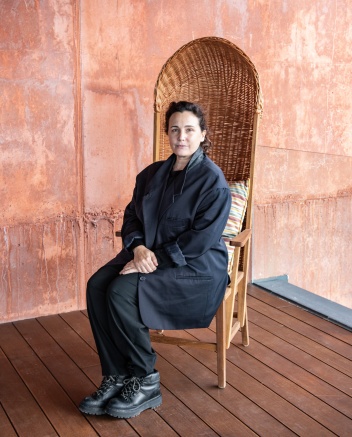
Ara spoke to us at the inauguration of La Almazara Museum, and her enormous mural on the ceiling of the museum and restaurant.
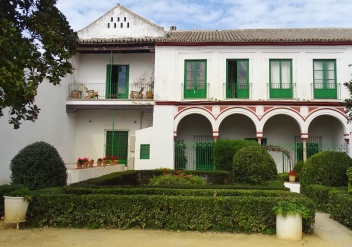
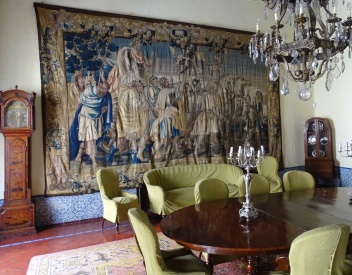
Seville has its fair share of magnificent family-owned palaces – In summer 2023, another such monument opened to the public for the first time: Palacio Bucarelli.
This collection of Sevillano costumbrista paintings, sculpture, furniture and porcelain is on show in a mansion in Barrio Santa Cruz. Donated to the city by the art collector Mariano Bellver, this collection of 567 works encompasses painting, sculpture, porcelain and religious pieces.
The International Museum of Naive Art, also known as the International Museum of Naive Art “Manuel Moral”, is an art gallery situated in the left wing of the Villardompardo Palace. The collection was initiated by Manuel Moral Mozas, a naïve style artist from Torredelcampo, who donated his private collection to the Provincial of Jaén.
The building of the Museum of Archaeology and Fine Arts, or simply Museum of Jaén, dates from 1920 and was designed by the architect, Antonio Flórez Urdapilleta. It is designed as a square footprint arranged around a central patio. The patio and interior portal, of the lost Iglesia de San Miguel date from 1561.
The only public center of photography in Spain, the Andalusian Center of Photography (CAF) is situated what was the once the Lycée Français of Almeria. It is a headquarters space created for different uses in which, in addition to exhibitions of photography of all styles and times, a photographic library is also offered to the public.
The Spanish Guitar Museum is more than a museum space; it is an exhibition and information center that through an entertaining and simple way, allow visitors to get to know one of the most popular musical instruments in the world: the guitar. There are various exhibition rooms with temporary and permanent exhibits, a multipurpose room.