Latest Pages

Latest pages

We are committed to updating our pages as regularly as possible, allocating over half of our editorial resources to this essential task, to ensure that you can always find the latest, most reliable information on popular topics and places.

Here is a list with the latest pages that have been updated or created. Most recent are at the top of the list.

Dólar

The name of this municipality has little to do with the American currency, as Dolar is a typical, unspoilt mountain village. It is located at the foot of Sierra Nevada, among pines and chestnuts. In fact, it is part of the Natural Park of the same name. The houses in Dolar are nestled at the whims of its geography, surrounding the peak.

Ermita de Nuestra Señora de la Cabeza

The chapel dates from the middle of the eighteenth century, according to the Cadastre of the Marqués de la Ensenada. The numerous religious offerings that are preserved in the sacristy of the hermitage, as well as the embossed silver lamp dedicated to the Virgin, from the year 1741, are proof of the local fervour for the Virgin. In 1956 and 1975, the dressing room was redesigned. In 1991, the chapel was restored and the dressing room underwent a third restoration. Located on Calle Carril de la Ermita.

Rota

Rota, an ancient town, stands at the extreme north of the Bay of Cádiz in a privileged position. The town opens out to the Atlantic and behind are two national parks, the Natural Park of the Bay of Cádiz and the Doñana. It is also a town of two extreme contrasts.

Escúzar

Escúzar is a village in Granada province located 24km from Granada city in an area of astounding natural beauty, with the Sierra de Tejada to the south and the Sierra de la Pera to the north.

History of Pulianas

The origins of Pulianas date back to the Roman period. Archaeological remains indicate it was established as one of numerous agricultural villages near Granada. Historians believe the municipality’s name may have two origins: Arabic and Roman. According to Seco de Lucena (19th century Spanish writer, journalist, lawyer and politician), in Muslim times, it was named Bulyana. This title was found in the Ihäta fi ajbär Garnäta by Ibn Al-Jatib (14th century influential cultural figure, historian and politician), which cites it as qaryät bulyäna. The opinion that the name is of Roman origin comes from the fact there is no direct Arabic meaning for the word Bulyana. This led to the conclusion, as with many others in the toponymy of Al- Andalus, that the name has an external, possibly Roman, origin.
Osuna

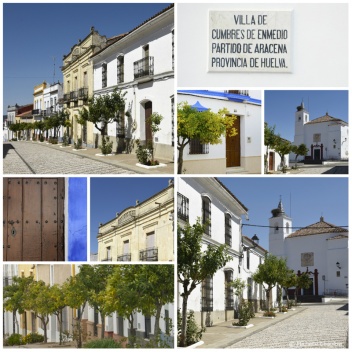
The town of Osuna is often compared to nearby Ecija, since both boast many fine baroque palaces, mansions and churches dating from the 16th to 18th centuries. Some scenes from Series 5 of the hit American TV drama series Game of Thrones were filmed here.

Flowers and invitations

You will want your wedding venue, and the location for your meal, whether a hotel, restaurant, function room (sala de celebraciones) or private house, to be decorated to reflect your own personal taste. Then you need to think about your own ramo (bouquet), which should reflect the blooms you choose to adorn your venue.

Tourist Office in Garrucha

Tourist Office in Garrucha is located at Centro Cultural Paseo del Malecón, 424630 Garrucha Almería.

Catedral de la Asunción de la Virgen, Jaen

Like most Andalusian cathedrals, the primitive cathedral of Jaén was created from a  former Muslim mosque. In the year 1492,  under the Bishopric of Don Luis de Osorio, work on a new church began by, Pedro López, with the help of Enrique Egas.

Carrera Del Darro, Granada City

Now we are ready to take one of the most picturesque and romantic walks in Spain, along the Carrera del Darro, the cobble-stoned street which over hangs the river and which was once one of Granada´s main arteries, leading to the vanished gate of Guadix and, from there, to the town of that name in northeastern Andalucia. First we pass old Granada´s last remaining arched bridges.

Cantoria

Cantoria is the town where Don Juan de Austria established his main encampment and where his troops actively participated in the expulsion of the Moors during the sixteenth century. It has around 3,200 inhabitants. The origin of the name of Cantoria is unknown, however, it is likely connected to the Moors, who called the town Canturia. Other sources suggest that the name relates to neighboring Oria, a Castilian name.

Silk painter in Seville - Silvia Ramos López

Trained as a chemist, Silvia has been painting silk for around 25 years. What started as a hobby is now her full-time job and she sells her hand-painted silk fans and scarves in her shop-cum-workshop in central Seville, close to the Setas (Metropol Parasol). The Cadiz native’s stunning designs, in bright colours and bold shapes, are inspired by nature, although she also does paintings and even makes fans for members of Semana Santa brotherhoods – both women and men

Alsodux

Alsodux, like many other villages in this part of Andalusia, is built around the site of an old farmhouse located strategically between the Nacimiento River and the entrance to Guadix. It has around 125 inhabitants. Historians have traditionally translated the village’s name as “sixth”, thought to come from the Arab word “al-sadis” or from “sodux” in the Andalusí dialect.

Puente Califalf, Pinos Puente

The bridge, which is classified as a Caliphate bridge, has been designated a Site of Cultural Interest since 1922. While the exact date of its construction is unclear, the bridge has undergone various reconstructions and alterations over the centuries, suggesting that it may have been built during the Roman era (Fernández, 2013)

Book your stay in Andalucia Now!