Estepona Murals
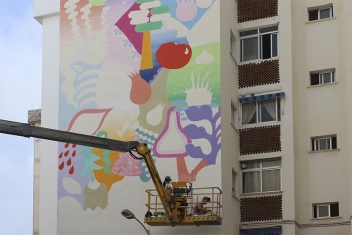
Estepona’s Route of Artistic Murals is an iniciative of the local council and the mayor, Jose Maria Garcia Urbano that was started in September 2012. It now consists of about 70 murals in the town centre and near centre districts.
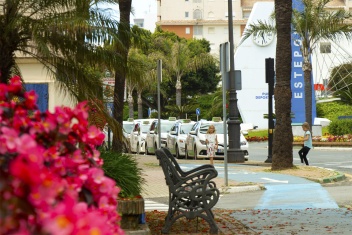
Here is an informative page regarding taxis in Estepona. Estepona Taxi are white in colour with the oficial logo on the side door. They also bear the small 'SP' plate. A taxi with a green light on the roof is available for hire. It is not normal to hail a taxi on the street in Estepona. Either book one by telephone of go to a taxi rank.
Estepona is a rare coastal destination - one of the few towns on the Costa del Sol to have retained its character and traditional feel, despite the influx of tourism in this part of Andalucia. The casco antiguo (old town) is what you'd expect from a picturesque Andalucian town - narrow, cobbled streets lined with beautiful stone houses and plazas, and walls ablaze with vibrant colour from the large variety of flora.
Estepona has a policy of commissioning sculptures by contemporary artists in different location in the town centre for the enjoyment of tourist and residents alike.
Located in the southwest part of Malaga province, the Sierra Bermeja is a mountain range with an average height of 1,000m (its highest point being 1,450m), covering 1,236ha. It is an area that has undergone major volcanic activity; the rocks are rich in the olivine mineral. Rainwater has oxidised the iron and magnesium present in the rocks and the iron oxide has coloured the rock reddish-ginger, a hue that gives the sierra its name.
Explore Estepona's art galleries, from contemporary exhibits at the privately run Stoa Gallery, Huber and Galeria 151, to the 21st centurary Spanish artist collection at the Museo de Arte de la Diputación and the exhibitions at the grand Mirador del Carmen Exhibition Centre. Don't forget the extensive street art with over 60 interesting murals and contemporary sculptures
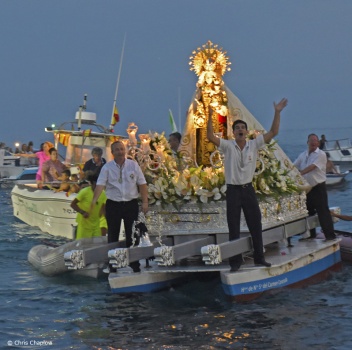
Every year, Estepona celebrates its long fishing tradition with its own Virgen del Carmen festival on July 16. The event comprises several days of magnificent Catholic display and civic festivities.
Estepona is home to a wide range of golf courses that are enjoyable and challenging for both novices and professionals to enjoy. As well as the golf courses mentioned below there is also a municipal driving range located near the entrance to Estepona Golf, look out for the sign by the little bridge at the entrance to Estepona golf.
Los Flamingos Golf has pitched its green fee price at the exclusive end of the range. It is a par 71 golf course. Situated between El Paraíso, Monte Mayor and the Marbella Club Resort, Los Flamingos takes its name from the Los Famencos lake around which Chamberlain & Turner have laid out their 18-hole design. A second Four Seasons Resort is planned to provide accommodation for visiting golfers.
The bullring dates back to 1972 and, from within, resembles the typical concrete architecture of this era. From the outside it is more interesting, due to the unique asymmetric design created by Juan Moro Urbano, the exterior is landscaped to allow access to the upper terraces without the necessity of steps.
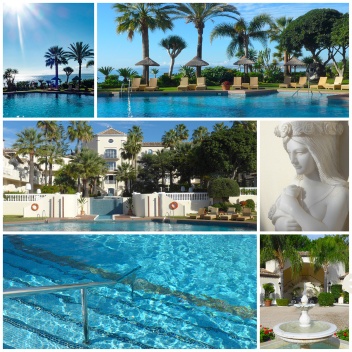
The Mett Hotel (was Iberostar Costa del Sol Hotel) is right on Estepona beach in the Costalita residential development. The hotel's AcquaPlaya Centre has two areas, both of which use water treatments at different temperatures to treat various conditions, or simply to create a relaxing environment as an antidote to stress. In the Club Acquaplaya the hydrotherapy circuit has jet sprays at different levels and whirlpools.
A lighthouse has stood on the natural limestone headland known as Punta Doncella at the west end of La Rada beach in Estepona since an 8,5 metre structure was completed by engineer Antonio Molina in 1863. The original olive oil burning lamp was purchased from Sautter the French maker. It was replaced in 1882 by a paraffin 'Maris' lamp and then by a petrol one in 1904.
Selwo is a fascinating adventure in contact with nature. The park covers 100 hectares and is home to more than 2,000 animals from the five continents. The animals live in liberty, recreating their natural habitat - you can see lions, rhinos and giraffes; gnus, cheetahs, red pandas, meekats, and the endangered Iberian lynx; also birds such as hornbill, ibis, stork and crane. Visitors are taken on a four-hour tour, on foot and in four-wheel drive trucks.
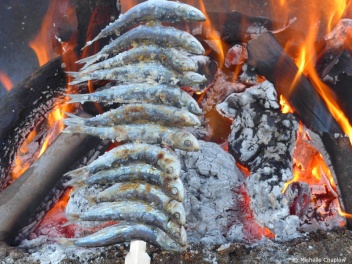
In the up-market areas of Andalucia, a growing trend has evolved for a beach life quite different from the simple pleasures of buckets and spades, cool boxes and fold-away deck chairs. Many simple, traditional "chiringuitos" or beach bars still exist dotted along the coast where you can enjoy local cuisine and get an ice cream.
Here is a comprehensive guide to the beach bars (chiringuitos) and beachside restaurants in Estepona. The majority of these establishments have sun beds for hire at a reasonable price per hour or day. Many also offer music and create their own, unique ambience. Most of the beach bars located in the town are open all year, most of those located outside the town are open from Easter to end of September.
Estepona has a varied selection of restaurants both in the town itself and in the surrounding areas. In the cobbled streets of the old town you will find many good quality tapas bars and restaurants, serving the very best of authentic, traditional generally serving Spanish cuisine. In the summer evenings the terraces are full of diners.