Latest Pages

Latest pages

We are committed to updating our pages as regularly as possible, allocating over half of our editorial resources to this essential task, to ensure that you can always find the latest, most reliable information on popular topics and places.

Here is a list with the latest pages that have been updated or created. Most recent are at the top of the list.
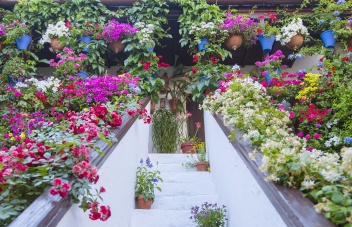

Convento de Santo Domingo, Ronda

Built on Arabic foundations at the instigation of the Reyes Catolicos after the fall of Ronda in 1485, this imposing structure on the far side of the Puente Nuevo has been rebuilt over the centuries in Mudejar (post-Reconquest Arabic), gothic and Renaissance styles. It has been, variously, a Dominican convent, a private mausoleum for the Moctezuma y Rojas family and, sporadically, a tribunal for the Inquisition.

Christmas Shopping

An important part of the lead-up to Christmas for Andalucians involves one of their favourite pastimes - shopping. This isn't just about making purchases, whether gifts or food for one of the big family meals; it's about browsing, wandering through stores looking at things, discussing them - at length and in detail - with friends and family (jamon, decorations, belen figures, shoes, kitchen equipment) over coffee.

Iglesia de Santa María Magdalena

In the centre of Cazalilla is the town’s most significant building, the parish church, which stands out both for its volume and height as well as for the quality of its construction materials and its artistic beauty.

Comares - Castle

The castle of Comares is of Arab origin, it was built in turn on an old Roman fortress. The remains of the fortress are popularly called "La Tahona" (a  bakery or mill )  and from the top you can see a wonderful general view of the town, which seems suspended in a rock, as well as the impressive massif of Sierra Tejeda to the north and the sea to the south . In fact, Comares is called the Balcón de la Axarquía malagueña.

Sweets & Desserts

Andalusia is Al-Andaluz, the kingdom of the Moors (Muslim Arabs and Berbers), who ruled southern Spain from the eighth to the 15th century. Way back then, Andalusian cuisine was the most opulent of all of Europe, in the use of spices, herbs, almonds, rose water, orange blossoms and other exotic flavourings of the Oriental heritage.

Moraga

In Marbella at various points along the beach you can find a number of fishing boats filled with sand which are used for moragas. A moraga is a night-time barbeque party, usually held on the beach. It is traditional to Malaga province, but is also found in other parts of Andalucia. A moraga is differentiated from a barbeque in that the food being cooked is espeto (stick) of sardines.

FUENTE DEL VINO

The Fuente del Vino has been designated a Site of Cultural Interest (BIC) by the Junta de Andalucía since 2008

Roman Villa, Marbella

The ancient site at Rio Verde may have been part of the Roman town of Cilniana. It now houses the remains of a late 1st century AD Roman villa. Sadly all that is left is the floor and a small portion of the walls of the villa (the highest at 1.2 metres). However, fortunately for us it is a floor unlike any other - embellished with black and white mosaic tiles in patterns never before seen in a Roman Villa.

Ermita de Jesús

The chapel has an eighteenth-century Baroque-style portal. At the foot of the hermitage, we can see a high choir, while the central altarpiece is from the nineteenth century, in Neoclassical style, and has the figure of Jesús Nazareno framed in its centre.

Holiday Rentals in the countryside

Andalucia has some of Europe´s most striking natural landscapes. Renting a countryside property is the best way of exploring the mountains, natural parks and rivers which divide this huge area of Spain. Countryside homes are rustic, authentically Spanish, and have uninterrupted views of the surrounding lands

History of Lobras

This municipality, comprising Lobras and Tímar, was founded during the early years of Islamic domination. However, the presence of an inactive mercury mine suggests that there was likely an earlier settlement. This is further supported by the Celtic origin of the place name Lobras and the possible Iberian origin of the place name Tímen (Tímar), as well as some Iberian-Roman archaeological remains found in the municipality. In any case, the earliest written record of Lobras and Tímar is provided by Ben Aljatib (1313–1374), minister to Mohamed V, who cites a twelfth-century writer's description of the Kingdom of Granada.

Benadalid

Benadalid is a village that is working hard to develop its reputation for quality rural tourism. With a perfect location, this has not been difficult as the town is situated in the Genal River Valley and close to the Guadiaro Valley and surrounded by Cuco mountains and near the “Tajo de los Aviones” and “Tajo de la Cruz” gorges.

Employing Staff in Spain

Most businesses will at some point in their growth need to employ staff. Unfortunately, doing so in Spain is complicated by very strict labour laws and regulations, so it's important to be fully informed and confirm with your payroll adviser before taking this step.

Necrópolis Megalítica

This archaeological site features one of the largest and most interesting funerary complexes in the southeast of the peninsula. Different types of burials are represented, with the majority being megalithic, characterized by having a central chamber with a polygonal plan, built with large stones arranged vertically, and a flat roof made from large stone slabs.

Archeological Museum, Benalmadena

Felipe Orlando-García Murciano, the prestigious Anthropologist and artist, who died in April 2001 at the age of 90, inherited a collection of pre-Columbian relics from his grandfather.

Seville - Flamenco Eggs

In a frying pan heat the oil and add the chopped ham, onion and garlic. Sauté a few minutes, then add the tomatoes. Continue cooking on a medium heat until tomatoes are very reduced, about 15 minutes. Oil four (or eight) oven-proof ramekins and divide the tomato sauce between them. Break one or two eggs into each ramekin.

Hotel Pez Espada - History

Although many locals laughed at the seemingly bizarre idea of building a five-star hotel on the beach in a small fishing village, the luxurious Hotel Pez Espada opened for business on Sunday 31 May 1959. The history of the Costa del Sol, and especially the history of Torremolinos, would be incomplete without referring to the hotel, for it became renowned for its famous guests and its illustrious galas and parties.

Book your stay in Andalucia Now!