Latest Pages

Latest pages

We are committed to updating our pages as regularly as possible, allocating over half of our editorial resources to this essential task, to ensure that you can always find the latest, most reliable information on popular topics and places.

Here is a list with the latest pages that have been updated or created. Most recent are at the top of the list.
A to M of Spanish Weddings

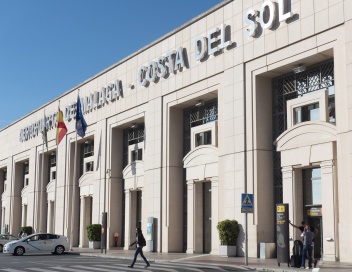
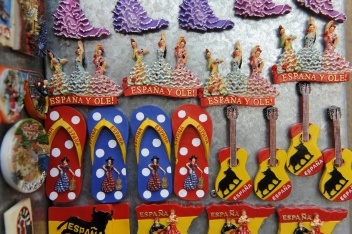
Journalist and author Theresa O'Shea tied the knot with her long-standing Spanish partner on Spain's Costa del Sol and has produced a linguistic and cultural survival guide to a Spanish weddings for those who might follow her example and walk the aisle in Spain!

Purchena - History

Copper Age settlements known as Churuletes and various Roman villas have been found in the Onegas area.

Padul

Padul, also known as El Padul, is an ideal destination for nature and adrenaline sports lovers. The area offers visitors activities such as hiking, horse riding, mountain biking, paragliding and hang gliding. Padul also has the advantage of being very close to Granada, the capital city of Andalucia.

City Parador Hotels in Andalucia

Many of Andalucia´s famous paradors are located in, or on the edge of, major cities, providing an ideal base from which you can explore the city where you are staying. Although these paradors are located in the city, they do not feel like it, as they provide exclusive accommodation away from the noise and pollution of the city.

Iglesia Parroquial de Santa Águeda

The Renaissance church was built on the site of a former temple by Alonso de Barba, a favourite disciple of Andrés de Vandelvira. The chancel was carved by the master stonemason Sebastián de Solis, and the work was completed in 1582. The design consists of a single nave, covered with a pair and knuckle wood frame, according to Mudejar tradition. The most outstanding feature is the main chapel, with a rectangular base, which is accessed by a staircase and grand pair of semicircular arches with large carved allegorical figures of Fe and Caridad, and voussoirs and geometric decoration characteristic of Alonso Barb. The coat of arms of Bishop Francisco Delgado presides over the central headwall. Outside, the nave is covered with a wide gabled roof and the entrance to the church is through a simple doorway on a staircase with a semicircular arch lined with imposts and a small frieze with an inscription dated 1582. The belltower is also noteworthy, designed by Andrés de Vandelvira. The carving of Santa Águeda dates from the sixteenth century. Located on Calle Reyes Católicos.

Brief History

San Fernando has been inhabited by settlers since prehistoric times. Relics from the Stone Age, the Palaeolithic Age, and from Roman times have been discovered there and show signs of primitive agricultural activities from very early on. The first historic finds date back to around 1,100 BC, with the arrival of the Phoenicians.

Dólar

The name of this municipality has little to do with the American currency, as Dolar is a typical, unspoilt mountain village. It is located at the foot of Sierra Nevada, among pines and chestnuts. In fact, it is part of the Natural Park of the same name. The houses in Dolar are nestled at the whims of its geography, surrounding the peak.

Santa Olalla del Cala

Santa Olalla del Cala is situated within the Sierra de Aracena y Picos de Aroche natural park, in the foothills of the Sierra Morena mountain range. The village is in the very north-east of Huelva province, about 5km from the province of Seville, on the old Ruta de la Plata.

Ermita de Nuestra Señora de los Remedios

The chapel of Nuestra Señora de los Remedios sits on the road to Albanchez, at the foot of the mountains. Nestled between palm trees and a fountain, it is a small temple with a cross-shaped floor plan, built in 1910. Located southeast of the town, on the J-3105.

Rota

Rota, an ancient town, stands at the extreme north of the Bay of Cádiz in a privileged position. The town opens out to the Atlantic and behind are two national parks, the Natural Park of the Bay of Cádiz and the Doñana. It is also a town of two extreme contrasts.

Where to see Flamenco

Flamenco can be found in varying forms in Andalucía, whether it is in a tablao, which are mostly aimed at the tourists, or a peña flamenca, which will offer a more authentic side of the art. Flamenco Tablaos are found along the coastal resorts like Málaga, Torremolinos, and Marbella, as well as the big cities like Seville, where the flamenco tablaos are situated in the old part of the city, and in Granada

History of Berja

Berja is thought to be of Iberian origin. Its Roman heritage is more assured, having been the Vergis of Roman Betica, from which period the remains of the Villavieja amphitheater stand out. The Romans left other artistic vestiges including the early Christian sarcophagus of Alcaudique (currently exhibited in the National Archaeological Museum).

Escúzar

Escúzar is a village in Granada province located 24km from Granada city in an area of astounding natural beauty, with the Sierra de Tejada to the south and the Sierra de la Pera to the north.

Book your stay in Andalucia Now!