Historical Sites

Alcazaba of Málaga

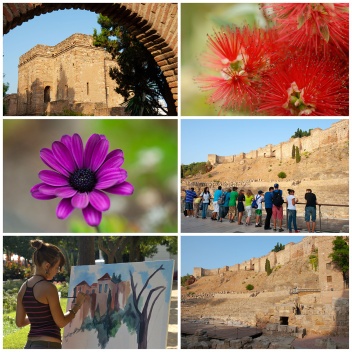
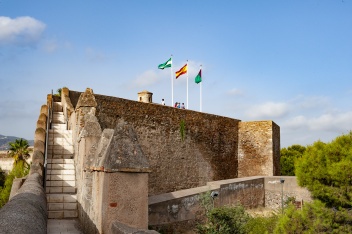
La Alcazaba is Malaga's most important landmark, and overlooks the city from a hilltop inland. It is one of two Moorish fortresses in the city, the other being the Castillo de Gibralfaro, situated above. The Alcazaba is the best-preserved Moorish fortress palace in Spain. It received about 1 million visitors in 2016.

Granada City Cathedral

The Cathedral is located in the centre of the Muslim area and dates back to 1523. It has a nave and four aisles, a crossing and circular apse. Alonso Cano built the main façade with sculptures by Duque Cornejo, Risueño and Verdiguier while the only tower of the two planned ended up half finished. On the northern side, there is La Puerta del Perdón, a magnificent work of Diego de Siloé who also built La Puerta de San Jerónimo.

Seville Gate

The Gate of Seville is of considerable historical interest standing as an original fortified tower and an early entry gate to the Alcazar or fortress from the west. Fragments date back to the 10th century. The wall here was erected by Christians in the 14th and 15th century along with the barbican and moat.

Palacio de Viana

This Palace, which was declared a National Monument and important Artistic Garden, has a surface of 6,500 m2, more than half of which is occupied by the garden and the rest by a building with two floors and two little entresols.

Tower of La Calahorra

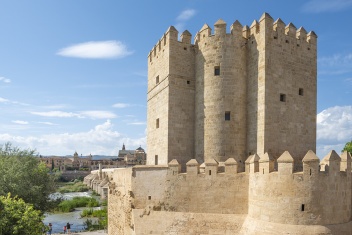
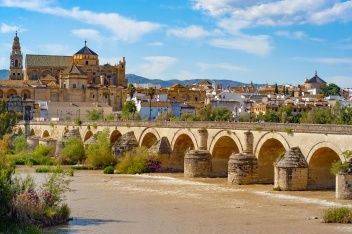
The Tower of La Calahorra rises up at the south of the Roman bridge, the far end from the city centre. It is a fortified gate originally built by the Moors (Almohads) and extensively restored by King Enrique II of Castile in 1369 to defend the city from attack by his brother Pedro I the Cruel from the South. It was origionally an arched gate between two towers. Enrique II added a third cylindrical shaped tower connecting the outer two.

Puerto Del Puente (Bridge Gate)

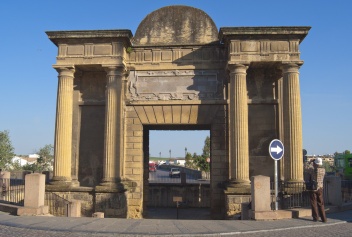
At the north end of the Roman bridge formerly used to enter the city enclosure near the Mosque, rises the Puerto del Puente or Bridge Gate. It was completed in the days of Philip II. The present triumphal arch is the work of Hernán Ruiz III and replaces what was first a Roman gate mentioned at the time of Julius Cesar and later a Moorish gate. A documented restoration took place in 720 AD. Today it is a traffic island.

City Walls

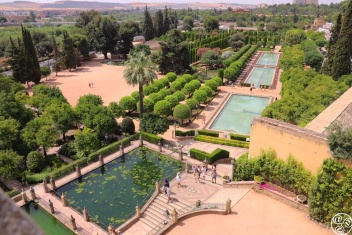
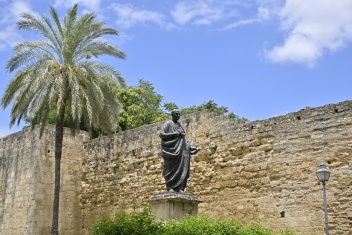
The walls which used to mark the boundaries of the Jewish quarter extended virtually to the Arab walls. The latter enclose the Alcazar gardens and continue along the river bank. These stretches of wall are among the better conserved in the city's fortified enclosure, although they are from a later period.

Plaza del Potro

Just a few minutes away from the Mezquita, to the east along calle Luis de la Cerda/Lineros, is the Plaza del Potro (Square of the Colt), a long, rectangular square which slopes down towards the nearby Guadalquivir river to the south. It is named after the 16th-century fountain in the plaza (1577).

Muralla de Jairan

Built in the 11th century by Jairan (or Jayran), the first ruler of the Almeria taifa (1012-1028), the wall descends the valley on the north side of the Alcazaba and climbs the Cerro de San Cristobal on the far side. The walls have three square towers dating from the Islamic era, plus four circular ones from the Christian period.

Monuments

The city of Antequera contains a wealth of fascinating monuments. Visit the recently excavated Roman baths, the magnificent Renaissance church of Santa Marí­a la Mayor Church, the Church of Nuestra Señora del Carmen, the 19th century bullring, and the Arch of the Giants, built in 1585, which leads up to the 13th century Moorish castle.

Manilva Roman baths & Aquaduct

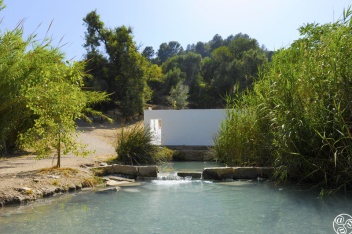
Sulphur is the ninth most abundant element of the universe and is one of nature´s great jokes on the human race. Known to the ancients as "Brimstone" it is one of the elements essential to life as a constituent of various biologically active compounds. Pure sulphur is odourless, but fun-loving nature frequently combines it with hydrogen to produce hydrogen sulphide, which has the odour of rotten eggs.

Roman Villa, Marbella

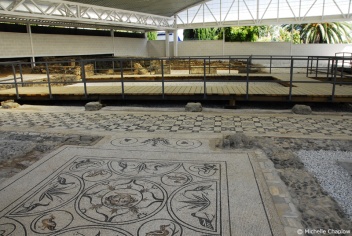
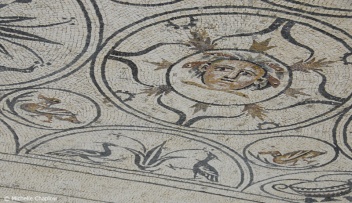
The ancient site at Rio Verde may have been part of the Roman town of Cilniana. It now houses the remains of a late 1st century AD Roman villa. Sadly all that is left is the floor and a small portion of the walls of the villa (the highest at 1.2 metres). However, fortunately for us it is a floor unlike any other - embellished with black and white mosaic tiles in patterns never before seen in a Roman Villa.