Historical Sites

Castillo del Aguila (Eagle’s Castle) in Gaucin

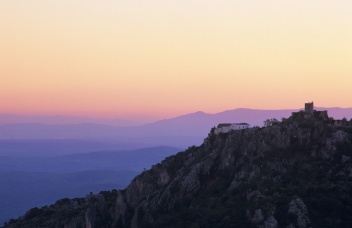
Castillo del Aguila (Eagle's Castle) in the Moorish hilltown of Gaucin, consists of a series of fortifications built across a rocky ridge above the village. The castle, which is of Roman origin, and was reinforced by the Moors, is located on top of a hill whose east and south slopes are practically impregnable; the best way to reach this magnificent, historic building is by walking up Calle Larga.  

Casa Colon

A symbol of British power in late 19th-century Huelva, the Casa Colón is the grandest of all the buildings constructed by the city's bourgeoisie around the same time. It is an imposing presence at the beginning of the Alameda Sundheim, with a terracotta façade and ornate wrought-iron balconies.

Barrio de Reina Victoria

The Barrio de Reina Victoria, otherwise known as the "Barrio Obrero" (Workers' District), is a testament to its name: an example of a Victorian English suburb superimposed onto an Andalucian landscape. Situated at the eastern end of Alameda Sundheim.

The Ancient City of Acinipo

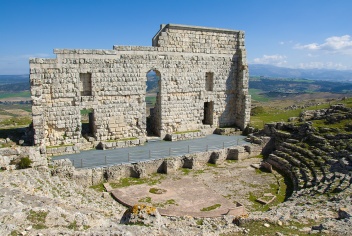
The ruins of this 32 hectare city are located at 1.000m above sea level. This is an urban are that thrived in the first century AD when it had a population of 5.000. It was mentioned in Plini and, inscriptions to Geninn Oppidi, to the god Marse and to Victoria Augusta have been found. The city even minted its own money, which features bunches of grapes.

Lighthouse

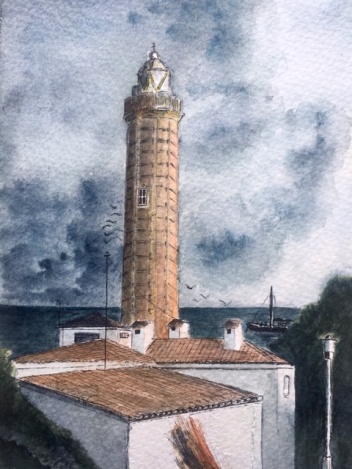
A lighthouse has stood on the natural limestone headland known as Punta Doncella at the west end of La Rada beach in Estepona since an 8,5 metre structure was completed by engineer Antonio Molina in 1863. The original olive oil burning lamp was purchased from Sautter the French maker. It was replaced in 1882 by a paraffin 'Maris' lamp and then by a petrol one in 1904.

Gaucin - Convento de los Carmelitas

Located in Calle Luis de Armiñan, the building stands on the site of a small ermita (Hermitage) called Vera Cruz. In 1700 Bartolome del Rio asked Don Juan Carlos Alonso Perez de Guzman el Bueno, 11th Duke of Medina Sidonia, for authorization to build a Carmelitas Descalzados convent. It was inaugurated on 15 August 1704.

Roman Lacipo, Casares

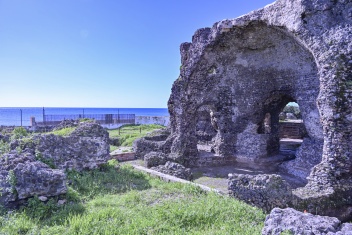
After one and a half kilometres west from Casares (MA-528) at the junction on the A-377 Manilva - Gaucin road a small track oposite can be seen. This was once the main route to Jimena de la Frontera and San Martin. Those who have no objection to a bumpy ride can still use it.

Teatro Romano Málaga

El Teatro Romano is the oldest monument in Málaga City, it is situated in the cultural heart of Málaga city, at the foot of the famous Alcazaba fortress.

Museo Naval Torre del Oro

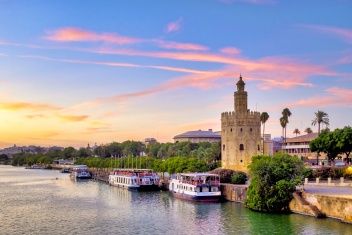
The Torre del Oro (Golden Tower), which dominates the banks of the river Guadalquivir next to the Puente San Telmo, is a remnant of the Moorish fortified walls which originally enclosed the city, with 166 towers and 15 gates. A watchtower designed to protect the docks, its iconic shape makes it one of Seville's best-known monuments, after the Giralda which was built just a few years earlier.

Convents & Monasteries in Seville

Seville is a city rich with convents and monasteries. Groups of nuns scuttle down the streets going around their daily business and school girls, dressed in smart plaid skirts and shirts walk in single file throughout the city. Although there is restricted entry to many of the convents, most are inhabited by closed religious orders.

Italica

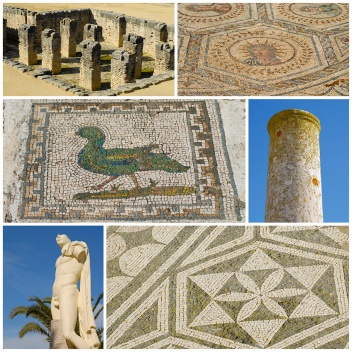
Roman ruins of Italica, near Seville, with remarkable mosaics and an impressive amphitheatre, are located 9 kilometres to the north of the city, just outside the village of Santiponce. Nearby you can also see a well preserved Roman theatre. Both are signposted from the the main road.

Monasterio de la Cartuja

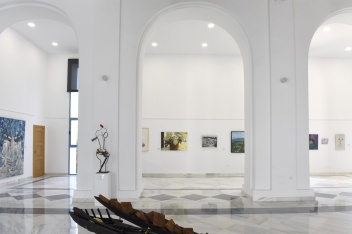
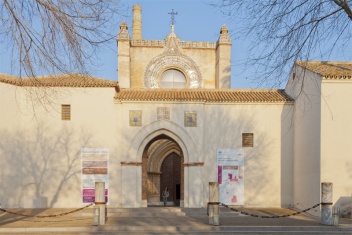
This large, walled complex of honey-coloured stone buildings, situated on the Isla la Cartuja (named after the monastery itself; the word means “charterhouse”), has seen many ups and downs during its long, dramatic history. From monks who welcomed Christopher Columbus, to barracks for Napoleon’s troops, ceramic factory run by an Englishman producing world-renowned porcelain, to modern-day contemporary art gallery and open-air live music venue.

City Walls and Gates of Seville

As you arrive in the city, look out for remnants of ancient stone walls marooned in the centre of busy roads, plus an impressive, well-preserved 400-metre section in Macarena, near the Andalucian parliament building. These are the remains of the city walls, or murallas, dating from the 12th century - Seville was once the most strongly fortified city in Europe.