Attractions

Palacio del Marqués de Salvatierra

Across the cuesta from the Casa del Rey Moro, the Palacio of the Marqués de Salvatierra family opens irregularly as a small museum of Renaissance art and artefacts. The Palacio is an 18th century renovation of an earlier 16th century building gifted to the family of Don Vasco Martín de Salvatierra by the Reyes Catolicos when they redistributed the spoils of the Reconquest.

Puente Arabe (Moorish bridge)

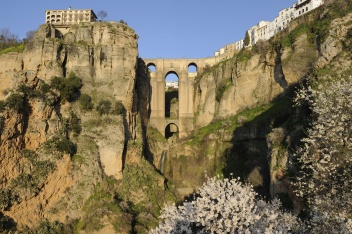
Sometimes called the Roman bridge, as it was thought to have been built on the foundations of an earlier Roman bridge, this was promptly abandoned when the 16th century expansion of the Mercadillo district required a better link with the Ciudad. Then, the Guadelevín was a much deeper river.

The Carmelite Convent, Ronda

Walk up the hill from the bullring, and you will soon find yourself at the foot of a wide flight of stone steps leading to the imposing wooden doors of the Merced Carmelite Convent. The first Carmelites were male hermits, former pilgrims and crusaders who gathered together in 1155 AD at Mount Carmel in Palestine, close by the fountain of Elijah, and dedicated themselves to a life of austerity, poverty and prayer.

Walls

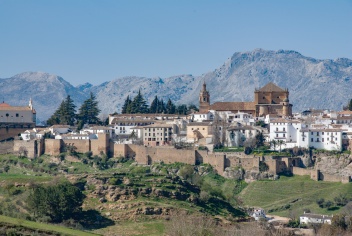
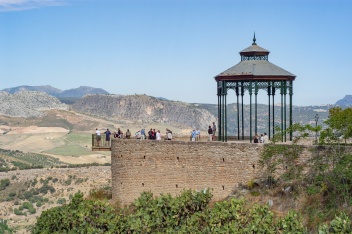
Ronda's extensive walls, murallas, were begun by its Moorish rulers in the 13th century, renovated in the 16th by the Christians the earlier walls were built to keep out, and parts are still being rebuilt in the 21st century. Originally, this feat of medieval engineering wrapped the entire city, and must have made it one of the most securely defended settlements of its time.

Plaza Duquesa de Parcent, Ronda

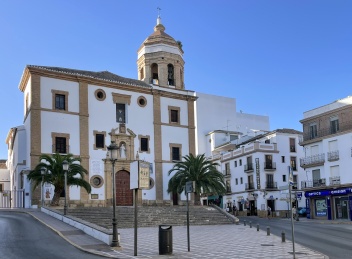
By far the loveliest public space in Ronda, this leafy square boasts an embarrassment of monuments. Its star is the Iglesia de Santa Maria del Mayor, whose exquisite belltower suggests Renaissance twinned with Toytown. This is another church commissioned by the Reyes Catolicos, sited with some purpose on the ruins of a mosque, believed to have been the centre of prayer in the Arabic Medina.

Palacio de Mondragón

Ronda's loveliest enclosed space is the Mondragón palace, the heavily renovated and part-modernised remnants of what once was the palace of the Moorish ruler Abbel Mallek, or Abomelic, son of the king of Morocco. The palace is tiny, but much detail remains, in the Mudejar ceilings, some original tiling, and the balconied inner courtyards.

Citadel

Ronda is divided into three parts, and the old Moorish citadel, La Ciudad, should be explored first. If, like most visitors, you drive up from the coast, the first part of town you will encounter is the Barrio de San Francisco. Park here, and enter the fortifications on foot through the Moorish gate, the Puerta de Almocábar, with its characteristic horseshoe arch.

Casino and Circulo de Artistas

The building known as the Casino and Circulo de Artistas (Artists Society) is located on the north side of Ronda's Plaza del Socorro. This is a charming corner of the town where tourists enjoy their lunch, unaware that they are in the company of one of Andalucia's most famous historical venues.

Cuevas de Nerja

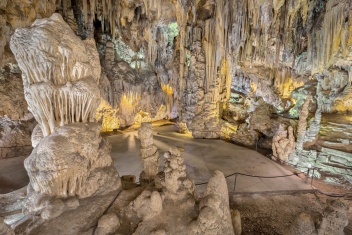
Las Cuevas de Nerja (the Caves of Nerja) are a series of naturally formed caves and caverns in the hills of Maro, 4km North-East of Nerja, some of which have taken up to two million years to form. The caves contain the widest naturally-formed column in the world, at 32m high and 13x7m at its base. Formed by the merging of a stalagmite and stalactite, it has held the Guinness World Record since 1989. The caves also famously host the annual Nerja International Festival of Music and Dance.

Bioparc Fuengirola

Zoos aren't what they used to be, fortunately. You won't find miserable animals pacing up and down shoebox cages, clinging to solitary branches or paddling around in sad puddles at Bioparc Fuengirola - Fuengirola's  visitor and animal-friendly zoo.

San Luis Castle, Estepona

There is little left to see of the great castle which once stood at the heart of Estepona, and what remains is not now readily apparent, but it is possible to trace the ruins around the high ground. Its construction followed the seizing of the town in 1457 by Enrique IV. He also built new defensive towers along the coast.

La Torre del Reloj - Estepona

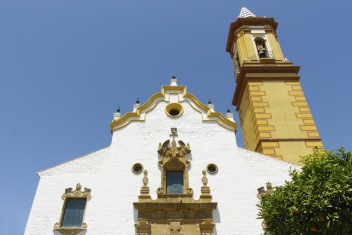
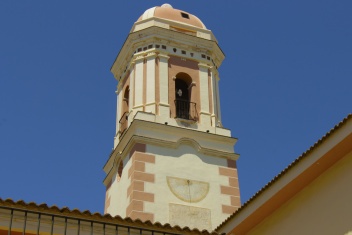
Estepona like so many villages in Southern Spain was fought over by the moors and the Christians until it was finally captured by the Enrique IV of Castile in 1457. He ordered the building of a church on the site of the old Mosque. The church was completed around 1473. it is the oldest ecclesiastical building on the Costa del Sol, but today only the clock tower survives. In the 18th Century a neo-classical dome was added.

Museums of Estepona

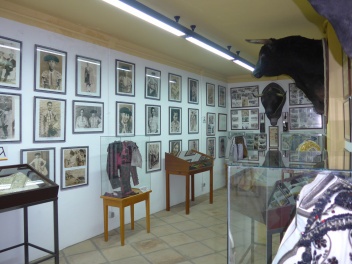
Estepona has several small museums devoted to its history and culture as as an agricultural town: Bullring, three of the museums are located in the Bullring oposite the entrance to the port (access via Calle Matias Prats), They share the same entrance. There are no admission charges. Hours of opening are Tuesday to Sunday 09.00 to 16.00 hrs. Closed Monday. Tel: 952 807 148

Parks and Gardens in Estepona

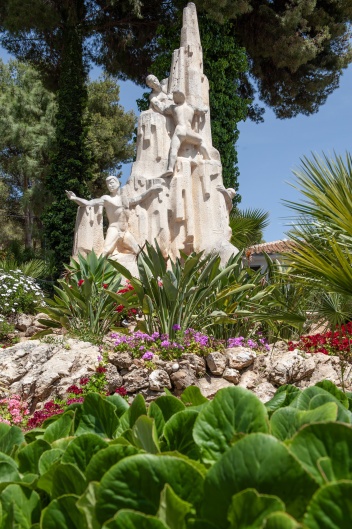
ully landscaped public parks in Estepona as well as public squares adored with flowers, Seafront Promenade, Plaza de las Flores and Orchid House plaza are in the old town. El Calvario park is at the top of Calle de la Terraza. The larger parks are located in the area to the west of the old town centre; Parque Huerta Nueva, Parque del Carmen, Parque La Constitucion. Further west are Parque de los Niños, Parque La Hermandad. Parque del Seghers. Outside Estepna town are Parque Pedregales and Selwo Wildlife park. Finally above 1000m, the Sierra Bermeja mountain behind Estepona is a protected natural area.

Los Millares

This archaological site is located 20 kms north west of Almeria, between the villages of Gador and Santa Fe de Mondujar. The site dates back to 1800 BC, when it was probably the location of Spain's first metalworking culture. Pottery and jewellery were made here and crops grown in what must have then been a much more fertile landscape.