Attractions

The Alcaicería, Granada City

The Alcaiceria home of the Great Bazaar of Granada, was originally a series of streets between Plaza Nueva and Plaza Bib-Rambla, bursting with stalls selling Arabic silks, spices and other precious goods. Nowadays the only remaining section is Calle Alcaiceria, beginning just off the Calle Reyes Catolicos, and extending back as far as the Cathedral. It is an area rich with history and local culture, still packed with interesting, exotic things to buy.

El Albaicín, Granada

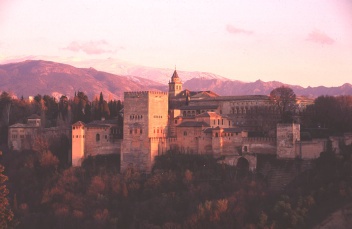
El Albaicín is the old Moorish quarter of the city. It's located on a hill facing the Alhambra and there are dramatic views of this area from the palace's famous rose gardens. The Zirid Monarchs first established their court here in the 11th century although little remains from this era today, apart from some crumbling remains of the wall.

Church of San José, Granada

The Church of San José is also worth visiting close by as it is on the site of the Great Mosque of La Alcazaba and the minaret belongs to caliphal architecture, the only one preceding the Almoravid type. It is here that the 'Christ of Silence' by José de Mora is kept. All the churches in the Albaicín have Mudéjar traces in their 16th century construction.

Granada City Cathedral

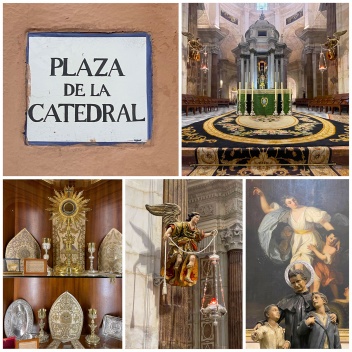
The Cathedral is located in the centre of the Muslim area and dates back to 1523. It has a nave and four aisles, a crossing and circular apse. Alonso Cano built the main façade with sculptures by Duque Cornejo, Risueño and Verdiguier while the only tower of the two planned ended up half finished. On the northern side, there is La Puerta del Perdón, a magnificent work of Diego de Siloé who also built La Puerta de San Jerónimo.

Arab Baths in Granada

The Arab Baths are one of the most important historic and architectural aspects of Granada, as they are symbolic evidence of the city's religious turmoil all those centuries ago. The baths were built by the Muslims because they believed water was a symbol of purity, and so used it to cleanse their bodies, whilst the Christians.

Torre Tavira

This highest and most important of the city's old watchtowers is a fine place to get your bearings and affords a dramatic panorama of the city. Back in the 18th century, Cadiz had no less than 160 towers to watch over its harbours.

Cadiz Museum - Fine Arts & Archaeology

The archaeology museum on the ground floor. Some excellent glassware and jewelry are highlights and there is a good collection of amphorae as you'd expect from an historic port.

Museo Historico Municipal de Cádiz

Museo Historico Municipal de Cádiz boasts a 19th century mural depicting the establishment of the Constitution of 1812. The real showpiece is a fascinating mahogany and ivory model of the city which dates back to 1779 and which is a fascinating duplicate of all the streets and the buildings much as they are today.

Gran Teatro Manuel de Falla

This theatre is located within a wonderful neo-Mudejar red brick building and has an impressive interior as well. There is an active programme throughout the year, check the tourist office for a schedule of events.

Iglesia del Espiritu Santo

Towering above the Almocábar gate, the monolithic church of the Holy Spirit is the Ciudad's unofficial cathedral, and certainly the place where the señoritos and their ladies from Ronda's old families can be seen at Sunday mass.

Convento de Santo Domingo, Ronda

Built on Arabic foundations at the instigation of the Reyes Catolicos after the fall of Ronda in 1485, this imposing structure on the far side of the Puente Nuevo has been rebuilt over the centuries in Mudejar (post-Reconquest Arabic), gothic and Renaissance styles. It has been, variously, a Dominican convent, a private mausoleum for the Moctezuma y Rojas family and, sporadically, a tribunal for the Inquisition.

Hotel Catalonia Reina Victoria

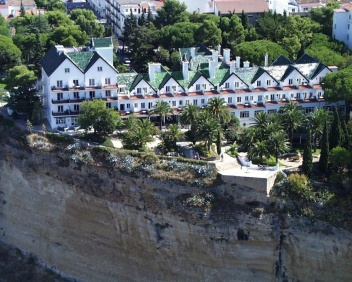
With views overlooking al Tajo and surrounded by nature, Hotel Catalonia Reina Victoria offers all the comfort and modern amenities of a 4 star hotel. A little to the south of the Alameda, and connected to it by the cliff top Paseo de los Ingleses is a garden, in the centre of which stands the Hotel Reina Victoria.

With views overlooking al Tajo and surrounded by nature, Hotel Catalonia Reina Victoria offers all the comfort and modern amenities of a 4 star hotel. A little to the south of the Alameda, and connected to it by the cliff top Paseo de los Ingleses is a garden, in the centre of which stands the Hotel Reina Victoria.

Casa del Rey Moro

The Casa del Rey Moro is to some extent a fraud, since the house was never the home of the Moorish King. It was built in the 18th Century, when Moorish Spain was already a distant memory. Its apparently Moorish gardens are even more recent, having been designed by the French landscape gardener, Jean Claude Forestier, in 1912.

Puente Viejo (Old bridge)

Built in the 16th century, possibly on remnants of an earlier bridge, this was the one navigable link between Mercadillo and La Ciudad until the completion of the Puente Nuevo centuries later. Cars still need good gears and drivers with steely nerves to take the steep hairpin bend on the way up to the cuesta de Santo Domingo.