Attractions

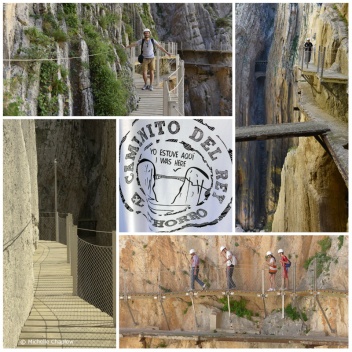
Caminito del Rey - Statistics

Statistics about the 1.3m unique visitors to the Caminito de Rey official website in its first year of operation were anounced in a press release by the Malaga provincial council.  22% of web visitors were from abroad. We were pleased to see reported that "The visits that come from diariosur.es, and other travel websites, such as skyscanner.es and andalucia.com stand out".

Museo al Aire Libre

The Museo al Aire Libre is a contemporary open air museum which was inaugurated in May 1991 thanks to sculptor Pepe Noja who came up with the idea. It suffered a period of abandonment, with no one looking after the museum, some of the works of art deteriorated and even fell to pieces, therefore being removed by the police due to safety reasons.

Balneario de Lanjarón, Granada

Lanjarón is famous in Spain and abroad for its drinking water, bottled and sold nationwide. The Spa is one of the best known in Andalucia thanks to the successful marketing of its drinking water. It has five natural springs of medicinal waters and is often referred to as the 'Fountain of Health'.

San Roque - Main Sites

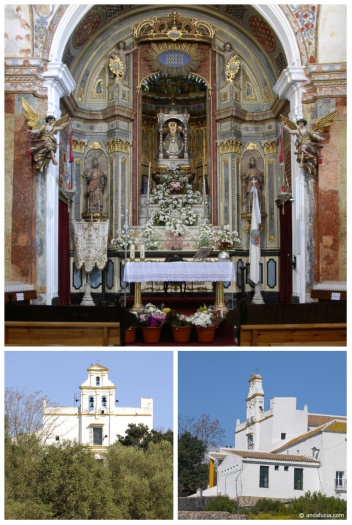
The Chapel of Nuestra Señora de la Visitacín dates back to the 18th Century and the present San Roque Hermitage was built in 1801.

Seville City - The Hospital de La Caridad

The Hospital de la Santa Caridad (Holy Charity Hospital)  is a 15th century baroque charity hospital, home to the Hermandad de la Santa Caridad (Brotherhood of Holy Charity). Located at the southern end of the Atarazanas (Royal Shipyards) in the Arenal neighbourhood, it has some superb artworks by Golden Age painters such as Murillo, Zurbaran and Valdes Leal.

Plaza Bib-Rambla, Granada

No place is more emblematic of the ´´Christian´´ part of the city. Surrounded by 19th Century town houses, shaded by leafy lime trees - and in the midst of a large pedestrian zone - the Plaza Bibarrambla is the real heart of the city´s social life. Much of the square is in the warm months filled with sidewalk cafes, where you can enjoy hot chocolate and churros, and, on summer afternoons freshly made horchata de chufas, a refreshing milkshake made of a root called an ´´earth almond´´.

Cadiz Town Hall

The city town hall overlooks the Plaza San Juan de Dios and was constructed in two stages, the first in 1799, the latter in 1861.

Hospital de Mujeres, Cadiz

This hospital has a brilliant El Greco of St Francis in Ecstasy, depicting the grey-cloaked saint experiencing a mystical vision.

Calle Ancha Cadiz

A couple of blocks west of the Oratorio de San Felipe Neri is Calle Ancha, the main street of late 18th and early 19th century Cadiz. The cafes and bars here were the unofficial gathering and debating places for members of the 1812 Cortes.

Oratorio de San Feligo Neri, Cadiz

The original simple chapel here was founded by a Philippine community around the year 1671.  Transformation began in the year 1688 at the hands of the master builder, Blas Díaz, and were finished for its inauguration in 1719.

Oratorio de Santa Cruz, Cadiz

This church is divided into two very distinct parts: the gloomily simplistic oval 18th century chapel with only a crucifixion sculpture; and the contrasting upper floor, elegantly decorated and containing some fine Goya paintings depicting the Miracle of the Loaves and Fishes, the Guest at the Wedding and the Last Supper. An excellent free guide is given upon entry.

Things to see near Yunquera

Two routes can be used to reach this deserted medieval village. The old road to Tolox can be seen leading down beneath the cliff to the left of the present day cemetery. This route gives any explorer the best view of the town, sat upon a high cliff.