Puebla de Guzmán
Puebla de Guzmán is located in the western part of Huelva. With Thars is in the east, Villanueva de los Castillejos in the south and the border to Portugal several kilometres to the west, Puebla de Guzmán has 3127 inhabitants.
Paymogo is located west of the province of Huelva, only several kilometres from Rio Chança, the natural border between Spain and Portugal. To the east is Santa Bárbara de Casa and south is Puebla de Guzmán. Paymogo has approximately 1290 inhabitants.
It is suggested that Paymogo was formed in the middle of the thirteenth century when it was conquered by the Templars, who came to the peninsula from the Holy Land during the mid-twelfth century.
If you are considering visiting Frigiliana you may find our maps a useful tool, we currently provide two maps. The first is a handcrafted map giving the location of Frigiliana with the corresponding local road network. For the second, we have embedded a Google map which is centered on Frigiliana.
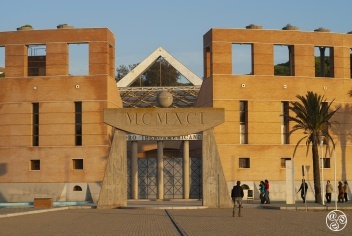
The Grupo de Universidades Iberoamericanas La Rábida (Group of Latin American Universities La Rabida) originates from an agreement signed in 1995 by several universities in the Latin American Headquarter of Santa María de la Rábida de la Universidad Internacional de Andalucía. Its purpose is to create academic, scientific, technological and cultural cooperation between Huelva, Andalusia and Latin America.
Built by José Álvarez Checa Curbelo and Tomás Curbelo between 1999-1991 for the celebration of the fifth centenary of the Discovery of America. Its construction would bridge the gap between the Old and the New World to symbolize the embrace between the two continents.
The monument was initiated in 1891 by Manuel Echegoyán and finished a year later, coinciding with the celebration of the fourth centenary of the discovery of America. The initiative for building the monument dates back to late 1875, when the President of the Diputación de Huelva, Antonio González Ciézar, exposes the idea of erecting a monument in honour of the participants in the discovery of America.
Plus Ultra was a Spanish Aeronautics Military seaplane that conducted its first flight between Spain and America, taking off on 22 January 1926 in front of La Rabida and arriving to Buenos Aires on 10 February 1926.
Boulevard: Sitting on top of the main coast road (in a 3km underpass) is the Boulevard park. Beaches & Promenade: San Pedro has an expansive beach and long seafront promenade with Chiringuitos. Paleochristian Necropolis: Paleochristian Balisilica Church and Necropolis are located in woods near the seafront.
A botanical garden with a growing collection of flora collected from five continents. It was opened in 1993 and the expedition was to result in an important herbarium of more than 20,000 species and a collection of 6,000 slides were sent to the Royal Botanical Garden of Madrid.
The monastery was constructed in 1412 on the site of a Moorish stronghold. 'Rábida' is a Arabic word meaning fortress. Its Moorish influences can still be seen in its Mudéjar architecture, including the fine cloister.
In Cordoba you can enjoy doing many activities: tapas, gardens, parks, golf, water parks, shopping, zoo, guided tours, arab baths, art galleries and more.
Tourist Office in San Pedro de Alcántara: Avenida del Marques del Duero, 69. Phone: 952 768 750. Helpful office and also has a model of the Basilica del Mar.
Villarrasa is situated within the Comarca El Condado and thrives on it agricultural production of olives, vines and fruit. It has about 2100 inhabitants.
Villalba del Alcor is situated in the heart of Comarca El Condado, east of La Palma del Condado. It thrives mainly on agriculture, specifically grape for the local production of wines from the Comarca. It has about 3500 inhabitants.
Trigueros is situated along the west side of the Comarca El Condado. A predominantly agricultural village with about 7400 inhabitants.
San Juan del Puerto is situated far south west of Comarca El Condado, bordering the capital of Huelva. Although considered an agricultural village, it is also an industrial location, due to its proximity to the capital. It sits on the north bank of the Rio Tinto. Through traffic from Seville to Huelva now by-passes the village on the A-49 Motorway. It has about 8700 inhabitants.
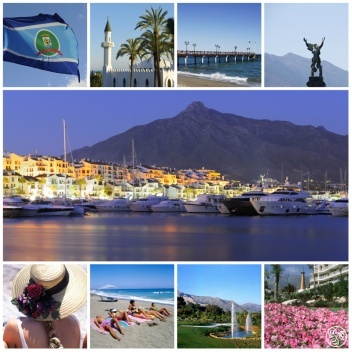
Marbella, whilst a modern and cosmopolitan resort town, still has numerous cultural and social events going in addition to important festivals and fairs that take place around the same time each year. Here is a look at Marbella's main traditional festivals.
Below is a list of related pages with more information on Marbella and what it has to offer. From various services available in the town to more general information about the weather, facilities and places of interest that can be found, all of these pages help to give an idea of what makes Marbella such a popular place to visit.
Things to see and do in Marbella. There are plenty of things to see and do in Marbella. Activities such as sport, shopping, markets, art galleries, restaurants, nightlife, beach clubs, day trips and excursions. There are also a attractions such as the old town, Alameda, Puerto Banus, parks and gardens, Roman baths and Roman villa.
Rociana del Condado is situated within the Comarca El Condado. Like its neighbouring villages, it thrives on agriculture, mainly strawberries, raspberries and grapes for the local wine. It has about 7600 inhabitants.