Jaen City - Tourist office
Jaen City - Tourist office, Oficina Municipal de Turismo de Jaén, Calle Maestra, 8, Jaén
Jaen City - Tourist office, Oficina Municipal de Turismo de Jaén, Calle Maestra, 8, Jaén
The Palace of the Counts of Villardompardo was built in the sixteenth century by Fernando Torres y Portugal, I Count of Villardompardo and Viceroy of Peru. The buildings current use is a cultural centre.
Shops are mainly located off Paseo de la Estación, with all the high street brands as well as gift shops, ceramics and local goods. There is also a selection of shopping centers with easy parking:
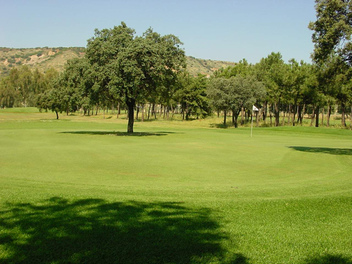
This is a flat golf course with fairways lined with oak, pine and cypress trees. This is Jaen province's only golf course, opened in 1994, and situated in a municipal park in Linares. It is an attractive course, suitable for all players, and the property of Andalucía's regional government.
Palacio de Congresos y Ferias de Jaén. This conference centre has 8 rooms with a total floor space of 4200 square metres and capacity for 713 people. The largest room has a floor space of 600 square metres and a capacity of 418 people.
There are two main conference centres in Jaen city. These are the Recinto de Ferias y Exposiciones de Jaen, Palacio de Congresos y Exposiciones Hospital San Juan de Dios. A third is in the nearby town of Ubeda; Centro de Congresos Hospital de Santiago-Úbeda
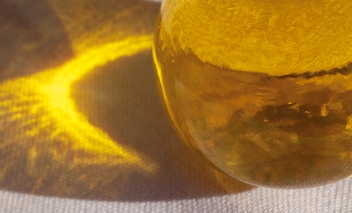
Jaen province has more olive trees than any other province in Spain, 40 million in fact - not surprising since its economy is based on olive oil. Liquid gold, as the locals call it, appears in all aspects of Jaen´s gastronomy.
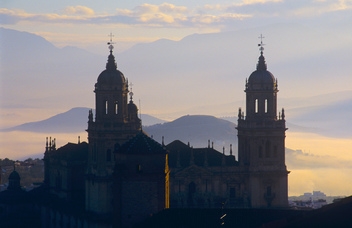
.Inside Jaen´s impressive Renaissance cathedral, behind the high altar, is a much-prized religious artifact: a cloth said to have been used by St Veronica to wipe Christ´s face as he carried the cross to Golgotha. The lienzo del Santo Rostro (cloth of the Holy Face) has an image of his countenance, allegedly, and is housed in its own chapel.
The people of Jaen make every typically Andalusian festival unique to Jaén, thanks to their own variations on the traditions.
The City of Jaen organises a full calendar of carnival events. This is a carnival with six centuries of history behind it with a man named Condestable Iranzo credited with founding the events in this part of Andalucia. As in other areas, it was prohibited for many years during Franco's rule of Spain, but today the Jaen Carnival is going strong.
Palacio de Congresos y Exposiciones Hospital San Juan de Dios conference centre has 7 rooms and capacity for 510 people. The largest room has the capacity of 150 people.
Although a palace was built over them in the 16th century, Jaen´s 11th-century hammam (Arab baths) have survived another 400 years, and are now the largest baths open to the public in Spain. They were probably constructed on top of earlier (Roman) baths which used local hot springs - you can see Roman ruins through a glass walkway in the basement of the palace, on your way to visit the baths.
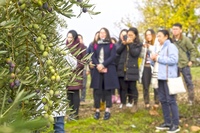
Our Almazara is a modern oil mill which has been awarded as the best technological and qualified mill in Spain. You will be able to learn the whole process of oil production in the very heart of Jaén, and you will gain knowledge about a healthy vegetal fat like no other.
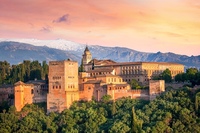
Alhambra is an exceptional place but no visit is complete unless we fully understand the art and history behind it.
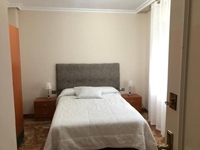
Offering a terrace and inner courtyard view, ALOJAMIENTO MIRASIERRA is set in Torre del Campo, 11 km from Jaén Train Station and 12 km from Jaén Cathedral. The property has mountain and city views, and is 11 km from Museo Provincial de Jaén. The accommodation offers a hot tub, free WiFi throughout the property and a lift.
The church is a temple of great architectural interest situated on the grounds of an Islamic mosque, the entire current church dates back to the first quarter of the sixteenth century, in the style known as Flamboyant Gothic.
The Royal Convent of Santa Clara, in the Gothic-Mudejar, Renaissance and Baroque styles, is thought to be the oldest convent in the city. It was built between the thirteenth and eighteenth centuries, and in 1979 it was granted the historical architectural monument designation.
The convent dates from 1580 and was built under the Order of the Mercedarian Fathers, who moved to live there and left a small house that they had near the Puerta Martos where they had their residence since the Re-conquest in 1288.
The small church is of medieval origin, being erected as a parish in the fourteenth century and built between the sixteenth and eighteenth centuries. A space with a steep slope that is softened by stone “cantons”, being delimited by a series of stately buildings of which there are still vestiges and among which the, Casa del Conde de Águila, stands out, better known as the “House of fear”.
It is one of the first temples in Jaén, as it dates from the second half of the fourteenth century, and was built on a mosque; proof of this is the existence of the remains of a Muslim minaret on Calle Martínez Molina.