Iglesia de la Magdalena
The church is a temple of great architectural interest situated on the grounds of an Islamic mosque, the entire current church dates back to the first quarter of the sixteenth century, in the style known as Flamboyant Gothic.
The Royal Convent of Santa Clara, in the Gothic-Mudejar, Renaissance and Baroque styles, is thought to be the oldest convent in the city. It was built between the thirteenth and eighteenth centuries, and in 1979 it was granted the historical architectural monument designation.
The convent dates from 1580 and was built under the Order of the Mercedarian Fathers, who moved to live there and left a small house that they had near the Puerta Martos where they had their residence since the Re-conquest in 1288.
The small church is of medieval origin, being erected as a parish in the fourteenth century and built between the sixteenth and eighteenth centuries. A space with a steep slope that is softened by stone “cantons”, being delimited by a series of stately buildings of which there are still vestiges and among which the, Casa del Conde de Águila, stands out, better known as the “House of fear”.
It is one of the first temples in Jaén, as it dates from the second half of the fourteenth century, and was built on a mosque; proof of this is the existence of the remains of a Muslim minaret on Calle Martínez Molina.
In the chronicles about this Convent it tells us about Francisco Ullua Palomino and his wife, Doña Luisa de Quesada y Valenzuela. His Christian piety was not content with having given a son and three daughters they had to the Order, they decided to give a good part of their property, founding a Convent of nuns.
The Paseo is a long and straight avenue that runs north from the historic and monumental center of the city. It begins in the Plaza de la Constitución, one of the liveliest places in the city, and ends in the Plaza Jaén por la Paz, approximately 1.4 km away, where the railway station is located.
The public fountain is situated next to one of the eight gates of the Santa Catalina Castle wall. Its design and construction is attributed to Alonso Barba, of clear Renaissance aesthetics and remarkable height, it is composed of a total of two bodies and a coronation attic.
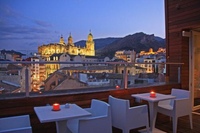
Situated in Jaén's historic and commercial centre, Hotel Xauen features a rooftop sun terrace with loungers, and panoramic views of the cathedral, old town and mountains. Free Wi-Fi is offered.
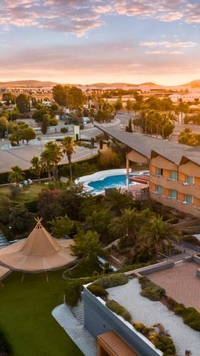
Situated next to the Jaen Museum, on Jaén's main avenue, the classic-style Condestable Iranzo offers free Wi-Fi access throughout. It features a rooftop terrace and a swimming pool open in the summer season with panoramic views of the city, as well as an on-site nightclub.
lbergue Inturjoven Jaen is located 100 metres from La Magdalena Church in Jaén in Andalucía. It offers air-conditioned rooms, a 24-hour reception and games area. Staff at the Inturjoven’s 24-hour reception can provide information about what to see and do in Jaén and the surrounding area.
Hotel Infanta Cristina is set in a new residential area of Jaen, near El Corte Inglés and the University. The hotel offers an outdoor swimming pool, gym and free Wi-Fi.This elegant hotel offers spacious, modern rooms with a private balcony. Rooms are all air conditioned, with satellite TV and a minibar.
This modern hotel is located in the city centre of Jaén and features a terrace with views over the cathedral. It offers rooms with free Wi-Fi, air conditioning, a TV and private bathroom.
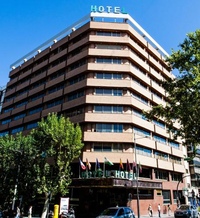
This 4-star hotel is located at the entrance of Jaén, perfectly located by the Bailen-Motril Motorway.
HO Ciudad de Jaén offers luxurious air-conditioned rooms with a private terrace and city views. Each one comes with free WiFi, a safe, a minibar, a flat-screen TV and a private bathroom.
On top of the Santa Catalina hill, this 18th-century castle has been beautifully renovated keeping its huge stone walls and many historical features to make for an authentic stay in Jaén.
Jaen is in the north east of Andalucia and tourists do not often visit Jaen. The mood of the city is more somber than other Andalucian towns, but the Cathedral is well worth a visit.
The bus station is on Plaza de Coca de la Pinera, 250m north of Plaza de la Constitucion. Alsina Graells runs 11 or more daily buses to Granada, seven or more to Baez and Ubeda and two to Cazorla. The Urena line travels up to eight times daily to Cordoba and three times daily to Seville. Other buses are for Guadix, Malaga, Almeria, Madrid, Valencia and Barcelona.
Jaen is also known – by historians – as the “Holy Kingdom”. This is because more or less the very same area we know today as Jaen Province, was long ago a kingdom, ruled first by Moors and then by Christians.
Jienense, as the locals are known, have a cuisine all their own – at least from their point of view. To the outsider, the menus of the day in Jaen will probably look very similar to those of any other town or village in Andalucia. To the insider, however – whether from Jaen or the rest of Andalucia – many dishes do offer a unique touch.