Latest Pages

Latest pages

We are committed to updating our pages as regularly as possible, allocating over half of our editorial resources to this essential task, to ensure that you can always find the latest, most reliable information on popular topics and places.

Here is a list with the latest pages that have been updated or created. Most recent are at the top of the list.
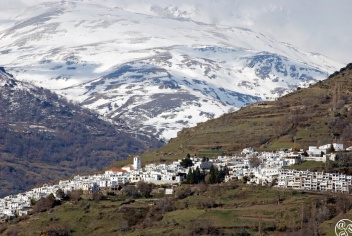
History of Almegíjar

The town's origins date back to the Neolithic era, as evidenced by artefacts found in the municipal area that date back to the time of settlement.

Festivals in Almegíjar

Popular festivals in Almegíjar are Cabalgata Reyes Magos, Día de Andalucía, Semana Santa, Romería de San Marcos, Fiestas de la Virgen de la Cabeza and Fiestas de Santo Cristo de la Salud.

El Puente Medieval o Romano

Although evidence of its origin only dates back to medieval times, the oldest bridge in Dúrcal is popularly known as the Roman bridge. The bridge is located close to the Camino Real (Royal Road) (GR-9067), which led up to the area of Las Fuentes, where the remains of a Roman villa have been found.

Fábrica de Orujo

It is one of only three oil factories built at the beginning of the last century that are still standing in a satisfactory state of preservation today. The factory was owned by Pepe Martín and Ignacio Ferrer. The chimney stands as a symbol of the past.

Central Eléctrica de San Antonio

The remains of this former power station can be seen on the right bank of the Dúrcal River, along the Nico Molina hiking route. It was built by the Tuset family in 1902 and inaugurated in 1908. Several other privately owned power stations existed at that time. The nearby Molino de Juana also operated as an electrical power station until it was converted into a school farm. Both stations used water channeling systems to power their turbines via waterfalls. The building consisted of two distinct sections: the first, where electricity was generated and the turbines were located (these have now disappeared), and the second, which housed the workers.

Puente de Lata

The bridge was formerly located in the town of Gor and was built at the beginning of the 20th century to carry the railway line between Guadix and Baza. Following a series of failures, a smaller bridge was built and the original bridge fell into disuse. TEGSA, the company building the tram line from Granada to Dúrcal, decided to purchase the superstructure of the bridge.

El Fuerte de Margena

The Márgena fort, dating back to the Nasrid period, is located in the fertile orchards of the Márgena or Mahina plain. This area is irrigated by a Muslim irrigation canal of the same name. Since the sixteenth century, the name of the Márgena neighbourhood has appeared in various chronicles, such as the Books of Survey and Distribution by Madoz, and the sketch of the Marquis of La Ensenada’s land registry.

Festivals in Dílar

Popular festivals in Dílar are Fiesta del Libro y Mosto, Three Kings, Día de San Sebastián, Semana Santa, Summer Feria, Chestnut Festival.

Lavaderos

Throughout history, washing clothes has been one of the most common tasks carried out by women. Until running water became widely available in homes, this task was carried out on the banks of rivers, in irrigation ditches, water troughs or courtyards. From the eighteenth century onwards, washhouses became places where women worked and socialised.

Iglesia Parroquial de la Inmaculada

The church was built by Juan Fernández in 1546 and has undergone many transformations throughout its history. Only the framework of the central nave remains of the original construction, featuring simple lintels and ten paired braces with a bow of eight on corbels in an inverted Mannerist design in the Mudejar style. The church now has three naves, separated by semicircular arches on pillars, as well as a transept, a main chapel, and a tower at the entrance.

Puente Antiguo

At the beginning of the nineteenth century, Granada was experiencing growth, making it necessary to establish new communication routes. Bridle paths had to be replaced with roads that could accommodate carriages. It was decided that the section of the royal road through the Alpujarra, passing through Dúrcal, Talará, Béznar and Izbor, should be used to reach Motril. However, the royal road to Motril passed through Restábal and Pinos del Rey.