Latest Pages

Latest pages

We are committed to updating our pages as regularly as possible, allocating over half of our editorial resources to this essential task, to ensure that you can always find the latest, most reliable information on popular topics and places.

Here is a list with the latest pages that have been updated or created. Most recent are at the top of the list.
Gardening in Andalucia

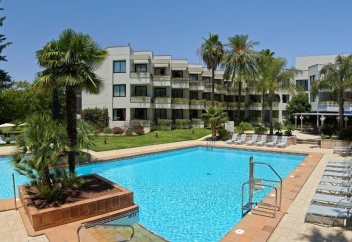
Gardening has never been so popular, especially in the UK where it dominates the airwaves and makes celebrities out of green-fingered presenters. But no-one can deny that gardens are special places. Being able to inhale the scent of flowers, watch birds from the kitchen window or merely sit outside on a sunny day, improves the quality of life beyond all measure. Whether you live in a palatial villa with sweeping lawns (and a resident gardener!) or a small apartment with a modest sized balcony, the Mediterranean climate is wonderfully conducive to creating your very own haven of colour, scent and soothing visual beauty.

Ronda Nightlife

As its population becomes increasingly younger and younger, so the lifestyle of Ronda changes, most notably its nightlife. The first-time visitor will be surprised, considering Spain's reputation as a nation of late-night carousers, to find Ronda's streets nearly deserted by 11pm, and retire to their accommodation slightly baffled.

History - Phoenicians to Carthaginians

During the 11th century BC, the first contacts between the Phoenicians and Iberia were made. This lead to the emergence of towns and cities on the southern coast including Gadir.

Cadiz Museum - Fine Arts & Archaeology

The archaeology museum on the ground floor. Some excellent glassware and jewelry are highlights and there is a good collection of amphorae as you'd expect from an historic port.

Órgiva

Located in the fertile valley of the Guadalfeo River, Órgiva is the largest town in the western Alpujarras. At an altitude of 450m, Órgiva enjoys a milder climate than many other places in the Alpujarras and is surrounded by olive, lemon and orange groves. Chris Stewart of 'Driving Over Lemons' fame lives nearby and his books have done much to boost the local tourist industry and attract more northern Europeans, mainly from the UK, to settle in the area. At last count, EU expats made up about a tenth of the town's 5,000 inhabitants. Órgiva has a somewhat bohemian atmosphere, as it is also a magnet for those seeking an alternative lifestyle. It has a population of around 5,700..

Glass and Crystal Museum

Glass and Crystal Museum opened in 2009, has around 700 pieces of glass, dating from Phoenician times to the 20the century. The museum is housed in an 18th-century casa palacio in the centre of Malaga, with spacious patios and gardens, is furnished like a private home, with antique sofas, rugs, mirrors and paintings, and cabinets for the glass.

History - The Phoenicians

The Phoenicians were a Semitic people who called themselves the ‘Canaan’ and lived in city-states on the coastal strip of what is today Lebanon. The Greeks called these people ‘Phoenician’ which is Greek for the Tyrian purple dye from the Murex mollusc that the Phoenicians traded. Tyre was their main territory but it would be difficult to call Tyre the capital of Phoenicia in the modern sense as all Phoenician city-states had their own kings or rulers — rather like the city-states in Greece.

History

The history of Fuengirola dates back to Phoenician, Carthaginian, Roman and Arabic times. Historical reference was made of the town during the 2nd century B.C. Roman remains have been found which include sculptures, one of which is the well known so-called 'Venus of Fuengirola', which is now an exhibit in the History Museum - Museo de Historia.

Necropolis Cerillo de las Sombras

Cerillo de las Sombras is an unusual Iron Age Necropolis (burial site) in Frigiliana, a pretty village six kilometres outside Nerja. It is one of just three Iron Age sites in Europe, dating from the 9th century BC. You cannot visit the site itself, as it is carefully protected, but to learn more about the necropolis.

History of Estepona

In Estepona various tools have been found made from local flint or quartzite using methods attributed to the Neanderthal era. Since we know the now-extinct Neanderthals lived in Gorham's cave in Gibraltar it raises the possibility that 30,000 years ago they were the first human (or at least humans' relatives) inhabitants of Estepona. These tools have been found in the Corominas and at Arroyo Vaquero.

History - Tartessos

For centuries Tartessos was as mythical as Atlantis and had just asWmany legends woven around it — but whether it was a city or an independent state, no one knows. The Greek historians Herodotus and Ephorus, plus Strabo the geographer, all wrote about Tartessos. The Roman historian Pliny the Elder indicated that Cádiz and Tartessos were really the same city but, although, the knowledge of early historians seems incomplete, they were all agreed that Tartessos existed.

Bacares - History

It is suggested that Bacares may have Phoenician or Tartesso origins, due to the richness of its mines. This is indicated by the remains of opencast smelters, common vestiges of the Phoenician culture. In the Muslim and Christian eras, the town stood out for the quality of its iron. It was here that forges produced works for the Cathedral of Almeria and some of the noble houses of the city.

Malaga History - Cerro del Villar

The ancient settlement of Cerro del Villar was built by Phoenicians around the second quarter of the 8th century BCE on a small sand bar (island) in the wide estuary of the Guadalhorce River. The sand bar is now connected to the southern river bank and alluvial plane.

Camino Mozarabe

The Camino Mozárabe de Santiago is marked footpath route which serves as way for walkers of pilgrims from parts of Andalucia (other than Sevilla) to join the Via de la Plata or Ruta de la Plata at Mérida and continue north to Santiago de Compostella.