Gibraltar Airport Flights
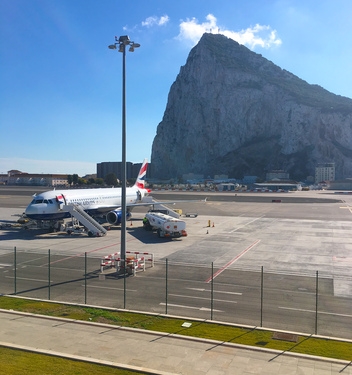
Table of all the destinations currently served by direct flights to and from Gibraltar Airport (GIB).
Table of all the destinations currently served by direct flights to and from Gibraltar Airport (GIB).
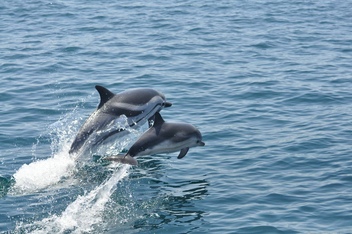
There are three species of dolphin commonly found in the Bay and Strait of Gibraltar. They are the Common Dolphin, the Striped Dolphin and the larger Bottle-nosed Dolphin. There are numerous dolphin-watching trips on offer and it is not unusual to be able to see these fascinating creatures close up in their natural environment.
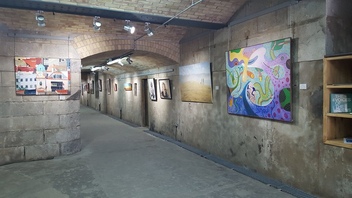
Art Galleries in Gibraltar include John Mackintosh Hall, The House of Sacarello and the Fine Arts Studio, Local Art Exhibitions can also be found in the City Hall.
In Gibraltar the following events take place throughout the month. Every Monday to Friday. The Integral Yoga Centre runs a full programme of Yoga classes at 33 Town Range. Everyone is welcome. More information on 956 741 389.
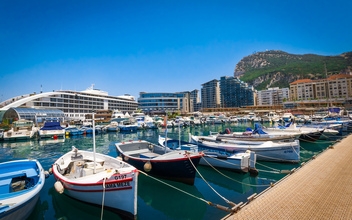
Gibraltar has plenty to offer for its more energetic visitors. The Rock is being promoted as an international yachting centre. There are already three major marinas to meet the needs of virtually every pleasure craft imaginable. The most modern marina is at Queensway Quay with 121 berths.
You will need a passport to enter Gibraltar unless you are an EU citizen with a valid national identity card. Citizens from many countries are required to obtain a visa before entering Gibraltar.
Gibraltar is so small (about 6 square kilometres) that getting around town - and around The Rock, in general - is a feasible option, if you have the time and energy.
Find tourist offices in Gibraltar at the following locations: Casemates Square, Airport Arrivals Hall, Gibraltar Coach Terminus, Gibraltar Cruise Terminal, Frontier
Judging from the number of sports and leisure associations in Gibraltar, this must be one of the most action-packed rocks in the world.
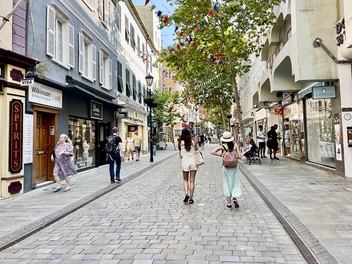
Gibraltar has an extensive array of shops, from luxury brands to British high-street stores, keeping window shoppers & shopaholics alike entertained.
Gibraltar is a multi-cultural community so it follows that its range of restaurants reflects the tastes of its inhabitants. Running parallel to Main Street is the pedestrianised Irish Town that is well worth a visit with its historic coffee houses, specialist ironmongers, Irish pubs and attractive restaurants.
These are Gibraltar's official public holidays.
Property in Gibraltar is in high demand for a number of reasons. In the first place, space is extremely limited. Secondly, many of the newer developments fall into the high quality, luxury category and are sought after by both locals and outsiders alike. And finally, thanks to a wonderful climate and favourable tax situation this rock is highly attractive to those wishing to relocate themselves and their wealth.
There is certainly no lack of things to do or places to visit during your stay in Gibraltar. Below we list some of the key sites to visit. Detailed information on all these can be obtained from any of the Gibraltar Tourist Board Information Centres. Tel: +350 20045000. Fax: +350 20074943 Email: [email protected]
There is no shortage of places to go in the evening. Hotel cocktail bars offer comfortable and sophisticated surroundings for a quiet drink or not so quiet, jazz performance or other live band. For a more informal evening, almost every street in town has wine bars and lively cosmopolitan pubs. Later you might dance into the small hours at one of Gibraltar's trendy disco pubs or enjoy a flutter at the Casino.
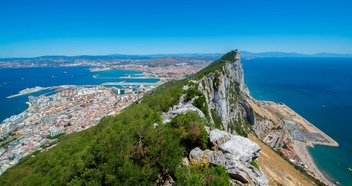
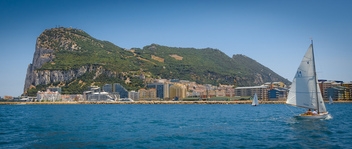
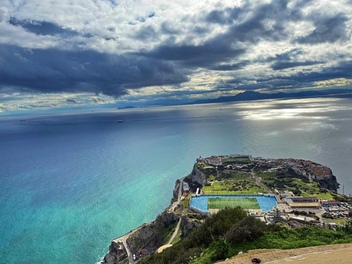
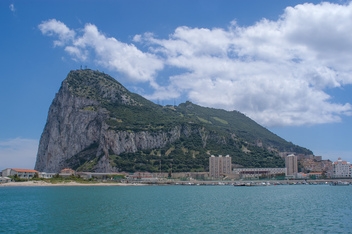
The Rock of Gibraltar is a giant slab of jagged Jurassic limestone. It has dominated the Straits of Gibraltar for around 200 million years and of course over such a period has continually changed and evolved. The porous limestone ensures that the Rock always has a plentiful water supply. So when nearby Spain is often arid and brown the Rock will be lush and green.
There are two marinas in Gibraltar, Ocean Village and Queensway Quay offering excellent berthing facilities, shops and restaurants. Sailing boats are available for charter.
Gibraltar might be small, but those wishing to live and work on the famous Rock will be pleased to hear that it is not a closed shop. Depending on your country of origin, however, you might need a residence permit.
Due to Gibraltar's unique geographical position, multi-culturalism reigns on this rock. The official language is English, but natives are typically bi-lingual, speaking Spanish as fluently as English. It is not unusual to hear the native Arabic of Gibraltar's other near neighbours as well, and Portuguese, Italian and Russian are not uncommon tongues in these parts either.
The land frontier between Gibraltar and Spain is open 24 hours a day, seven days a week both for vehicles and pedestrians. There is no limit on the number of frontier crossings you can make. Since 15th July 2026 when Gibraltar joined the Schengen area of the EU there are no passport nor customs formalities crossing the border.