Latest Pages

Latest pages

We are committed to updating our pages as regularly as possible, allocating over half of our editorial resources to this essential task, to ensure that you can always find the latest, most reliable information on popular topics and places.

Here is a list with the latest pages that have been updated or created. Most recent are at the top of the list.
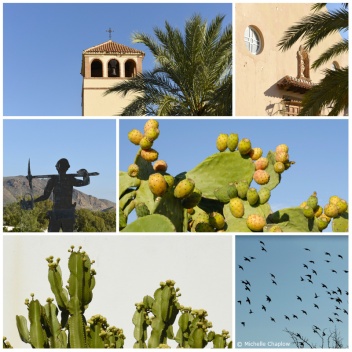

Casabermeja

Casabermeja, otherwise known as the door or gateway, to Malaga, is a great a place to head inland from the coast to explore the mountains of Malaga. This village lies within the Parque Natural del Montes de Malaga (Malaga mountains natural park) and is also close to various other mountain ranges such as El Torcal, de Cabras, del Co and de Camorolos, as well the Arroyo de Guadalmedina and de Coche.

Car Hire Itineraries

In this section we have suggested some itineraries that you can use as a base for tours in Andalucia. These itineraries also link together many other information pages. As always the greatest problem is how to fit so much in a limited period of time and have a holiday as well rather than win an endurance award. You will need a good map.

Almogia

This small town roughly halfway between Málaga and Antequera is rightly proud of its name. It derives from the Moorish al-megia or al-mexía, 'the pretty one', a reference to its position in the foothills of the Sierra del Hacho, in the shadow of the Sancti Petri peak.

Ardales

The rural village of Ardales, well known to Spaniards who spend summers at its reservoir-side campgrounds, is perched along the border of the Ronda mountains. It offers more than stunning countryside and fresh air, however, as those who take the time to enter the town will find. History has been good to Ardales - at least from tourist office's point of view.

Coín

Coín is situated in the fertile valley of the rio Grande and there is little doubt that a community of some kind existed on the spot long before the Roman conquest. Nevertheless, it was the Romans who gave it the first name which has survived: Lacibis. It became a market town: a transition point for the minerals being quarried 5 kilometres or so to the south in the Sierra Blanca.

Pizarra

Pizarra is a tiny town lying 30 kilometres upriver in the Guadalhorce valley at the foot of the 350 metre high Sierra del Hacho. Still a largely farming community, it has so far managed to avoid the threat of absorption by the spreading metropolis of Málaga in spite of the recent appearance of the two commuter settlements of Zalea and Cerralba on its western face.

Churriana

Churriana is one of the 11 districts of Malaga, in the south-western part of the city. It includes the airport, the beach and coastal area of Guadalmar, and the Sierra de Churriana hills. The Phoenicians called Churriana, Siryana. Until the beginning of the 20th century, this area was a separate town, but today it forms part of the city.

Mollina

There has been a human settlement on the site of this small town (current population just over 3,500) since Neolithic times. Just 15km north-west of Antequera on the A92, on the lower slopes of the Sierra de Mollina, this is set in perfect olive and cereal country. It is also a mere ten km from the Laguna de Fuente de la Piedra lake, famous for its pink flamingos.

Alhaurín de la Torre

Unlike its equally venerable neighbour, Alhaurín el Grande, which has managed to preserve and even modestly flaunt a little of its Roman and Moorish heritage, Alhaurín de la Torre has conspired to hide its past with such ruthless efficiency that it is now almost impossible to find. Even the tower which gave it its name is long gone.

Fuente de Piedra

The village of Fuente de Piedra (with a population of approximately 2,000) is close to the Natural park and lake; Laguna de Fuente de Piedra. Due to the presence of the lake, it seems that man has been in this area since prehistoric times. Later, commercial links were maintained with the Phoenicians and the Carthaginians. During Roman times, the lake was named "Fons Divinus" or divine spring, due to the medicinal properties of the water.

Yunquera

Set below the heights of the Serranía de Ronda and the start of the Hoya de Málaga range, this pueblo sits between El Burgo and Alozaina on the Ronda-Málaga road. It is a relatively large village with today over 3,000 inhabitants. The surrounding peaks reach over 1500m and winter snows cover them for two or three weeks each year.

Montecorto

Montecorto village as a municipal district was formed as recently as October 2014. It had been part of the municipal district of Ronda. Montecorto has about 600 inhabitants. The origins of Montecorto go back to the Neolithic age, when it was associated with small agricultural communities that settled here due to the fertile land, abundance of water, and other important resources such as flint-stone which was used as tools.

Jubrique

The village is easily approached by road, which skirts lower part of the village. Whenr approaching from Estepona park up by the Morisco looking monument of the Hermitage of the Castanuelo, just above the town. Looking down the immediate valley, the old Lavardero can be seen, which until the coming of electricity, was the main washing area. A pleasant short track leads down to this.

Cuevas del Becerro

The village of Cuevas del Becerro, 733 metres above sea level and sitting quietly beside the Ronda to Campillos road like a retired highwayman dreaming of his fiery youth, is living proof that in the hills of Andalucía there is always more to the landscape than meets the eye.

Benadalid

Benadalid is a village that is working hard to develop its reputation for quality rural tourism. With a perfect location, this has not been difficult as the town is situated in the Genal River Valley and close to the Guadiaro Valley and surrounded by Cuco mountains and near the “Tajo de los Aviones” and “Tajo de la Cruz” gorges.

Benarrabá

This hidden village can only be approached by car, along its own short but mountainous 3-kilometre road. To find the turn off, look for Gaucín on the map and the junction to the right is 5 kilometres to the north. The municipal district was probably much larger as the pueblo was once the site of an important village.

Cartajima

Located halfway between the Ronda-San Pedro road and village of Juzcar, Cartajima is a small, quiet hamlet. It is one of the highest communities in the province of Malaga, at 846m above sea level. Like other villages in the Alto Genal of the Serrania de Ronda, Cartajima is famous for its chestnut trees , which are harvested in October and November.