Top 10s Attractions

Andalucia has a rich history - the Moors played a huge part, leaving their mark in extraordinary buildings around the region. Columbus sailed from here, and the natural wonders of Andalucia are boundless, from rare birds to wonderful foods. Here are our Top 10 attractions – of a very, very long list.

Parque de las Ciencias Granada

Granada's excellent science museum is located just two kilometres (or a 15-minute walk) south of the centre of the city on Avenida del Mediterráneo, opposite the Convention Centre. Probably the most stimulating museum for children in Andalucia, although be warned that large, noisy school groups come in term-time, from Tuesday to Friday.
Teatro Romano Málaga

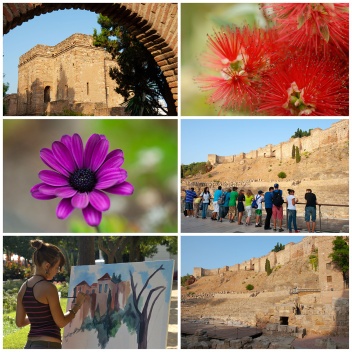
El Teatro Romano is the oldest monument in Málaga City, it is situated in the cultural heart of Málaga city, at the foot of the famous Alcazaba fortress.

Museo Naval Torre del Oro

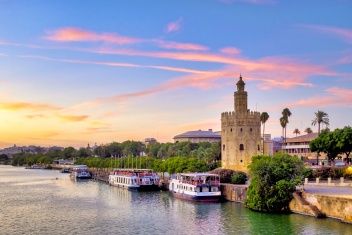
The Torre del Oro (Golden Tower), which dominates the banks of the river Guadalquivir next to the Puente San Telmo, is a remnant of the Moorish fortified walls which originally enclosed the city, with 166 towers and 15 gates. A watchtower designed to protect the docks, its iconic shape makes it one of Seville's best-known monuments, after the Giralda which was built just a few years earlier.

Barrio Santa Cruz, district of Seville city

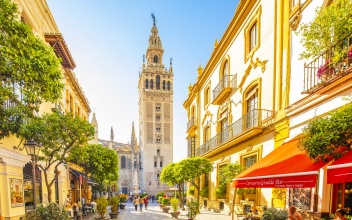
This is the first barrio (area or neighbourhood) tourists head for, and with good reason. It is the most picturesque and delightful part of the city, with narrow winding cobbled streets and whitewashed houses, where you can sit outside a bar, enjoy some tapas and watch the world go by, or wander through centuries-old gardens and relax on beautiful tiled benches.

Italica

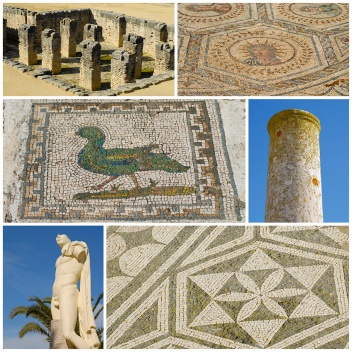
Roman ruins of Italica, near Seville, with remarkable mosaics and an impressive amphitheatre, are located 9 kilometres to the north of the city, just outside the village of Santiponce. Nearby you can also see a well preserved Roman theatre. Both are signposted from the the main road.

Triana district of Seville city

Famous for having its own strong identity - it's known in Seville as "the independent republic of Triana" - this district is celebrated for its azulejos (ceramic tiles), made in workshops here originally using mud from the river bank; its sailors, bullfighters and flamenco artists.

Monasterio de la Cartuja

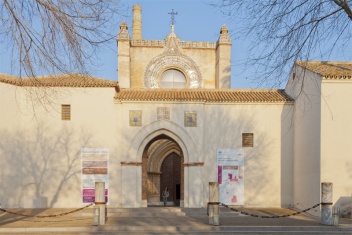
This large, walled complex of honey-coloured stone buildings, situated on the Isla la Cartuja (named after the monastery itself; the word means “charterhouse”), has seen many ups and downs during its long, dramatic history. From monks who welcomed Christopher Columbus, to barracks for Napoleon’s troops, ceramic factory run by an Englishman producing world-renowned porcelain, to modern-day contemporary art gallery and open-air live music venue.

Metropol Parasol

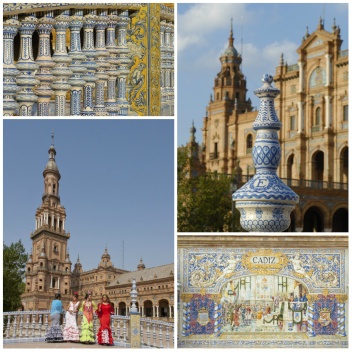
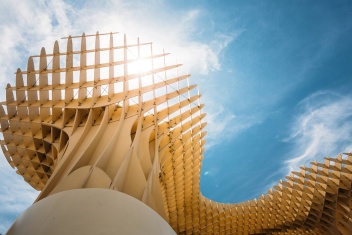
Known locally as Las Setas (the Mushrooms), due to its short stems and wide caps, this is the most ambitious, expensive and controversial urban project in Seville since Expo 92. Opened in 2011, and designed by German architect Jurgen Meyer H, it is now one of Seville's architectural icons, along with the Giralda, Torre del Oro, Plaza de España, and the Alamillo bridge.

Alcazaba of Málaga

La Alcazaba is Malaga's most important landmark, and overlooks the city from a hilltop inland. It is one of two Moorish fortresses in the city, the other being the Castillo de Gibralfaro, situated above. The Alcazaba is the best-preserved Moorish fortress palace in Spain. It received about 1 million visitors in 2016.

Malaga City Beaches

Malaga City has much to offer a tourist, not only is it the cosmopolitan capital of the Costa del Sol it also has kilometres of beautiful sandy beaches. The beaches are all situated along the Promenade of Pablo Ruiz Picasso which is lined with bars and restaurants where you can sample Malagueño produce and culture at its best.

Malaga City Museums

Whether you like wine, archaeology or cars; you’re interested in glass, contemporary art or 19th century painting, you’re sure to find at least one museum which will interest you in the city. Most visitors to Malaga go to the Picasso museum and his birth house, as the painter is the most famous son of the city. There is also a first rate art museum now which focuses on Andalucian art – the Museo Carmen Thyssen.

Picasso Museum

The people of Malaga are proud of the fact that Picasso was born here and it was a big day when the King and Queen of Spain inaugurated the Museo Picasso (Picasso Museum) on the 27th October 2003. On that first day alone almost 2,000 people visited. the museum, which is housed in the Palacio de Buenavista.

Malaga City Cathedral

Malaga´s cathedral was built between 1528 and 1782 on or near the site of a former mosque. While original plans had allowed for two towers, both lack of funds those donated to American Independence resulted in the completion of only one, giving rise to the name by which the cathedral is affectionately referred to, La Manquita, loosely interpreted as "one armed woman".

Places of Interest

Located in a magnificent 19th century mansion designed by the architect of the Paris Opera - Garnier. Training sessions may be watched and there is a tour of the stables. An ´Equestrian Ballet´ also takes place on Thursdays (and some other days, depending on the month).

History

Jerez de la Frontera dates from Phoenician times, but first rose to prominence under the Moors, who called it Xerix or Sherrich ‘De la Frontera’. These names refer to Jerez’s position on the frontier of Moorish Spain, and the Alcazar (fortress) is a reminder of the town’s strategic importance.

Jerez Motor Racing Circuit

The Jerez race circuit opened on 8 December 1985 with the Touring Car Spanish Championships, marking a truly momentous event. Today the course boasts many state-of-the-art facilities and hosts the Spanish Moto GP every year; usually last weekend in April or first in May.

Sherry Bodegas

The white chalky soil of the Jerez area, 'albariza,' is ideal for the cultivation of Palamino grapes which produce the sherry for which Jerez is so well known. If you arrive at Jerez airport, as you leave your plane to walk to the terminal, you will be greeted by wooden sherry barrels piled up decoratively, along with grassy lawns and beautiful flowers, surely one of the most attractive of any Andalucian airports.