Bars in Jerez de la Frontera

Part of any complete Andalucian experience is the tapas bar. There is a wide choice of tapas bars to choose from in Jerez and, naturally, the local fino (sherry) is the usual accompaniment to your traditional bite-size snack.

Huelva City Museum

Huelva's provincial museum, housed in a modern building on the Avenida Sundheim, has an interesting archaeological collection, with objects from the megalithic sites of La Zarcita at Santa Bárbara de las Casas and El Pozuelo at Zalamea la Real; Tartessian treasure from the necropolis at La Joya; and Phoenician and Greek artefacts discovered in excavations within the city. Moorish artefacts are also on display.

Iglesia de San Pedro

Huelva's oldest parish church, the Iglesia de San Pedro, was constructed in the 15th and 16th centuries on a hilltop site of a mosque and next to the remains of a medieval fortress. It faces a pleasant palm tree-lined square, the Plaza San Pedro.

Catedral de la Merced, Huelva

The Iglesia de la Merced used to serve as the church of the neighbouring convent, the Convento de la Merced, and was designated a cathedral in 1953. It is one of the best examples of Baroque architecture in Huelva province, with a striking pink exterior and a bright white marble interior. It dominates the Plaza de la Merced, an elegant square lined with tall palm trees.

Sacromonte, Granada

The Sacromonte is famous for the gypsy caves, but the gypsies were neither the first nor the last people to live in them. Long before the Oriental nomads arrived in Spain, the Arabs had discovered that the soft stone of the hill was ideal for carving out underground homes, and gypsies simply moved into them after the conquest.

Corral del Carbon, Granada

The Arabic Word bib means gate and rambla river bank. Until the end of the 19th century, there stood, at the plaza´s east end, a large Moorish gate which gave the place its name - gate of the strand, because it stood on the sandy bank of the river which now flows unseen beneath the Calle de los Reyes Catolicos.

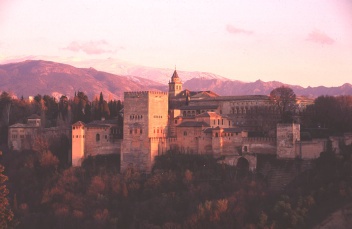
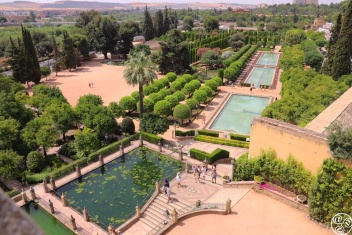
Generalife gardens of the Alhambra

After the city was conquered, the Generalife was granted by the Catholic Monarchs to the Granada Venegas family. The promenade leads to the "Patio de la Acequia" which is the most celebrated spot and the heart and soul of the palace grounds.

El Albaicín, Granada

El Albaicín is the old Moorish quarter of the city. It's located on a hill facing the Alhambra and there are dramatic views of this area from the palace's famous rose gardens. The Zirid Monarchs first established their court here in the 11th century although little remains from this era today, apart from some crumbling remains of the wall.

Granada City Cathedral

The Cathedral is located in the centre of the Muslim area and dates back to 1523. It has a nave and four aisles, a crossing and circular apse. Alonso Cano built the main façade with sculptures by Duque Cornejo, Risueño and Verdiguier while the only tower of the two planned ended up half finished. On the northern side, there is La Puerta del Perdón, a magnificent work of Diego de Siloé who also built La Puerta de San Jerónimo.

Arab Baths in Granada

The Arab Baths are one of the most important historic and architectural aspects of Granada, as they are symbolic evidence of the city's religious turmoil all those centuries ago. The baths were built by the Muslims because they believed water was a symbol of purity, and so used it to cleanse their bodies, whilst the Christians.

Cordoba City Top Ten

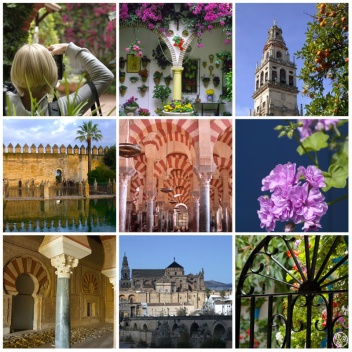
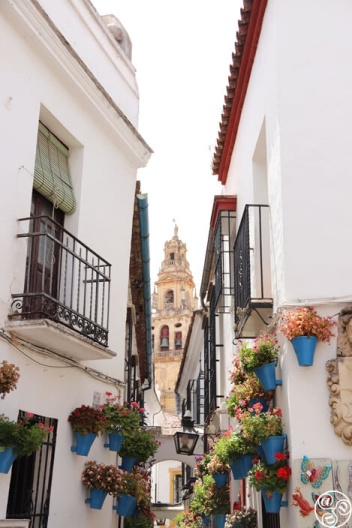
May is the best month to visit Cordoba, with its riot of colourful and fragrant celebrations. The floral excitements kick off with the Battle of the Flowers parade, followed by the Cruces de Mayo - a competition of flower-decorated crosses, between city neighbourhoods, then the Patios Festival - traditional Andalucian houses whose interior courtyards are festooned with potted flowers and plants, bursting with blooms.

Palacio de Viana

This Palace, which was declared a National Monument and important Artistic Garden, has a surface of 6,500 m2, more than half of which is occupied by the garden and the rest by a building with two floors and two little entresols.

Botanical Garden

The hothouse has 130 plant species from the Canary Islands, divided into three areas by climate: moist such as geranium; desert plants, such as spiny and succulent (cacti and aloes); and a diverse group which includes ferns and Cycads (palms and ferns), as well as many native Spanish plants, also found in the Andalucian mountains and the Balearic islands.

Tower of La Calahorra

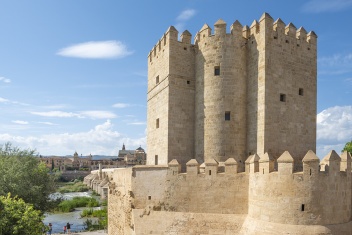
The Tower of La Calahorra rises up at the south of the Roman bridge, the far end from the city centre. It is a fortified gate originally built by the Moors (Almohads) and extensively restored by King Enrique II of Castile in 1369 to defend the city from attack by his brother Pedro I the Cruel from the South. It was origionally an arched gate between two towers. Enrique II added a third cylindrical shaped tower connecting the outer two.

Plaza del Potro

Just a few minutes away from the Mezquita, to the east along calle Luis de la Cerda/Lineros, is the Plaza del Potro (Square of the Colt), a long, rectangular square which slopes down towards the nearby Guadalquivir river to the south. It is named after the 16th-century fountain in the plaza (1577).