Tourist Offices in Antequera
Tourist offices in Antequera: Town Hall Tourist Department, Municipal Tourist Office and Tourist Center.
Tourist offices in Antequera: Town Hall Tourist Department, Municipal Tourist Office and Tourist Center.
Plan your visit to these selection of interesting museums in Antequera town. Theses include the Casa Museo de la Diputacion Provincial, Museo Conventual de las Descalzas, Museo Taurino, Museo de Usos y Costumbres San Benito, Museo del aceite - Hojiblanca
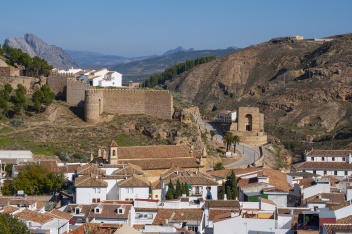
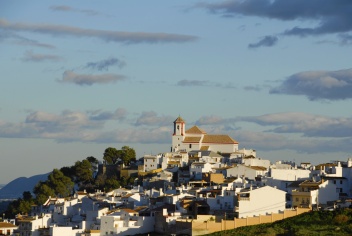
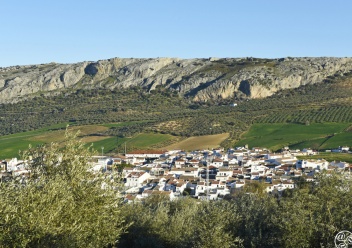
Antequera is a medieval town in the hills to the north of Malaga, overlooked by a Moorish fortress or Alcazaba. It is located in a fertile river valley, with olive groves and fields of sunflowers, and has great climbing and walking attractions nearby.
The municipal district of the village of Alozaina, some five kilometres in area, sits between the distinct geographic regions of the Guadalhorce Valley and the Serrania de Ronda. This gives the area a varied landscape of fertile agriculture and mountain upland, topped by the limestone outcrops of the Sierra Prieta and La Ventanilla.
This mountainous town on the road between Ronda and Coín is dominated by the limestone outcrops of the surrounding mountains of the Serrania de Ronda. The bizarre rock formations of El Torrecilla (1900m) and its surrounding parque natural overlook the town and provide the source for the Río Turón that runs through it.
Arriate is a jack-in-the-box; a surprise package in a plain wrapper. Enter it from any direction, and it appears to be a sleepy rural village waiting, with no sense of urgency, for its grass to grow and its paint to dry. Then, abracadabra! - a corner is turned and the visitor is suddenly thrown into the sophisticated high street of a chic and bustling small town.
Casarabonela geographically belongs to the Hoya de Málaga valley and the fertile valley that leads down to the coast, although the upper reaches of the municipal district touch on the mountainous region of Ronda and it falls in the administrative district of Yunquera.
The village of Cuevas del Becerro, 733 metres above sea level and sitting quietly beside the Ronda to Campillos road like a retired highwayman dreaming of his fiery youth, is living proof that in the hills of Andalucía there is always more to the landscape than meets the eye.
Malaga is best known for its string of popular beach resorts along the Costa del Sol and, although these have their own attractions, the province has much more to offer. Malaga city is a vibrant provincial capital with a fascinating history, while the area of the Costa del Sol to the east of Malaga city, towards Granada, is less developed, and is known as La Axarquia.
Set below the heights of the Serranía de Ronda and the start of the Hoya de Málaga range, this pueblo sits between El Burgo and Alozaina on the Ronda-Málaga road. It is a relatively large village with today over 3,000 inhabitants. The surrounding peaks reach over 1500m and winter snows cover them for two or three weeks each year.
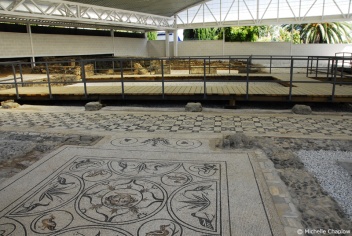
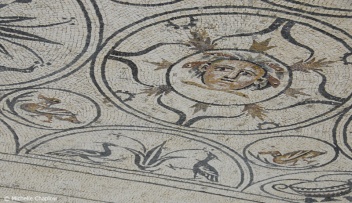
The ancient site at Rio Verde may have been part of the Roman town of Cilniana. It now houses the remains of a late 1st century AD Roman villa. Sadly all that is left is the floor and a small portion of the walls of the villa (the highest at 1.2 metres). However, fortunately for us it is a floor unlike any other - embellished with black and white mosaic tiles in patterns never before seen in a Roman Villa.
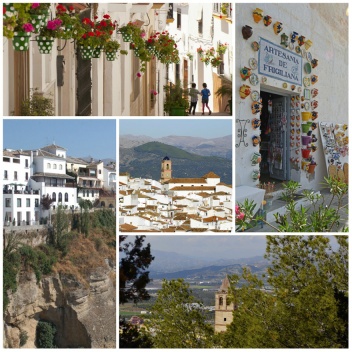
Partially surrounded by the ruins of an old Arab wall with narrow white washed streets, old churches and squares, as well as lots of fascinating shops and boutiques At the heart of the old town is Orange Square which dates back to 1485
Read more about the archaeological sites in Estepona: Castillo del Nicio, Ermita del Calvario, Torre del Reloj, Nuestra Señora de los Remedios, Plaza de las Flores, Runias del Castillo de San Luís and more.
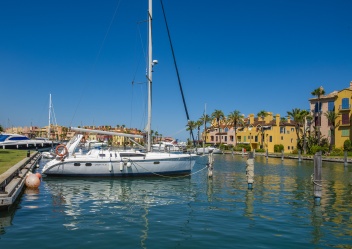
It is hard to imagine how different the land looked back in the early 1960s when Joseph McMicking (Joseph Rafael McMicking y Ynchausti, 1908-1990), a naturalised American with a Scottish and Philippines family background, had the foresight to create what is now the Sotogrande resort.
Granada province is characterised by extreme variables in landscape and climate, to the extent that you can even ski in the mountains in the morning, and then go diving in the sea in the afternoon. When you've explored the magnificent city of Granada, with its majestic Alhambra palace, venture further afield: visit cave dwellings in a desolate desert-like area, climb the Iberian Peninsula's highest mountains, and lose yourself in the region's rich Moorish history and fortified palaces.
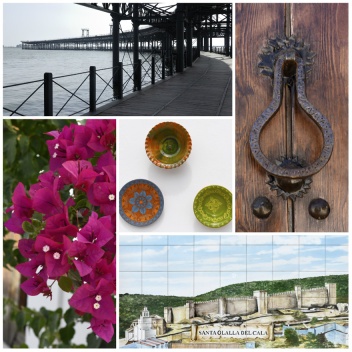
Huelva is one of the least-visited regions in Andalucía, but it has many unique places to discover and explore, from cork oak-covered hills, to deserted beaches. Indeed, this province's escape from mass tourism is one of its main attractions. It lies at the western edge of Andalucía, bordered by Portugal to the west, Seville province to the east and the region of Extremadura to the north.
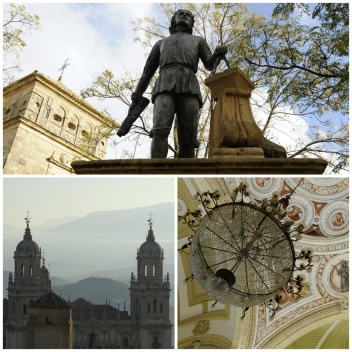
Jaén is probably best known for its abundance of olive trees which dominate the landscape and punctuate the horizon, interspersed by stark white-washed farms and houses against a deep orange backdrop; the colour of the soil. This province is the world's leading producer of olives and olive oil.
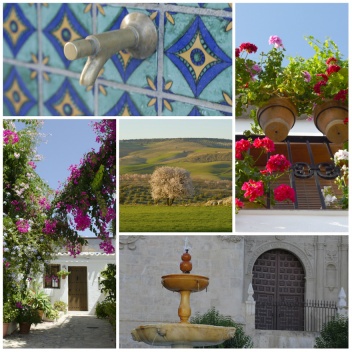
The countryside of Cordoba province is extremely varied, from rolling plains around Cordoba city, the Guadalquivir basin and south to Seville province, to forbidding mountain ranges with jagged peaks in the north and west. Dotted around the province are many pristine whitewashed villages with Baroque churches, Moorish castles and flower-festooned courtyards.
In the far south-eastern corner of the Iberian peninsula is this sun-baked province, with the highest hours of sunshine and lowest rainfall in Europe. Given Almería's climate, it´s no surprise that much of the province is comprised of semi-arid desert-like landscape.
Relatively few foreign tourists venture beyond the delights of Seville city and the region's main transport arteries to Cordoba, Cadiz, Malaga and Huelva. But there are abundant places to explore - Baroque and Renaissance towns in the Campina, and the stunning Sierra Norte countryside of rolling olive fields dotted with small, characterful towns.