Andalucia Recipes

Andalucian cuisine is generally simple and tasty. In this section you'll find recipes that bring the flavours of this region to your kitchen no matter where you are in the world.
Andalucian cuisine is generally simple and tasty. In this section you'll find recipes that bring the flavours of this region to your kitchen no matter where you are in the world.
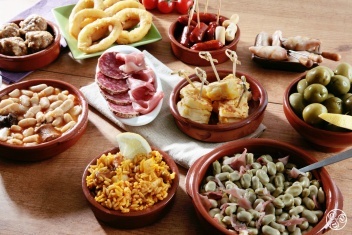
Step out of the Andalusian sunshine. Just follow the crowds through this little doorway, into the cool interior of a typical bodega or wine bar. Multi-coloured tiles line the walls while clay-tiled floors shine with the patina of years of footsteps. Barrels of wine are stacked behind the bar. From wooden beams hang whole hams and links of sausages, ropes of garlic and peppers.
Granada is one of the last towns in Spain where you still get a free tapa with every glass of wine or beer. We have our earliest record of this marvellous tradition from King Alfonso 10th "El Sabio" (whose wisdom extended also to music and poetry, as lovers of the cantigas de Santa Maria are well aware).
Granada is one of the last towns in Spain where you still get a free tapa with every glass of wine or beer. We have our earliest record of this marvellous tradition from King Alfonso 10th "El Sabio" (whose wisdom extended also to music and poetry, as lovers of the cantigas de Santa Maria are well aware).
Tapas are more than just snacks in Andalucia. The word means, literally a lid and the term was thought to have come from the habit of having a few nibbles with a drink and the necessity of placing a saucer or tapas on top of a glass to keep the flies out.
Andalusia is Al-Andaluz, the kingdom of the Moors (Muslim Arabs and Berbers), who ruled southern Spain from the eighth to the 15th century. Way back then, Andalusian cuisine was the most opulent of all of Europe, in the use of spices, herbs, almonds, rose water, orange blossoms and other exotic flavourings of the Oriental heritage.
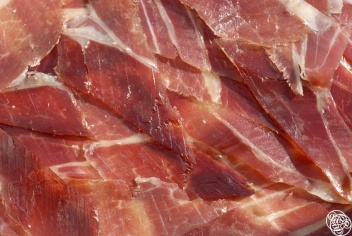
Cured ham is called jamón serrano, or mountain-cured ham. It can be very good. But, Andalusia has some special pigs with a southern accent. These are a native breed called iberico, a small brown pig which thrives on the acorns from scrub oaks and cork trees.
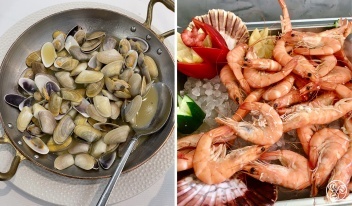
Five of Andalucia's eight provinces have stretches of coastline (Almería, Granada, Málaga on the Mediterranean; Cádiz and Huelva on the Atlantic), while a sixth, Sevilla, has a tidal river and a seaport. So, you can imagine that the cooking of the coastal regions is distinguished by a huge variety of seafood. The fish market is a great place to get acquainted with the local catch.
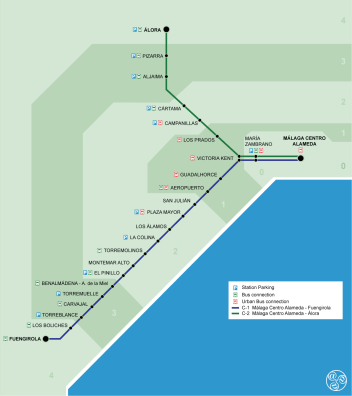
The RENFE train station in Fuengirola is located on Avenida Jesús Santos Rein, just one road away from the bus station. From here you can catch the Fuengirola to Malaga commuter (cercanías) trainline C-1 which takes 48 minutes to get to Malaga City, via Benalmádena, Torremolinos and Malaga Airport.
The Estacion de Autobus (bus station (95 238 24 19) in Torremolinos is not a bus station but a bus lay- by on Calle Hoyo 8 oposite the Hospital de Dia and near the junction with Plaza de las Añpujjaras. There is a small kiosk to purchase tickets. There are regular buses to most of the main Coast de Sol towns, including Benalmádena, Fuengirola and Marbella.
Andalucia has some excellent cheeses, often eaten as a tapas accompanied by a glass fino or manzanilla sherry. The cheeses are mostly made from goat's milk, from herds which live in the mountainous areas of the region. A whole round of cured cheese with textured rind weighs between one and four kg and costs about 12-18 € per kg.
The bus station in Fuengirola is located in the town centre, on Calle Jacinto Benavente, just one road away from the train station. From here you can take buses along the Costa del Sol, west to Algeciras and east to Malaga.
Andalucia is best known for its beaches, sunny weather and flamenco. But food is a hugely important part of southern Spain - indeed, the Mediterranean diet was recently recognised as being part of UNESCO's world cultural heritage.
The bus station is located within the same building as the train station, in the Estación Intermodal. ( Intermodal station; meaning bus and train combined station). the building opened in 2005 as the first of its type in Spain. It is open from 05.00 to 24.00 hrs. Here is a plan of the station. You are able to take buses from here around the city.
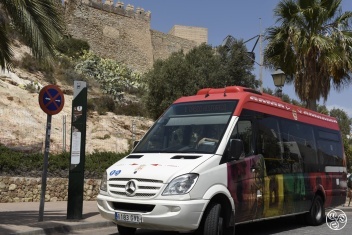
Bus service operates from Marbella to Malaga Airport (AGP), Algeciras, Almería, Benahavís, Benalmádena, Cádiz, Coín, Córdoba, Estepona, Fuengirola, Granada, Jaén, La Línea, Málaga, Ojén, Ronda, San Pedro, Sevilla, Torremolinos and Madrid.
The main bus and coach station is located just to the west of the centre of town, next to the Train Station. There are also coaches from here to Costa del Sol and Andalucia.
There are bus services from Jerez de la Frontera ato Seville and Cadiz and other towns and villages in the surrounding province of Cadiz.
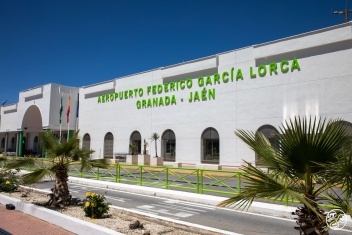
Granada Airport, situated in the area known as "Vega del Genil" or plains of the River Genil 16 km west of the city of Granada and 106 km south of the city of Jaen. It traditionally handled national flights to Madrid and Barcelona but recently has expanded with a number of international flights from low cost airlines. The first recorded flight at the Santa Fe location was in 1911 to celebrate Corpus Cristi.
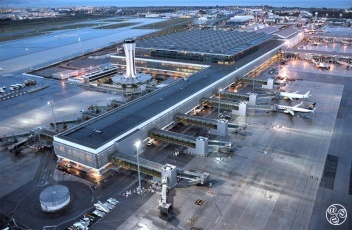
Málaga Airport is the fourth busiest airport in Spain with over 22 million passenger movements in 2023. Malaga Airport offers full range of passenger services. The airport essentially operates from Terminal 3 which was opened in March 2010. The second runway which is only used at peak times was opened in June 2012.
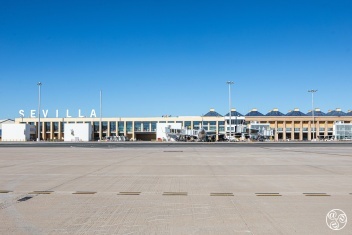
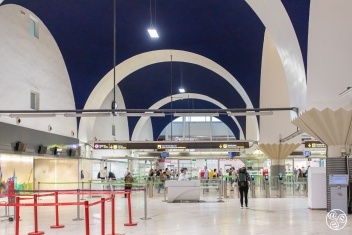
Seville Airport dates from 1914 when a permanent aerodrome was established on land used for an air show and for the first flight between Europe and Africa. The present terminal was opened in 1989. The architect Rafael Moneo designed the with three traditional components of Seville culture in mind