Latest Pages

Latest pages

We are committed to updating our pages as regularly as possible, allocating over half of our editorial resources to this essential task, to ensure that you can always find the latest, most reliable information on popular topics and places.

Here is a list with the latest pages that have been updated or created. Most recent are at the top of the list.
Bédar

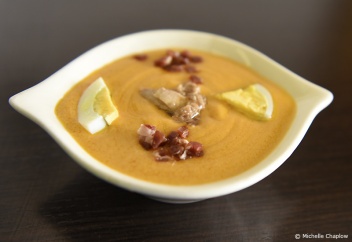
Bédar has a strong mining past which is evident in the area of El Pinar (which has now been urbanized), from which the first cableway in the province was erected in 1888. This cableway ran to the blast furnaces of Garrucha. Bédar now has around 920 inhabitants. Although we do not know when the town was founded, the origins of Bédar date back to the Moorish period, when it was part of Vera.

Hotels

One of the more famous coastal towns on the Costa Almería, Garrucha is well-known as being the residence of many economically and socially high-standing people in Spain. It is also known for its amazing gastronomy, with fresh ingredients and seafood coming straight from the Mediterranean waters.

Lubrín

Lubrín is an ideal destination for lovers of rural tourism. Visitors can discover its charm by walking through the residential areas, and the centre offers the typical narrow, steep Andalusian streets flanked with whitewashed houses adorned with flowers. The town has around 1,400 inhabitants. During the sixteenth century, in the time of Felipe II, there was an morisco uprising of in Granada city and the villages of the Alpujjaras.

Garrucha

Garrucha has a rich history spanning fishing traditions and industrial mechanization, all of which can be observed throughout the town. It has around 8,800 inhabitants. The earliest reference to a settlement in Garrucha dates to 1327. The spot was fought over by nearby Vera and Mojácar until royal intervention offered the diplomatic solution of a tax on its port activities to be paid to the competing neighbouring towns.

Turre

Turre’s name comes from the Latin turris, meaning ‘tower’, and since the Ibero-Roman occupation of the town, it has acted as a settlement for numerous Mediterranean civilizations, inclucing the culture of Los Millares and the Argaric. Steeped in this history, it encapulsates the socio-cultural history of Almeria. Today, it has around 3,300 inhabitants.

Hotels in Mojácar

Positioned in the mountains of Almeria, the town of Mojacar gives stunning views overlooking the Mediterranean Sea. It is located within an hour's drive from the provincial capital of Almeria City and that city's convenient transportation connections.

Sorbas

Sorbas, also known as Cuenca la Chica, is an extremely impressive village. It is located on a small plateau over the Río Aguas, and its white houses are almost suspended over the ravine. It has around 2300 inhabitants. Several prehistoric settlements dating from the Neolithic and Metal Ages have been found in Sorbas. Some found in the town centre at the beginning of the twentieth century have been dated as far back as the Bronze Age.

Carboneras

Sitting in a unique and spectacular environment, Carboneras is a perfect destination for nature lovers. Visitors can enjoy the views, or practice open-air sports including hiking or scuba diving. It is set within the Nature Reserve of Cabo de Gata-Níjar, one of the most arid protected areas in Europe and the only one in Andalusia with a coast, including Los Muertos beach.

Níjar

Níjar is renowned for its superb handcrafts in pottery, ceramics and textiles. This exceptional corner of Andalusia is a stunning natural enclave, right on the edge of the Cabo de Gata Natural Park. It has been described as one of the most picturesque towns in the whole of Spain. A visit to Níjar guarantees the traveller a flavour of the ‘real’ Andalusia.

Hotels and Accommodation

Accommodation is widely available in and around the municipality of Níjar. In the town itself, there is everything from hotels to hostels, as well as self-catering options including apartments and villas. There are many small villages surrounding the town which also provide accommodation.

Hotels in San José

What was once a small fishing village is now the most important touristic hub of the Cabo de Gata-Níjar National Park. San José is home to some of the most breathtaking scenery in Almería province and also has some of the most spectacular beaches on the Costa Almería.

Roquetas de Mar

Roquetas de Mar is a fishing town just 15 minutes by car from the provincial capital, Almería. It is famed not only for its fishing traditions, which are preserved today through gastronomy and annual festivals, but also as a coastal resort town. It has around 94,900 inhabitants.

San José

San José sits beside a shallow bay at the south end of the Cabo de Gata Natural Area. Once a small eighteenth-century fishing village, it is now the most important touristic hub of the Cabo de Gata-Níjar National Park; this tourism has supplanted fishing as the town’s principal economy.

Excursions from Aquadulce

See below a selection of excellent excursions from Aquadulce to interesting locations in the countryside. The perfect opportunity to see some of the interesting aspects of Andalucia culture without the hassle of having to organise them yourself.

Roquetas de Mar Cinemas

Information about the cinemas in Roquetas de Mar. Yelmo Cines Gran Plaza is located in la Gran Plaza Parque Comercial. Large cinema with 13 screens. Also with free parking.

Hotels

El Ejido is well-known for its close proximity to many beautiful beaches as well as to the Reserve of Punta Entinas-Sabinar. For this reason, the town is a hub for tourists and travellers and has quite an array of hotels and accommodation options to welcome them. As well as hotels, the town has quite a few hostals and guesthouses, providing a cheap and comfortable alternative.

Festivals in San Roque

If visiting San Roque village or one of the other suburbs in the area, bear in mind the following dates (dates change slightly each year to take in weekends where possible): February: Carnival time. Easter Week - when the streets of San Roque a filled with the scent of orange blossom, jasmine and incense and the whole village is involved in organizing and taking part in the processions and celebrations of Semana Santa (Easter).