Latest Pages

Latest pages

We are committed to updating our pages as regularly as possible, allocating over half of our editorial resources to this essential task, to ensure that you can always find the latest, most reliable information on popular topics and places.

Here is a list with the latest pages that have been updated or created. Most recent are at the top of the list.
Hotel Petit Palace Plaza Málaga

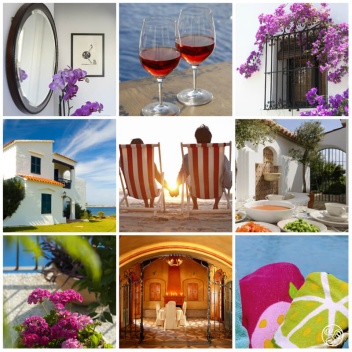
The Petit Palace Plaza Hotel Malaga occupies a late 19th-century palace. Located in the heart of the city, just off Calle Larios, the building has been refurbished and updated for the 21st century. The impressive architecture is perfectly conserved while at the same time the hotel offers all the comfort and high-tech facilities you’d expect to find in a four-star establishment.

Sol Guadalmar (formerly Tryp Malaga Guadalmar Hotel)

This modern nine-storey hotel, part of the Melia group, is set in beautiful gardens next to the beach and the close to the Parador Malaga Golf. About 5km south of the city centre, it is also well located Book now! for the airport. The 197 rooms and suites are comfortable, with pine headboards, pale bed linen, marble floors and sea-view balconies.

Palacio de los Patos

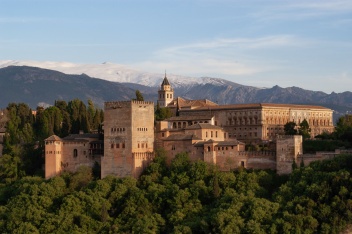
A 19th-century palace with a perfect blend of historic features and contemporary décor, plus an avant-garde wing of metal and glass. This magnificent period building, which sits behind wrought-iron gates, is surrounded by its own garden complete with palm trees - an oasis in a busy city, overlooked by the Alhambra palace.

Christmas

Christmas is not Andalucia´s biggest religious celebration - Semana Santa has that distinction. But it is nonetheless a big deal, with all the seasonal ambience, lights, markets, special food and other trappings. Every school, shop, office and home has a Nativity Scene.

Casa Morisca

This three-star hotel was originally a morisco residence – Moors who stayed on after the Christian reconquest by the Catholic monarchs, Ferdinand and Isabella. With just 14 rooms, the beautifully restored Granada house epitomises the intimate atmosphere of the Albaicin, with its narrow streets and centuries-old houses. The interior courtyard has a morisco pool which dates from when the house was first built.

Alhambra Palace

You can easily spot this five-star hotel, with its striking, ochre-coloured crenellated walls perched on the hill, from anywhere in Granada’s old town. It is one of the closest hotels to the Alhambra, five minutes’ Book now! walk away, while the city centre is also a short distance, just down the hill (though a steep climb with shopping bags or a full stomach).

Puente Genil

The town of Puente Genil owes its name to the bridge that was constructed over the Genil River in the sixteenth century. A later bridge was constructed by Hernán Ruiz. Today it has about 30,200 inhabitants.

Palma del Río

Palma del Río is particularly stunning when the orange trees that line its street are out in flower and the fragrance of orange blossom fills the town. It has about 21,100 inhabitants.

Summer 2025 Newsletter

Summer in Andalucía is more than just a season – it’s a celebration of life, colour, and traditions under the southern Spanish sun. This is the season to experience the region’s essence – on long, sunny days, slow down with a late lunch on a terrace, an evening paseo as the sun goes down, or live music under the stars at an open-air concerts.

Sotogrande Music Festival 2023

The second edition of the Sotogrande Music Festival took place in the grounds of the Puerto Maria Polo Club, Los Pinos fields from 1 July until 15 September, a musical extravaganza that will present artistes of diverse styles, ranging from more traditional music such as copla, or Spanish song, to energetic genres such as urban pop, rock and rap.

Sotogrande - Alto

Sotogrande Alto is the name given to the half of Sotogrande that is located on the mountain side of the A-7 (formerly N-340) coast road. This half includes the areas around three championship golf courses; Valderrama Golf Course, Almenara Golf Course and La Reserva Golf Course.

Sotogrande - Costa

Sotogrande Costa (formerly Sotogrande Baja) is the name of the half of Sotogrande that is located on the coastal side of the A-7 (originally N-340) coast road that 'split the resort in two' when this section was constructed in 1969 (see Sotogrande history).

Sotogrande - Ribieras and Islas

The newer Sotogrande Marina comprises numerous frontline apartments called Ribieras and Islas. The Ribera nearest to the Sotogrande Marina Entrance and the Puerto Deportivo is called Ribera del Marlin. The quay level features a commercial area of boutique shops and restaurants. The long running Sunday Market takes place here, as well as other summer evening events. There is a sizeable free public car park under the Ribera del Marlin.

Bahia Dorada - Estepona districts

The Bahía Dorada urbanisation is located to the west of Arroyo Vaquero, and to the east of the Buenas Noches district. It is one single large urbanisation built on both sides of the A-7 coast road, giving either coastal or mountain views depending on the location.

Architects

Some of the great modern Architects have an association with Andalucia. Buildings and Housing complexes throughout the region are testament to the creative vein that continues to run through southern Spain.

Valentin de Madariaga

Valentin is a world-famous architect and president of the Fundacion Valentin de Madariaga y Oya. Born in Seville in 1960, he lived in his native city until the age of 18, when he moved to Madrid to study architecture. After university Valentin remained true to his Andalucian roots, working in Malaga, Cadiz and Seville.

Sacromonte, Granada

The Sacromonte is famous for the gypsy caves, but the gypsies were neither the first nor the last people to live in them. Long before the Oriental nomads arrived in Spain, the Arabs had discovered that the soft stone of the hill was ideal for carving out underground homes, and gypsies simply moved into them after the conquest.

Sacromonte Cave Museum, Granada

The Sacromonte is famous for the gypsy caves, but the gypsies were neither the first nor the last people to live in them. Long before the Oriental nomads arrived in Spain, the Arabs had discovered that the soft stone of the hill was ideal for carving out underground homes, and gypsies simply moved into them after the conquest, as the Moriscos were expelled.