Latest Pages

Latest pages

We are committed to updating our pages as regularly as possible, allocating over half of our editorial resources to this essential task, to ensure that you can always find the latest, most reliable information on popular topics and places.

Here is a list with the latest pages that have been updated or created. Most recent are at the top of the list.

La Malahá

The Greeks called it Malka. The Romans, Misarza. The Goths called it Mizarza, and the Arabs Al-Malaha. When looking at maps or roads to the village; you might see its name written in different ways. The district of La Malahá is located at the foot of the mining hill of Montevives. This area is home to some of the most important salt mines in Andalucía. These historic mines feed the waters of the Santapudia and Salado streams.

Books - Mediterranean Garden Plants

It covers over 350 of the best plants for our climate - ones that will work with you helping to form that Mediterranean garden of your dreams.

Lorraine arrived in Andalucia over 25 years ago and may be known by many of you for her specialist plant nursery near Cómpeta and her writings in many publications within Spain. This was the book that she was writing in her head over many years, based on clients' doubts and queries about local plants.

Écija - Gastronomy

The gastronomy in Écija is based entirely on natural ingredients. There is a great variety of recipes imported throughout its history as well as the great diversity and interaction of the different cultures existing in Écija. Dishes include sopa de gato (tomato and pepper soup), gazpacho and flamenquines (stuffed with hardboiled egg and ham).

Hotels in Cazorla

A very popular tourist destination all year round due its rich historic and cultural heritage, as well as it being an ideal setting for hiking and walking, Cazorla is flooded with accommodation options. A huge selection of hotels is available both in and out of the town, as well as numerous self-catering mountain chalets, apartments and villas.

Soportújar

This village, located in the Sierra Nevada National Park, has an important factor which distinguishes it from all the other Alpujarra villages: its altitude. This factor allows visitors to enjoy the majesty of the Sierra Nevada, and at the same time, get some great views of the Mediterranean Sea across the Valle de Órgiva.

Restaurants

Now one of the most popular holiday destinations in the Cabo de Gata nature reserve, San José has an abundance of restaurants, tapas bars and cafés to accommodate the influx of tourists that descend upon the town all year round.

Navas de San Juan

Visitors to Navas de San Juan can enjoy walks through its enchanting streets, admiring the remarkable buildings that make up its historical and artistic heritage. It has about 4,500 inhabitants.

Maps

If you are considering visiting San Fernando you may find our maps a useful tool, we provide three maps, one of the region of Andalucia with San Fernando highlighted. The second handcrafted map gives the location of San Fernando with the corresponding local road network.

Gobernador

Gobernador is a village in Granada province located at 1,000m altitude. Gobernador also has archaeological remains from Roman and Arabic times. The town is close to the Genil and Guadiana Menor rivers, and is situated at around 1000m above sea level. After the Reconquest, the town became the property of Governor Don Francisco de Molino, after whom Gobernador was eventually named.

Arroyomolinos de León

Arroyomolinos de León is at 609m above sea level, with a population of about 1000. It is located east of Cañaveral de León within the Natural Park of the Sierra de Aracena and Picos de Aroche on the border between Huelva province and Extremadura region, offering beautiful natural scenery. Like Cañaveral de León.

Ermita de Santa Lucía

This chapel was built using alms collected from devotees who passed through Puerta de Arenas and stopped to pray before the saint. This worship was initially carried out towards a painting of the saint placed against the rock walls, until a proper image was established in a small niche in 1840. Once enough donations had been collected, the first chapel was built in 1858. The blessing was attended by the local authorities and more than 2,000 devotees from all over the region. The chapel deteriorated over time and required numerous restorations. At the end of the 1990s, the Puerta de Arenas recreational area was built, offering bird watching, a botanical garden, hiking and a picnic spot. Located north of the town, off the N-323A.

Flamenco - Villancicos - Zambombas

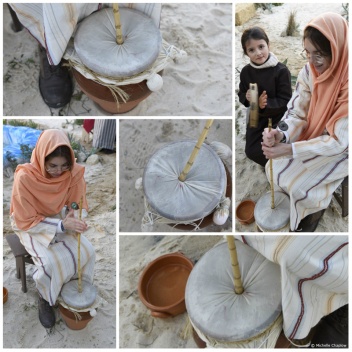
The villancicos are also known by the name of zambombas in Andalucía, a name which comes from the instrument that is traditionally used to accompany them. A zambomba is a drum like instrument that has a stick inserted through the skin, and the stick is moved up and down, creating the rhythm.

Festivals in Almócita

Festivals in Almócita: Cabalgata Reyes Magos, Fiesta de San Blas, Carnaval, Día de Andalucía, Semana Santa and Fiesta en Honor a Nuestra Señora de los Desamparados.

Stand Up Paddleboarding (SUP)

'Stand up Paddleboarding', popularly called SUP, or surf a remo in Spanish, is an alternative to surfing which sees users stand on their board and propel themselves through the water using a paddle. The sport is usually performed in the calm sea or a lake as larger waves or strong winds make it challenging. It reached Tarifa in 2011 and became popular in other parts of Andalucía by 2015.

Sancti Petri - Novo Sancti Petri

Novo Sancti Petri's is the newer seafront town located to the south of the old town, with a new seafront promenade behind the magnificent beach Playa de La Barrosa. This beach actually stretches for 8km, from Sancti Petri village to Torre del Puerco, a defensive coastal tower dating from the 19th century.

Book your stay in Andalucia Now!