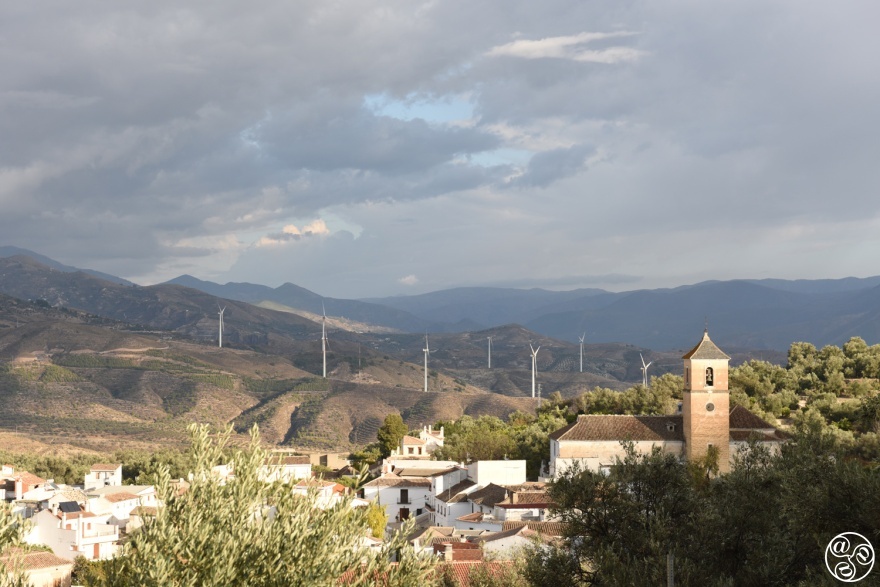
 Pinos del Valle village in El Pinar municipal district
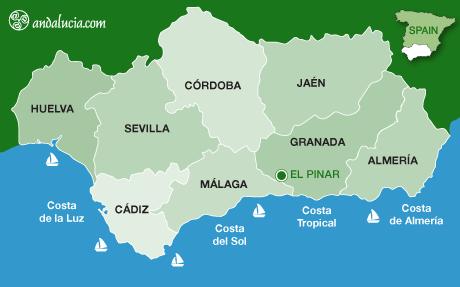
El Pinar
El Pinar is not a village, but a municipal district formed in 1976 from the merger of three small villages: Pinos del Valle, Ízbor and Acebuche. Boasting a rich historical and artistic heritage, evident in its numerous religious buildings, the El Pinar district is renowned for offering some of the most spectacular landscapes in the Lecrín Valley. It has a population of around 900.
HISTORY
Pinos del Valle and Ízbor were two independent municipalities until 1976, when they merged with Acebuche to form El Pinar. Pinos del Valle became the location of the town hall. Due to the villages location at the entrance to the Alpujarras they played a key role in the historical events that took place during the 1568 Moorish rebellion, often called the War of the Alpujarras, and the subsequent expulsion of the Moors.
THINGS TO SEE
Iglesia de Inmaculada Concepción (Pinos del Valle)
This is the oldest church in the town. Built in the mid-sixteenth century, it was restored at the end of the century due to damage sustained during the Moorish rebellion. More>
Iglesia de San Sebastián (Pinos del Valle)
The church was built on the site of an old rábida, a military and/or religious fortress built by Muslims in Al-Andalus to protect their borders from Christian invaders. It was located on the Camino Real, which led to the Costa Tropical. More>
Iglesia de San José (Ízbor)
The church was built in the sixteenth century and later enlarged. It has a rectangular nave and a single-bay chancel. The main chapel is accessed via a semicircular arch and the nave is covered by a distinctive truss. The church is located on Calle Real.
Lavadero del Barrio Alto (Pinos del Valle)
Like all other public wash houses in Spain, the one in Barrio Alto was traditionally a place where neighbours met and socialised. Water has shaped the culture and customs of Spain, leaving behind buildings like this one that continue to be a point of reference in many villages even today.
Molino del Barrio Bajo (Pinos del Valle)
The olive oil mill is one of many that have existed in the town since the Muslim period. Outside, you can see a press that was used to extract oil from paste placed in esparto grass baskets. The mill is currently owned by the Town Hall and is used as a multi-purpose venue. However, it serves as a reminder of the municipality's olive-growing tradition, as well as the importance and relevance of olive cultivation and its role in the area's gastronomy today. It is located on Calle Simon de Rodas.
Fuente del Miriñaque (Ízbor)
This fountain is one of the most charming places in the town of Ízbor. It has long been a traditional meeting point for locals and travellers passing through the town on the way from Granada to Motril via the tunnel. In the past, it was located on the left-hand side of the road to Motril, but due to roadworks, the water is now channelled to a pillar next to the aforementioned tunnel. It is located on Calle de la Fuente.
THINGS TO SEE OUTSIDE THE TOWN
Ermita Cristo del Zapato
Situated on the top of Monte Chinchirilla in Pinos del Valle, the chapel is one of the most famous landmarks. This small temple is dedicated to the Santo Cristo del Zapato. More>
Puente de Tablate
To the east of El Pinar district on the way to Lanajaron lies the abandoned village of Tablate, with its deserted church, Iglesia de Santiago, and the steep Tablate ravine, considered the gateway to the Alpujarras.
A bridge of Arab origin, built over the Tablate gorge, on the royal road that linked Almería to Granada via the southern route around the Sierra Nevada. The arab bridge's single arch is constructed from red brick with remnants of stone on the outer edges and parapets. It span is only 19m but is nearly one hundred meteres above the river. Elements from five different periods can be distinguished in the masonry. More>.
NATURAL AREAS
Embalse de Béznar
The Béznar reservoir is mainly supplied by the waters of the Ízbor River, the main tributary of the Guadalfeo. Built to improve irrigation for subtropical produce in the Motril and Salobreña areas, supply the population of Granada's Costa del Sol, act as a flood defence and guarantee concession flows to the Ízbor hydroelectric power station, the reservoir was completed in 1986. Construction of the Béznar reservoir began in 1977 and was completed in 1986. It was constructed at a location known as 'El Salto del Lobo', where the river narrowed to such an extent that there were rocks between the riverbanks, supposedly allowing a wolf to jump from one to the other, hence the name. In terms of sports activities, canyoning and bungee jumping are popular, and the reservoir is also a renowned spot for sport fishing, particularly for cyprinids and black bass.
BUS SERVICE
There is a bus service from Pinos del Valle to Granada and Los Guájares. More>
GASTRONOMY
Typical dishes to try in El Pinar are puchero de hinojos (fennel stew), remojón de naranja (orange and cod salad), migas (fried breadcrumbs with pork), sopa de ajo (garlic soup), cazuela de fideos (pasta stew), gazpacho de limón (lemon soup) and habas fritas (fried beans). If you want something sweet, try arroz con leche (rice pudding), natillas (custard), arrope (honey and pumpkin pudding) and flan de naranja (orange egg custard).
FESTIVALS
Popular festivals in El Pinar are Fiestas Patronales, Fiestas de la Cruz, San José and San Cayetano. More>
WEATHER FORECAST
The weather forecast for the next few days for El Pinar More>
TOURIST OFFICE
The tourist office of El Pinar is located in the Town Hall. More>
NEARBY PLACES
The neighbouring villages to El Pinar are Mondújar and Vélez de Benaudalla.