Granada Festival (of Music and Dance)
For more than half a century this amazing festival of international music and dance has brought some of the world’s best musicians and dance performers to Granada bringing the city’s top venues to life.
For more than half a century this amazing festival of international music and dance has brought some of the world’s best musicians and dance performers to Granada bringing the city’s top venues to life.
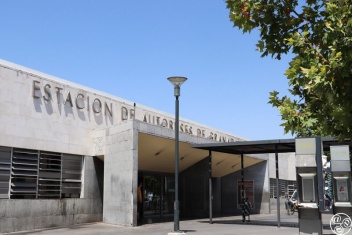
Granada Bus Station is situated on Avenida de Juan Pablo II, in the north west of the city about 3km from city centre. it is the only bus station in Granada having replaced the older 'Camino de Ronda' station in 1995. The metropolitan (urban) red bus line numbers 5, 33 and 21 go from outside the bus staion to different parts of the city. There is a metro stop outside the bus station.
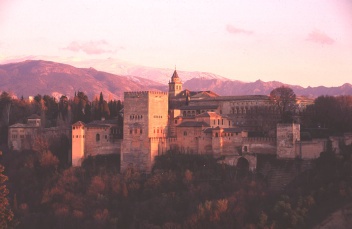
Granada boasts one of the most magnificently positioned palaces in the world, as wondrous to behold from across the gorge, with the white peaks of the Sierra Nevada glinting behind in the sun, as it is to examine close at hand, with its elaborate symbolic designs. The city has a fascinating history, which can still be seen today in Granada´s carmens and Arab baths.
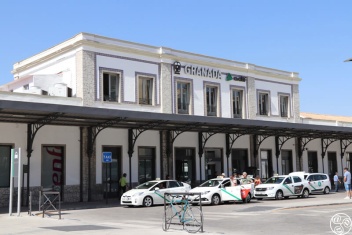
Granada Train Station is situated at the convergence of Calle de Halcon and Calle Doctor Jaime Garcia Royo. Trains are an easy way to travel to and from the city of Granada, it is also possible to take trains from Granada (RENFE) Train Station to towns in Granada province.
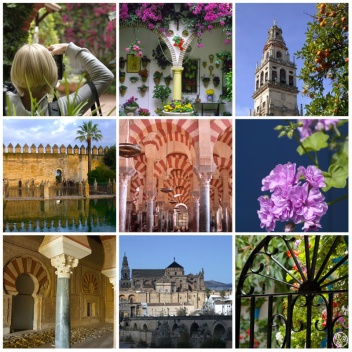
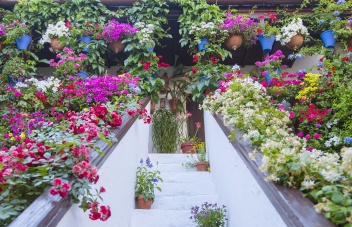
May is the best month to visit Cordoba, with its riot of colourful and fragrant celebrations. The floral excitements kick off with the Battle of the Flowers parade, followed by the Cruces de Mayo - a competition of flower-decorated crosses, between city neighbourhoods, then the Patios Festival - traditional Andalucian houses whose interior courtyards are festooned with potted flowers and plants, bursting with blooms.
The AVE high speed train links Cordoba with Sevilla (45min) and Madrid ( 2hrs) and also Antequera and Malaga. The RENFE station opened in 1994 and is located in the northwest of the city. More Cordoba station.
Museums in Cordoba City: Museo de Joyerá Regina, Alcázar de los Reyes Cristianos, Museo Arqueológico, Museo de Bellas Artes, Museo Julio Romero de Torres, Museo Diocesano de Bellas Artes, Museo Monográfico Madinat Al-Zahra and more.
Once the largest city of Roman Spain, Córdoba later formed the heart of the western Islamic empire. Today, the city is a typical bustling, noisy Andalusian city, with lots of atmosphere, fascinating sites, intriguing small streets and shops and the inevitable fabulous choice of restaurants and bars. Download pdf list of sites in Córdoba with their opening hours.
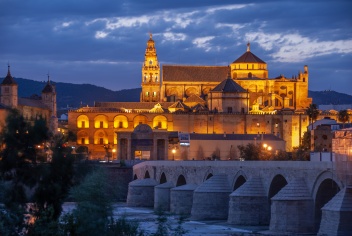
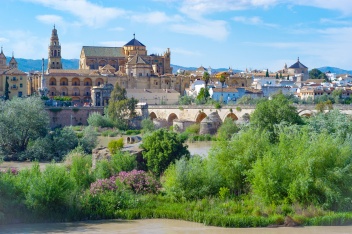
Cordoba is best known as being home to one of Andalucia's three great monuments: the Mezquita, the other two being Seville's Alcazar and Granada's Alhambra. Like the other two, the city embodies the region's rich cultural and religious history: the Mezquita - which dates from Cordoba's zenith, as capital of Al-Andalus and the largest and most important city in Western Europe, with 500,000 inhabitants.
The Patio contests is sponsored by the Córdoba City Hall and began in 1918. But to really understand why a contest of this type was created in Córdoba you must know something about the local architecture.
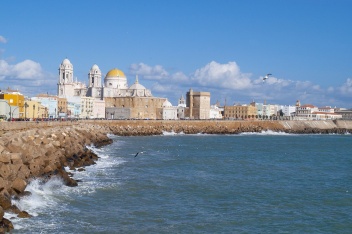
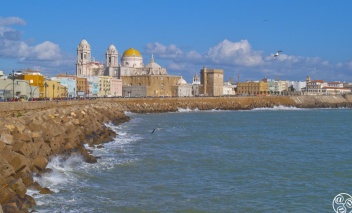
Cadiz´s name and reputation have forever been linked with its maritime adventures. It was from this ancient port city, dramatically situated on a spit of land surrounded on three sides by the sea, that two of Columbus´ four voyages set out for the New World. During the Franco era it was known as a hotbed of dissent, with its legendary carnival continuing despite the dictator´s ban on such decadent events.
Cadiz stands on a peninsula jutting out into a bay, and is almost entirely surrounded by water. Named Gadir by the Phoencians, who founded their trading post in 1100 BC, it was later controlled by the Carthaginians, until it became a thriving Roman port.
The city of Almeria was founded in 955 by the Arabs, but there are sites that trace their origins to prehistoric times. The hill where the Alcazaba is currently was the subject of the earliest occupation in prehistoric times, likely to be during the Bronze Age.
Information about travel and tourism in Andalucia, Spain. Cinemas and Multi-cinemas complex in the City of Almeria
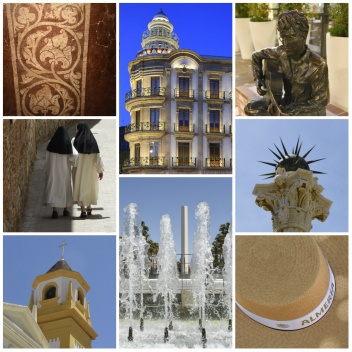
Almería as one of the eight provincial capitals of Andalucia houses various museums. True historians will appreciate the Almeria Museum which contains numerous objects discovered by the well-known Belgian mining engineer, Louis Siret. The contemporary art museum is well worth visiting. Take a stroll around Almeria and discover for yourself numerous examples of beautiful street art.
Almeria was, until recently, the last well-known of Andalucia's provincial capitals. These days, however, thanks to the growing popularity of the province's beaches, especially nearby Cabo de Gata and its natural park, more visitors are getting to know Andalucia's fastest-growing major city. It remains, for now at least, largely uncommercialised.
This fortified behemoth of a basilica was designed in the 16th century with a dual role: as a place of worship, but also to protect the citizens when pirates attacked the city of Almeria after the Reconquest. Built in 1524, after an earthquake destroyed the previous structure, the cathedral is constructed, like so many churches in Spain, on the site of a mosque.
If you are considering visiting Las Minas de Rio Tinto you may find our maps a useful tool, we provide three maps, one of the region of Andalucia with Las Minas de Rio Tinto highlighted. The second handcrafted map gives the location of Las Minas de Rio Tinto with the corresponding local road network.
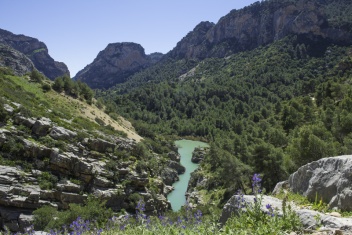
Imagine three stunningly beautiful turquoise coloured lakes bordered by pine forests. A tranquil retreat where you can swim or fish, or picnic on the lake shore. Hardly sounds like a typical Andalucian scene, does it! But west of Alora that is what you will find.
Video of Caminito del Rey.