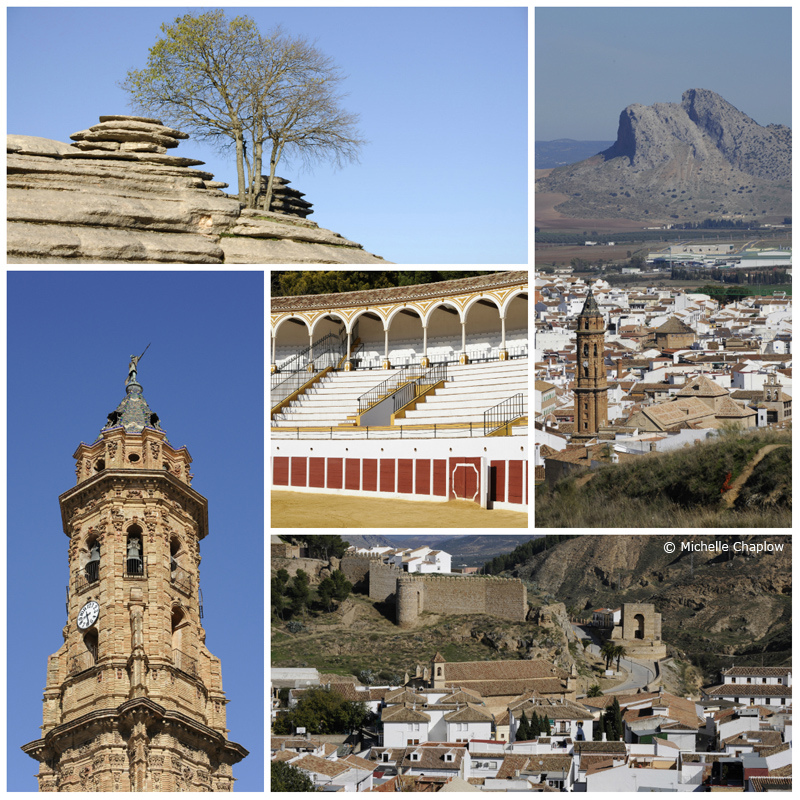
 Antequera © Michelle Chaplow
ANTEQUERA "CROSSROADS OF ANDALUCIA"
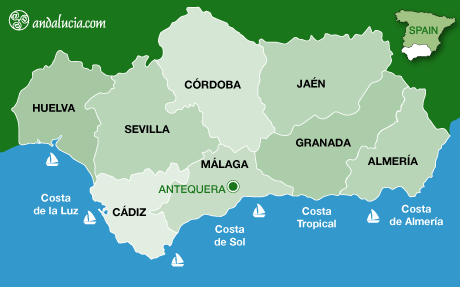
Antequera is centrally located in Andalusia, making it an important connection point between the main Andalusian cities (such as Málaga, Seville, Córdoba, and Granada). The first sighting of Antequera in the distance is that of a typical medieval town, with the spires of her many churches and the walls and towers of the great Moorish fortress silhouetted against the sky. Spread out in the valley below lie rich farmlands irrigated by the Guadalhorce River.
The town boasts over 50 monuments and buildings, including megalithic dolmens, Roman baths, a Moorish fortress, Gothic churches, Renaissance fountains, and Baroque bell towers. Its landscape is dominated by olive groves and cereal fields, bordered by the rugged sierras of El Torcal and the Cordillera Bética Central. Above the plain rises the Peña de los Enamorados, laden with legends.
History
The Romans called it Antikaria, meaning ancient, while the Arabs called it Antaqira. For centuries, Antequera has been a settlement for various cultures and peoples. From the Moorish Period, many significant military architectural remnants remain, including La Alcazaba de Antequera (The Alcazaba of Antequera), La Puerta Real (The Real Gate), La Puerta del Agua (The Water Gate), La Puerta de la Estrella (The Star Gate), and the remains of the ancient city walls.
In 1410, Don Fernando of Antequera captured the town from the Moors, marking a key moment in the Catholic Reconquest, and it served as a strategic launch point for further campaigns against the last Muslim stronghold in Spain. More>
Things to see
Antequerra Dolmens
The Antequera dolmens are a megalithic site recognised for their architecture and alignment with natural landmarks like La Peña de los Enamorados and El Torcal.
Convent Museum las descalzas de antequera
The convent museum Las Descalzas De Antequera is a religious art museum in Antequera, within the San José Convent of the Discalced Carmelites. Established in 1999, it showcases a collection of sacred art preserved by the Carmelite community over centuries. More>
Municipal Museum of Antequera
The Museum of the City of Antequera (MVCA) is a cultural institution housed in the 17th-century Palacio de Nájera. The museum offers a journey through the area's history, from prehistoric times to the present. More>
Art Galleries
Antequera is home to several art galleries, showcasing a range of contemporary and traditional Andalusian art.
Plaza de Torros de Antequera
The Plaza de toros de Antequera is a bullring inaugurated on 20 August 1848. It has a capacity for 6.150 spectators and houses a bullfighting museum and holds events such as the traditional ‘Goyesca’ bullfight.
Monuments
Antequera has historical monuments that reflect its diverse cultural heritage.
Antequera Dolmes
The dolmens of Antequera were built more than 5,000 years ago with huge stone slabs. More>
Alcazaba & Arco de los gigantes
The Arco de los Gigantes (Arch of the Giants), with a height of 7 metres, was built in 1585 and leads to the 13th-century Moorish Alcazaba. This building is an example of late Renaissance architecture with Roman remains found on its floor. More>
Plaza de Toros de Antequerra
This 19th-century bullring was officially opened on 20 August 1848. Work began on the façade in 1984, preserving its traditional style. Inside, it houses a small museum dedicated to the history of bullfighting in Antequera, with memorabilia, costumes, and photographs that provide an insight into the cultural significance of this tradition in the town.
Things to see outside the town
Lobo Park
Located about 16 kilometres from Antequera, Lobo Park is a private nature reserve dedicated to the observation and study of wolves in conditions very similar to those of their natural habitat. More>
El Caminito del Rey
Located 55 kilometres south of Antequera, the Caminito del Rey is a suspension footbridge built along the Desfiladero de los Gaitanes. Once known as a dangerous trail, it has been fully restored and is now a destination for those seeking scenery and hiking. More>
Things to do
Antequera Golf
Antequera has only one golf course located 650 metres above sea level. More>
Torcal de Antequera
The Torcal de Antequera is a striking natural reserve renowned for its unique limestone formations, rich biodiversity, and prehistoric archaeological remains. More>
Gastronomy
Antequera's most popular dish is porra antequerana, a thick version of gazpacho. Another highlight dish is morcón antequerano (tongue and chopped pork).
The town's desserts include bienmesabe, a sweet treat made from ground almonds, ladyfingers, and candied pumpkin. During the festive season, especially around Christmas, mantecados (shortbread) are sold widely. The town is also known for its pestiños, torrijas, and roscos, typical of the Holy Week celebrations.
The mollete de Antequera is a traditional Andalusian soft, oval-shaped bun, known for its slightly flat shape. Typically made with wheat flour, water, yeast, and salt, this lightly baked bread is pale in colour and has a soft texture. It is usually served warm for breakfast or as a light meal, accompanied by olive oil, crushed tomato, or local cured ham.
Handicrafts
Antequera boasts a traditional craftsmanship that reflects the area's cultural heritage. The city is known for its ceramics, leather, textiles, and woodworking. Local artisans continue to use techniques passed down through generations.
Some of the most notable crafts include:
- Ceramics and Pottery: Handmade ceramic pieces such as vases, plates, and decorative items, often featuring traditional Andalusian designs.
- Leather Goods such as belts, bags, shoes, and saddlery, often using techniques and styles rooted in the area's history.
- Textiles: Linen and wool, in particular, are prominent crafts in the area. These products are used to create traditional Andalusian garments, as well as modern home textiles such as tablecloths, bedspreads, and towels.
- Woodworking: Carvings, furniture, and decorative pieces are prominent. These often incorporate areal designs, with both Arab and Christian influences.
In addition to these traditional crafts, Antequera has a wide variety of markets and craft shops, where both locals and visitors can purchase handmade items.
Sports
Antequera offers a wide range of sports activities for visitors. More>
Festivals in Antequera
Popular festivals in Antequera are Holy Week, The Three Wise, Señor de la Salud y las Aguas (Lord of Health and Water), Feria de Primavera (Spring Fair), Feria Real de Agosto (The Royal August Fair), and Nuestra Señora de Los Remedios (Our Lady of the Remedy). More>
Next Villages
The next villages near Antequera include Villanueva de la Concepción, Archidona, and Fuente de Piedra.
Accommodation
El Parador de Antequera
The Parador de Antequera is a modern, four-star hotel in a park-like setting just a short walk from the historic centre of Antequera. More>
A selection of hand picked holiday villa rentals in the countryside around Antequera from Rustical Travel.
All with private pools and grounds.
Find an self catering apartment to stay for a break in this historic town of Antequera in the north of Malaga province which is known as the cross roads of Andalucia for its central location at… More →
Set in beautiful Andalucian countryside, this historic town is rich in fertile land making it Andalucia's top producers of a number of foods like asparagus, cereals and olives. A stay here offers… More →
Just outside Antequera you can visit three 5,000-year-old dolmens: Menga Dolmen (the largest in Europe) and Viera Dolmen, which are both located just outside the town, while El Romeral Dolmen is a… More →
Antequera is a very popular tourist destination and, as a result, has a number of high quality hotels dotted in and around the town. Being located just half an hour from Málaga, it is a great… More →
El Torcal Park and the protected El Torcal Natural Area is known for its unusual limestone rock formations. The park and natural area are located about 30 km north of Málaga city,… More →
The Nájera Palace has a brick façade, a cloistered courtyard, and a staircase decorated with Baroque plasterwork. Its tower, designed by Nicolás Mejías, exemplifies the predominant civil tower… More →
Antequera offers green spaces that combine nature and history.
Torcal de Antequera is a natural area known for their unusual limestone rock formations
The Archivo Histórico Municipal houses a large collection of historical documents, including manuscripts and printed books dating from the 15th to the 20th century, offering resources for… More →
Torcal de Antequera is a natural area known for their unusual limestone rock formations
Just outside Antequera you can visit three 5,000-year-old dolmens: Menga Dolmen (the largest in Europe) and Viera Dolmen, which are both located just outside the town, while El Romeral Dolmen is a… More →
Antequera Cuidad station is the old train station just to the north of the town at the end if the aptly named Avenida Estacion. From here there were regional trains on the following route until… More →
There is an art gallery in the Unicaja premises in calle Ramon y Cajal, 2. Open weekdays between 19.00 and 21.00.
There is only one course in Antequera and that is the aptly named Antequera Golf course. The course at 650 metres above sea level is situated between the Torcal mountains and La Vega de Antequera… More →
The enormous 880m-high crag of limestone that overlooks the town and valley of Antequera is known as La Peña de los Enamorados, or "The Lovers' Rock" and it is also called "the Lovers Leap". The… More →
The city of Antequera contains a wealth of fascinating monuments. Visit the recently excavated Roman baths, the magnificent Renaissance church of Santa María la Mayor Church, the Church of… More →
Antequera has numerous bars here are some of the most interesting.
Antequera is famous for a dish called "Porra Antequerana", which is a very thick style gazpacho. Also from Antequera are the wonderful, soft, "rustic-style" buns called "molletes". These are sold… More →
These are the main annual festivals celebrated in Antequera: Semana Santa, Señor de la Salud y de las Aguas, Spring Fair, Royal Fair of August and Nuestra Señora de los Remedios.
Antequera is filled with small shops usually run as family businesses. However, there are also modern shopping centres, including a fully equipped "Hipermarket" on the outskirts of the city. It is… More →
Among the most popular sporting activities in the Antequera region are horse riding, trekking and golf. Also, inside the city there are numerous opportunies to join organized sport activities and… More →
Tourist offices in Antequera: Town Hall Tourist Department, Municipal Tourist Office and Tourist Center.
Plan your visit to these selection of interesting museums in Antequera town. Theses include the Casa Museo de la Diputacion Provincial, Museo Conventual de las Descalzas, Museo Taurino, Museo de… More →
Antequera is a medieval town in the hills to the north of Malaga, overlooked by a Moorish fortress or Alcazaba. It is located in a fertile river valley, with olive groves and fields of sunflowers… More →
The Parks in Antequera are Paraje Natural del Torcal, El Chorro, Jardín de la Plaza de Toros, Jardines del Rey, Río de la Villa and Corazón de Jesús.
Book Antequera town tours