Illora
Íllora is one of those villages in the province of Granada that has more than one population centre in its municipal area. In total, there are six: Íllora, the capital of the municipality, and the annexes of Alomarte, Brácara, Escóznar, Obéilar, and Tocón.
Alomarte, which is the largest and closest anejo to the capital of the municipality, is located in the foothills of the Sierra de Parapanda. It is particularly interesting for its natural surroundings, where there are many water springs. The most outstanding of these is the so-called Fuente de Alomarte. From an architectural point of view, the most interesting feature of this village is its neoclassical parish church dedicated to the Virgen de los Dolores and, next to it, the old 18th century mill.
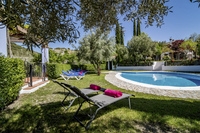
Well-kept country home with panoramic views. Crammed with wonderful corners for outdoor living, and boasting sweeping views, landscaped garden and elegant interior design – this is a four-bed family. Located in the Vega de Granada Those looking to blend a country retreat with access to Andalucía’s exotic highlights will be captivated. Sleeps 7.
The anejo of Brácara, which lies at the foot of the Sierra de Parapanda, has three buildings of outstanding historical and artistic interest; the so-called Torre de la Encantada, its parish church and the Dávila Chapel.
Escóznar is located in the foothills of the Montes Occidentales and shows the characteristic urban layout of the population centres of Muslim origin.
The anejo of Obéilar is known as the Barriada de la Estación, as it is where the railway station of the municipality of Íllora is located.
Tocón, known in the Middle Ages as Altocón, preserves numerous archaeological remains, especially from the time of the Arab domination. Among them the most outstanding is the Tower of Clementito.
Finally, the village that gives its name to the municipality, Íllora, offers the visitor the largest number of buildings of historical and artistic interest, among which are: Casa López-Font, which was built between the end of the 19th century and the beginning of the 20th century in the neo-Mudejar style and has beautiful gardens in the Romanesque style; the Muslim castle dating from the 10th century; the Church of La Encarnación, which was built in the 16th century according to a project by Diego de Siloé; the Church-Convent of San Pedro de Alcántara, the current seat of the Town Hall, which was built in the 17th century; the Municipal Museum, an 18th century building in neoclassical style; and the Residence of the Duke of Wellington, a country estate built in the 19th century which occupies the whole of the old Dehesa Baja de Íllora.
Hotels in Illora
Book hotels in Illora
The traveller who wants to taste the most characteristic delicacies of the gastronomy of the people of Íllora, should order tortilla de espárragos silvestres, migas, puchero de garbanzo, ajo blanco, gachas de mosto, pencas con miguillas and almendrado illoreño.
In the festive chapter, the key dates in the calendar of Íllora are: the second Sunday of August, when the Fiestas Patronales in honour of the Virgen de los Dolores are celebrated in the anejo of Alomarte; in the middle of August the Fiestas Patronales in honour of the Virgen de las Mercedes take place in the anejo of Brácana, when there is also a pilgrimage next to the river Genil; during the penultimate week of August the Fiestas in honour of San Francisco de Asís are celebrated in the anejo of Escóznar; in the month of June the Fiestas in honour of the Virgen del Carmen take place in the anejo of Obéilar; and in Tocón, the Fiestas in honour of the Virgen Socorro are celebrated in the first week of August. In the village of Íllora, the patron saint festivities are also in August, in honour of San Rogelio.
The municipality of Íllora is about 30 kilometres from the city of Granada, which can be reached via the A-92 motorway, linking first with the N-432 and then with the GR-NO-26, which takes us to the centre of our destination.