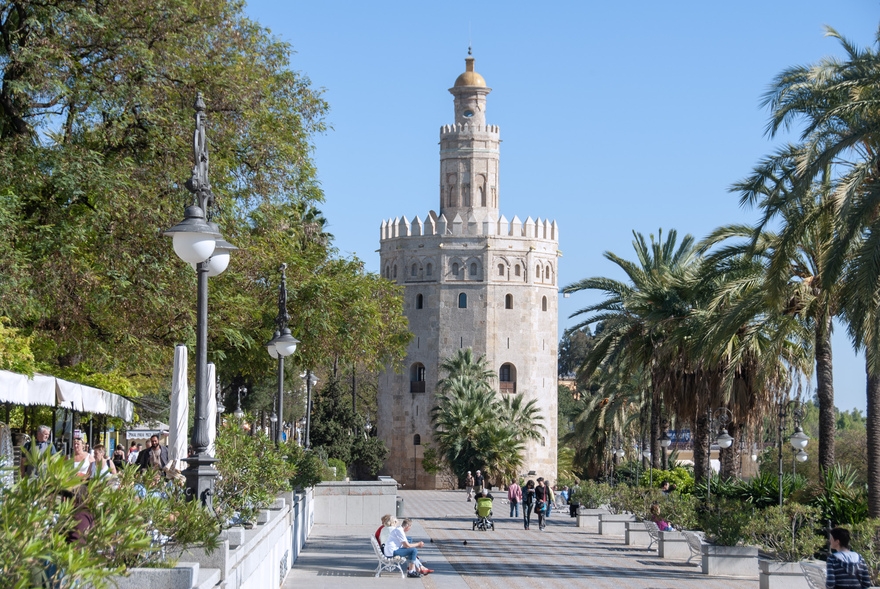
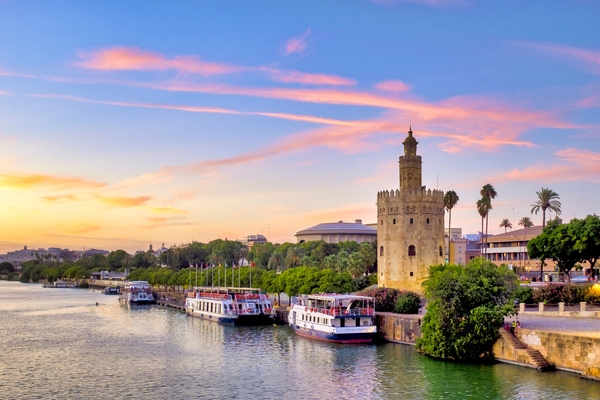
 The Torre del Oro (Golden Tower), which dominates the banks of the river Guadalquivir. © Michelle Chaplow
Top 10 sights or attractions in Seville
by Fiona Flores Watson
One of the most stunning cities in Spain, Seville’s charm lies in its walkable historic centre, richly varied architecture, and cultural legacy. You can trace the civilizations who left their mark, from the Romans, Visigoths and Islamic dynasties to Christian monarchs. The river port saw ships set off to the New World – Seville initially had a monopoly on trade - bringing back riches which funded magnificent mansions, churches, and convents.
1) Cathedral
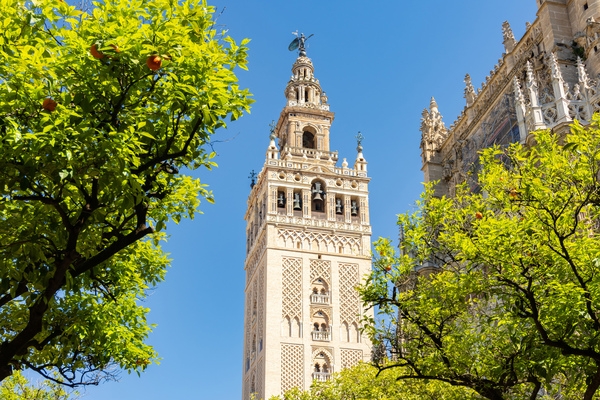
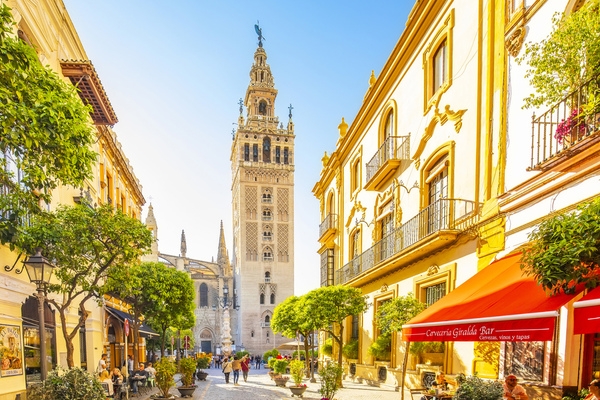
One of the city’s three UNESCO-recognised World Heritage sites, the cathedral is the third-largest in the world. Be sure to climb the Giralda and see Columbus’ tomb. The interior is cool, offering relief from the midday summer heat, but the less crowded slots are earlier. Buy your tickets in advance from the official website. More>


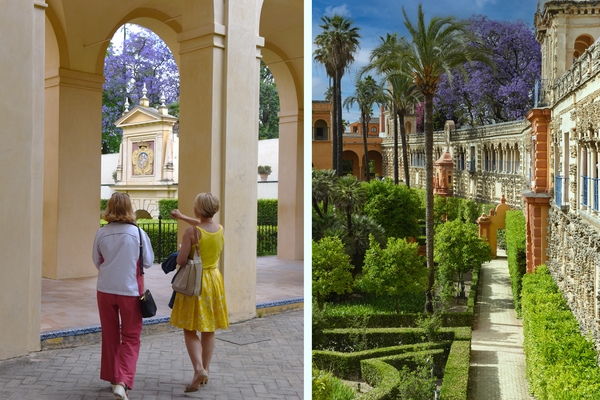
2) Alcazar Palace
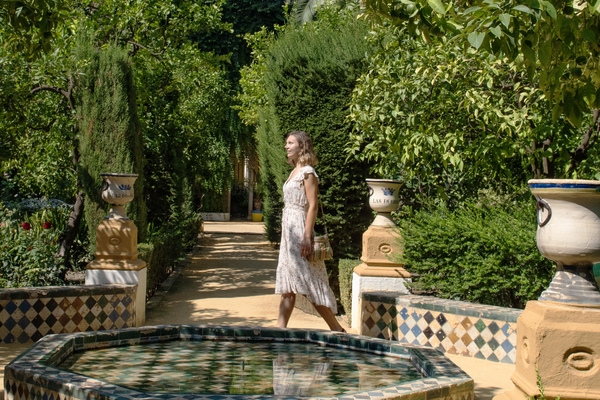
The second-most important monument – the best part is Mudéjar in style, built by skilled Muslim craftsmen under a Christian king (Pedro I). A symphony of pretty patios with pools, brilliantly colourful geometric tiles, carved wooden doors and ceilings, and beautiful plasterwork. Glorious gardens. Book in advance; early entrance will afford emptier spaces; avoid weekends. More>
3) Archive of the Indies
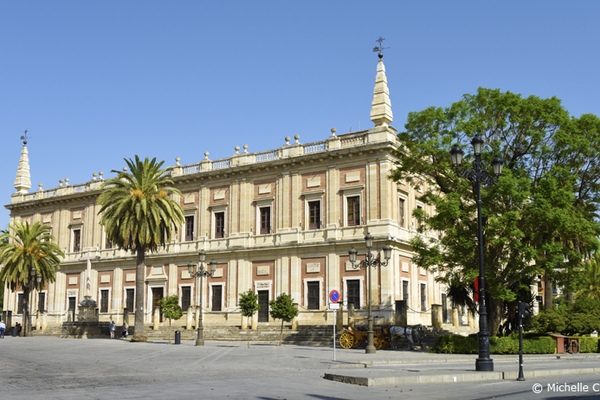
Holding around 80 million documents relating to trade with the New World (known historically as The Indies), this 16th century building, set between the cathedral and the Alcázar, is the third of the UNESCO trio. Originally the merchants’ guild, for trading precious goods shipped back such as gold, silver and spices, in 1784 the building was transformed into an archive about the Spanish Empire, its history and commerce. A good short film introduces the archive, and Seville as a trading port. More>
4) Nao Victoria ship + visitor centre
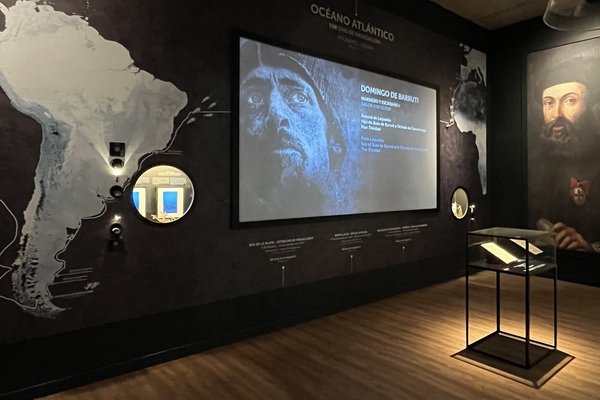
Climb aboard this replica of Ferdinand Magellan’s carrack, the first ever ship to circumnavigate the globe (1519-1522). See how the crew lived, what they ate, and where they slept. Then, a few steps away back on dry land, visit Centro Nao Victoria where the expedition’s political context, its crew, and the eventful journey itself (Who went? Why did they go? What happened to them?), as well as its wide repercussions, are explained in appealing visual displays. More>
5) Las Setas
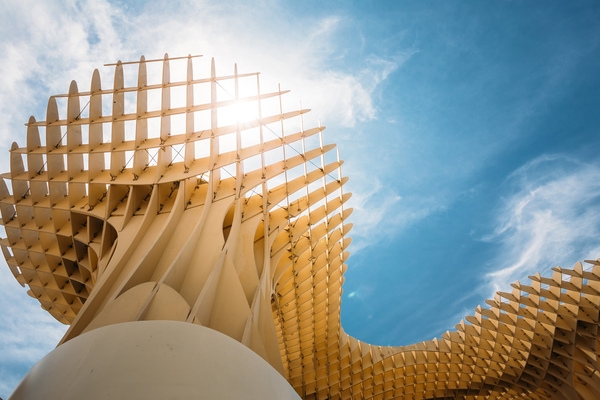
Massively controversial when it was built, this is now Seville’s 21st-century icon. The six “mushrooms”, designed in a criss-cross style, constitute the largest wooden structure in the world. Take the lift up to the 26-metre-high walkway for amazing views – there’s a light show at night, so you get two visits with your entry ticket. On the ground floor is a food market and bars, while the basement holds a small Roman museum. More>
6) Casa de Pilatos
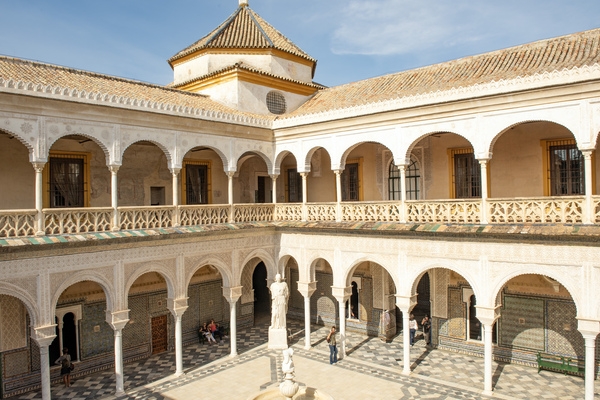
Seville is blessed with a wealth of stunning palaces, of which this is one of the most impressive. From the dazzling display of ceramic tiles to the pretty, peaceful garden, the home of the powerful Dukes of Medinaceli has elements of Romanesque, Gothic, Mudéjar and Italianate Renaissance, as well as original Roman statues in one of the city’s most breath-taking patios. More>
7) Las Dueñas
Home to Spain’s most titled noblewoman, who was a charming and much-loved eccentric and art collector, Las Dueñas is a palace with a personal feel. You can see mementoes of the late Duchess of Alba (the palace is now owned by her son), famously a lover of flamenco, Feria and football; Jackie Kennedy and Grace Kelly both stayed here, as shown in photos. You can see priceless artworks such as paintings and tapestries. More>
8) Plaza de España
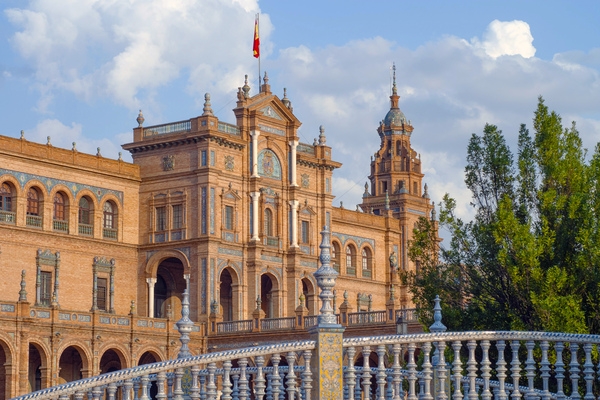
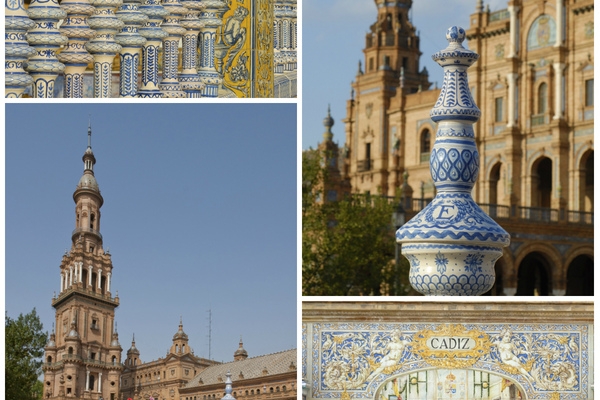
This vast monument in Maria Luisa Park (see below) was designed as the centrepiece of the Ibero-American Expo 1929: the semi-circular brick building has niches for all the provinces in Spain, from Alava to Zaragoza, with colourful tiled panels - a map and a historical scene - in each. The circular plaza, its colonnades, and its canal crossed by four bridges are well worth exploring (and highly photogenic). Several movies were shot here, including Star Wars: Attack of the Clones. Icónica music festival takes place in the plaza every June/July, and access is restricted at certain times More>
9) Maria Luisa Park
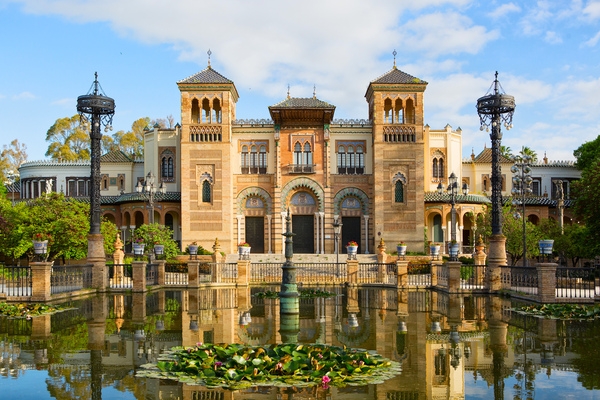
Every city has its favourite green space, and this is Seville’s – and its oldest. The park is suitably majestic with grand avenues of palm trees, tiled benches and statues, fountains, lakes and even a waterfall, whose waters cool the air on hot days. There are cafés where you can enjoy a coffee, beer or tapa, or even a copa (liquor plus mixer). In Plaza de America, at the eastern end, you’ll find three beautiful Expo 29 pavilions, one of which holds a wonderful collection of Andalucian folklore (see Museums and galleries). The purple jacarandas flowering in May/June are glorious. Be aware that part of the park is closed to the public during Icónica music festival (June/July). More>
10) Jewish Quarter
Barrio Santa Cruz was originally the Jewish quarter, once Spain’s second-largest Jewish community after Toledo. Sephardic Jews (from the Iberian peninsula) played a prominent part in medieval Seville, as bankers, doctors and merchants, until the Inquisition began in 1481 (although in 1391 a pogrom had already driven many away). While few visible signs remain, although you can see conserved tombs from cemeteries in underground car parks, incongruously. More>
More Things to do in Seville
Sightseeing tours in Seville
Flamenco Shows in Seville
Tapas tour in Seville