Latest Pages

Latest pages

We are committed to updating our pages as regularly as possible, allocating over half of our editorial resources to this essential task, to ensure that you can always find the latest, most reliable information on popular topics and places.

Here is a list with the latest pages that have been updated or created. Most recent are at the top of the list.
Cordoba City - Five Fascinating Facts

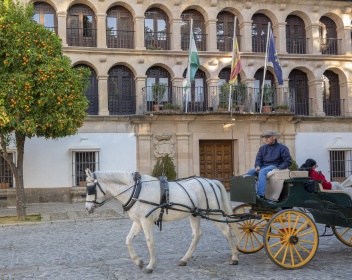
Cordoba is best known as being home to one of Andalucia's three great monuments: the Mezquita, the other two being Seville's Alcazar and Granada's Alhambra. Like the other two, the city embodies the region's rich cultural and religious history: the Mezquita - which dates from Cordoba's zenith, as capital of Al-Andalus and the largest and most important city in Western Europe, with 500,000 inhabitants.

Cadiz Carnival - Five Fascinating Facts

Carnival is the biggest event in Cadiz's calendar, and the most important of its type on mainland Spain, just as the Feria is for Seville. People flood in from all over Spain, and beyond, to enjoy the noisy, colourful, festive atmosphere, singing competitions, concerts (rock, flamenco, samba), comedy, children's shows, parades, firework displays and street parties. Carnaval is also celebrated in towns and cities around Andalucia.

Cadiz City - Five Fascinating Facts

Cadiz´s name and reputation have forever been linked with its maritime adventures. It was from this ancient port city, dramatically situated on a spit of land surrounded on three sides by the sea, that two of Columbus´ four voyages set out for the New World. During the Franco era it was known as a hotbed of dissent, with its legendary carnival continuing despite the dictator´s ban on such decadent events.

Cadiz City - Fascinating Fact 2 - Name that City

The oldest continuously-inhabited city in the Iberian Peninsula, and possibly all of southwestern Europe - it was founded in 1104 BC - Cadiz´s fascinating history and varied fortunes can be glimpsed through the development of its name over the centuries. The Phoenicians called the city "Gadir", which means "walled stronghold"; the Berbers subsequently changed this word to "agadir", meaning "wall". In Greek, Cadiz was called was "Gadeira" - according to Greek legend, Hercules founded the city after his tenth labour.

Huelva City - Five Fascinating Facts

Huelva has always been known more for the beaches in the surrounding area, than for the city itself. Known by the Phoenicians as Onuba, it has a long history, closely linked to the sea and nearby mineral riches, and apart from the less attractive industrial port area, has some interesting sights, although many monuments were destroyed in the 1755 Lisbon earthquake.

Jerez de la Frontera - Five Fascinating Facts

Well-known as the place where sherry that classic English tipple, is produced, Jerez is also equally famous both for its horses and its flamenco. Situated in the province of Cadiz, and larger than its capital city, it is only 20km from the coast, but has an aristocratic, anglophile atmosphere all of its own. A major event in Jerez's annual calendar is the colourful, lively Vendimia (Grape Harvest) Festival in September.

Nerja - Five Fascinating Fact 1 - Stalactite City

The Nerja Caves were formed five million years ago. This 4km-long cave system was once inhabited - skeletons, pottery, ornaments and implements of stone, flint, copper and bronze dating from Neolithic times were found when the caves were discovered in 1959, as well as animal paintings (not viewable, unfortunately).

Tarifa - Five Fascinating Facts

Famous for being the European capital of kite-surfing and located at the southernmost tip of Spain, Tarifa has a laid-back atmosphere all of its own. With its reliable breezes, kilometres of sandy beaches and a Moorish fort, it is a relatively small town which offers fantastic watersports all year round, fascinating history, and excellent nightlife.

Seville City - Fascinating Fact 6

Visitors to Seville will notice a symbol on many signs around the city, from taxis and buses to sewer covers, consisting of the letters ´NO8DO´. This is the city´s logo, and legend says that it originates from the 13th-century coat of arms awarded to Sevilla by King Alfonso X the Wise.