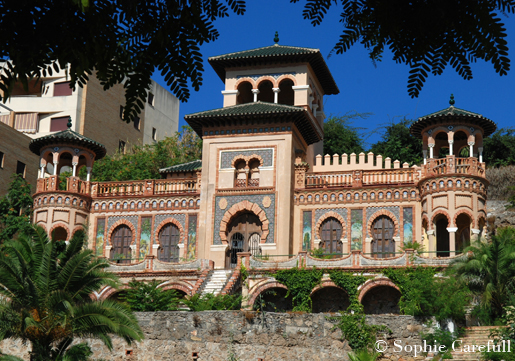
|
| Casa de los Navajas dates back to 1925. |
Torremolinos History overview
The Moorish Legacy and the Tower of Mills
The history of Torremolinos is deeply rooted in its strategic coastal positioning, which necessitated defense during the Nasrid dynasty. The town derives its name from the "Torre de los Molinos," a defensive watchtower built by the Moors to protect the vital water-powered flour mills that once dotted the landscape. This era established the geographical identity of the area, linking the natural springs of the Sierra de Mijas to the industrial necessity of bread production for the nearby city of Málaga.
From Reconquest to a Fishing Village
Following the Christian Reconquest in the late 15th century, the region underwent a significant demographic and economic shift. While the mills continued to be a primary source of income, the threat of pirate raids kept the coastal population sparse for centuries. It wasn't until the 18th and 19th centuries that Torremolinos began to stabilize as a modest fishing community, with the "La Carihuela" district emerging as a focal point for maritime life and traditional Andalusian seafaring culture.
The Dawn of Glamour in the 1950s
The mid-20th century marked a pivotal transformation as Torremolinos evolved from a quiet village into a playground for the international elite. During the 1950s, the town began to attract Hollywood stars, bohemian artists, and European royalty who were drawn to its secluded beaches and Mediterranean charm. Establishments like the Hotel Pez Espada became symbols of this new era, signaling the start of a sophisticated tourism industry that would soon change the face of the Costa del Sol.
A Hub of Liberal Expression
Unlike many other parts of Spain during the mid-century, Torremolinos cultivated a unique atmosphere of relative social freedom. It became a sanctuary for avant-garde thinkers and an early adopter of cosmopolitan values, hosting a diverse mix of international visitors. This period of "pre-boom" tourism was defined by a blend of traditional Spanish hospitality and a burgeoning modernism that laid the groundwork for the massive infrastructure developments to follow.
The Explosive Growth of the 1960s
The 1960s witnessed an unprecedented construction frenzy as Torremolinos became the poster child for mass tourism in Spain. High-rise hotels and apartment complexes began to dominate the skyline to accommodate the influx of sun-seekers from Northern Europe. This decade saw the transition from exclusive luxury to a more accessible holiday destination, fueled by the expansion of the nearby Málaga airport and the rise of affordable charter flights.
Cultural Landmark of the 1970s
By the 1970s, Torremolinos had solidified its reputation as a vibrant, neon-lit epicenter of nightlife and entertainment. The town became famous for its diverse culinary scene, bustling shopping streets like Calle San Miguel, and a nightlife that was considered among the most progressive in Europe. However, this rapid expansion also brought challenges, as the local infrastructure struggled to keep pace with the sheer volume of visitors arriving each summer.
Autonomy and Rejuvenation in the 1980s
A major turning point occurred in 1988 when Torremolinos successfully campaigned for independence from the municipality of Málaga. Achieving autonomy allowed the town to take direct control of its urban planning and tax revenue, sparking a period of civic rejuvenation. The 1980s and 1990s focused on refining the town's image, investing in public squares, and pedestrianizing key areas to improve the quality of life for both residents and tourists.
Torremolinos in the Modern Era
Today, Torremolinos continues to find its way by balancing its heritage as a historic fishing village with its status as a premier global destination. Modern efforts have focused on environmental sustainability, the diversification of cultural offerings, and the celebration of its reputation as an inclusive and diverse community. By honoring its Moorish past and its mid-century golden age, the town has successfully reinvented itself for the 21st century while maintaining its distinct Mediterranean soul.
Torremolinos History in detail
This detail history of Torremolinos is divided into four sections.
